South Korea Successfully Tests New Marine Attack Helicopter
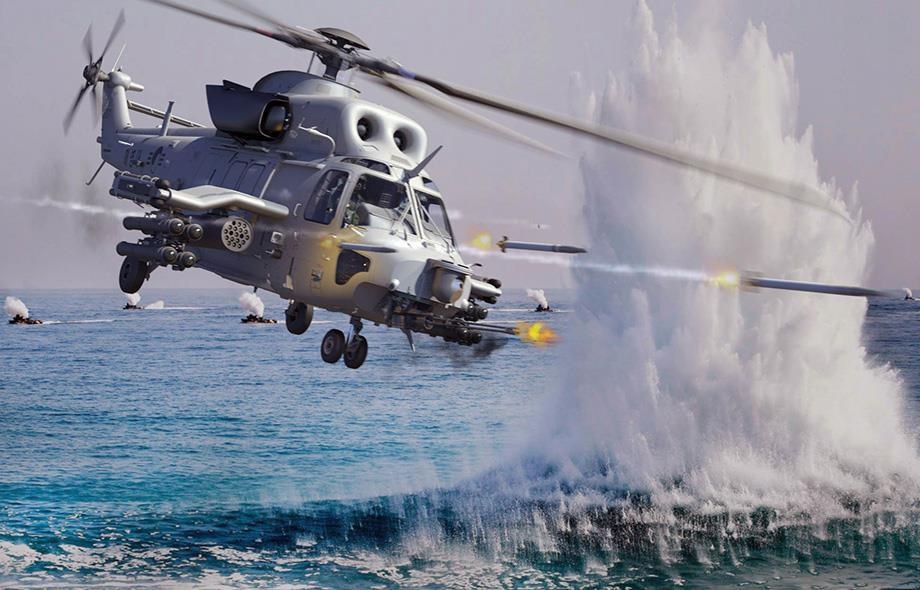
On July 14, 2025, South Korea successfully conducted live-fire tests of its newly developed Marine Attack Helicopter (MAH), marking a major milestone in its efforts to establish an independent aerial strike capability for the Republic of Korea Marine Corps. This powerful new rotorcraft, developed by Korea Aerospace Industries (KAI) under the oversight of the Defense Acquisition Program Administration (DAPA), is now positioned as a game-changer for South Korea’s amphibious and expeditionary warfare strategies.
The recent tests—conducted in both daylight and nighttime conditions—validated the helicopter’s precision strike capabilities and operational readiness in real combat scenarios. This achievement is not only a technical success, but also a strategic signal to regional powers amid heightened tensions on the Korean Peninsula and in Northeast Asia's disputed maritime regions.
A Battle-Ready Evolution of the Surion Platform
The MAH is derived from the MUH-1 Marineon, a naval utility variant of the Surion helicopter, and has been customized into a heavily armed assault platform. Key weapons onboard include:
-
A nose-mounted 20mm three-barrel cannon,
-
Hanwha Techwin Cheon-geom anti-tank missiles,
-
MBDA Mistral air-to-air missiles, and
-
2.75-inch unguided rockets.
These are paired with advanced Target Acquisition and Designation Sights (TADS), enabling the MAH to deliver close air support (CAS), cover amphibious landings, and defend transport helicopters in contested zones.
Strengthening Amphibious and Autonomous Capabilities
What makes the MAH especially significant is its role in giving the Republic of Korea Marine Corps (ROKMC) an independent aviation arm, reducing their historical reliance on Army or Navy helicopter support. This mirrors the U.S. Marine Corps’ evolution of self-sustaining air-ground task forces, designed for rapid deployment and assault in littoral environments.
Compared to older attack helicopters, the MAH delivers better modularity, situational awareness, and localized integration tailored for Korea’s specific terrain and operational doctrines. It is expected to coordinate closely with Marineon transport helicopters during high-risk operations such as island landings or swift incursions along hostile coastlines.
A Strategic Step Toward Indigenous Defense
The development of the MAH is not just about enhancing combat power—it’s about building strategic autonomy. By deploying a domestically developed, mission-specific attack platform, South Korea is moving away from dependency on foreign defense suppliers, while also laying the groundwork for future defense exports.
The MAH project is part of a broader modernization initiative funded through DAPA, with full operational capability expected by 2026. While no official budget details have been disclosed, the helicopter is set to become a cornerstone asset in the Marine Corps’ growing aviation wing. Experts suggest that, if successfully fielded, the MAH could also attract export interest from countries seeking cost-effective, versatile attack helicopters for amphibious operations.
More Tests, More Capability
Following the success of these recent trials, South Korea plans additional tests focused on air-to-ground and air-to-air missile integration, further strengthening the MAH’s multi-role combat versatility. These future trials will confirm its ability to operate independently and as part of joint task forces across diverse operational theaters.
In a region where maritime disputes and flashpoints are increasingly unpredictable, South Korea’s MAH program reflects strategic foresight. It’s not just about adding firepower—it’s about enhancing national deterrence, operational flexibility, and defense industry self-reliance.
With this powerful new addition to its arsenal, South Korea is taking flight as a regional innovator in rotorcraft warfare, preparing its Marine Corps to operate with greater autonomy and resilience in today’s rapidly evolving security landscape.
✍️ This article is written by the team of The Defense News.