South Korea Signs Indigenous Long-range Surface-to-Air Missile System 'L-SAM' Mass-Production Deal
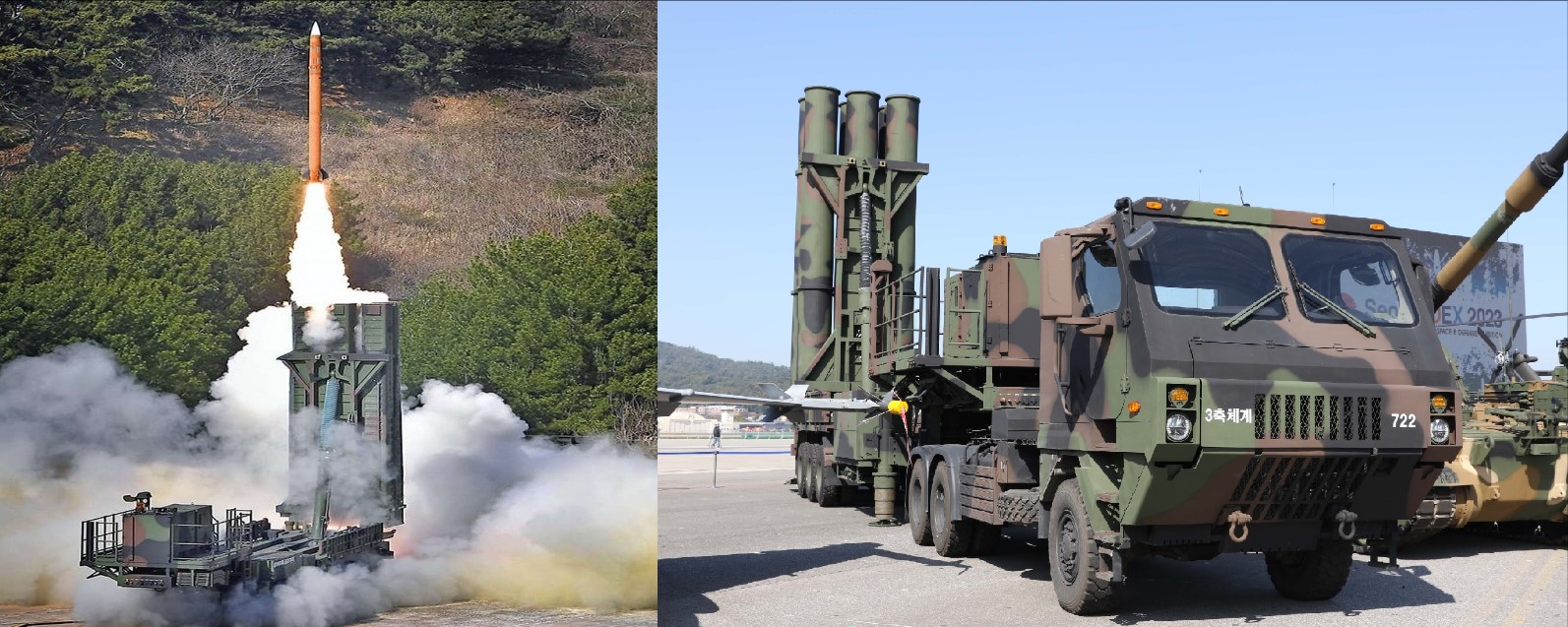
SEOUL — On the heels of years of development, South Korea has officially contracted for mass production of its indigenous long-range surface-to-air / anti-ballistic missile system — L-SAM — a major milestone that positions the system as the backbone of the country’s upper-tier air and missile defense shield. The contract, awarded to Hanwha Aerospace, marks a turning point for domestic missile-defense capability just in time for the anticipated wave of global interest in region-wide defense systems this holiday season.
A new layer in a multi-tiered shield
The L-SAM is designed as the uppermost layer in the Korean Air and Missile Defense (KAMD) architecture — an indigenous, multi-layer missile defense framework developed to counter the growing ballistic and aerial threats facing the Korean Peninsula.
Built by South Korea’s own defense-industrial base (led by Hanwha and LIG Nex1 under the coordination of the Agency for Defense Development (ADD)), the system closes a crucial gap: intercepting high-altitude ballistic missiles during their terminal descent — a phase earlier systems struggle with.
A single L-SAM battery comprises a truck-mounted S-band AESA radar, a command-and-control centre, a combat control station, and four mobile launchers. Each launcher carries a mix of missiles optimized for both ballistic missile and conventional aerial threats.
Cutting-edge technology: speed, altitude, precision
The L-SAM system uses advanced technologies previously rare in Korean defense: a Divert and Attitude Control System (DACS) and dual-pulse propulsion. These enable the missiles to maneuver and intercept hostile ballistic threats in the thin upper atmosphere.
Its anti-ballistic variant (ABM) uses a hit-to-kill approach — relying on an imaging infrared seeker and fine control of trajectory to strike incoming missiles directly.
According to available data, L-SAM Block 1 interceptors have a nominal range of up to 150 km and can engage targets at altitudes in the ballpark of 50–60 km. Its speed and design make it suitable not only against ballistic missiles like the North Korean KN-23 and KN-24, but also against high-speed air and cruise missiles.
L-SAM has already undergone live-fire testing between 2022 and 2023 — reportedly intercepting incoming targets successfully.
Timeline: from concept to contract
The development of L-SAM began in the mid-2010s under ADD, in response to evolving missile threats from the north. The project entered a decisive phase around 2019, when ADD teamed with Hanwha Aerospace and LIG Nex1 for missile production and system integration.
By May 2024, L-SAM Block 1 development was completed and the system was declared combat-ready by military acquisition authorities. Following that, in late November 2025, Hanwha Aerospace signed a contract worth approximately KRW 705 billion (roughly US $482 million) to begin full-scale production of launchers and ABM missiles through 2030.
L-SAM-II, exports, and strategic ripples
The success of L-SAM Block 1 has laid the foundation for an enhanced successor — L-SAM II, which is expected to push interception altitudes much higher — up to 180 km — and integrate glide-phase interceptors, enabling it to counter future hypersonic and advanced ballistic missiles.
This expanded capability aligns with South Korea’s broader defense posture: a mix of offensive missile strike systems and robust multi-layered defenses under KAMD, aiming for autonomy and strategic deterrence.
Moreover, with the L-SAM now moving into mass production, its radar and interceptor technologies could make the system attractive to other nations, especially in the Middle East and Europe.
Significance: a model for rapid defence-system development
The relatively swift path of L-SAM — from formal development in 2015 to mass-production contract by 2025 — presents a blueprint for future domestic defense programs.
For a program involving advanced technologies such as multi-stage interceptors, AESA radar, hit-to-kill ABMs, and high-altitude ballistic interceptors, such rapid progress underscores both industrial maturity and institutional commitment.
As the global strategic landscape grows more complex — with ballistic, cruise, and hypersonic threats proliferating — the successful deployment of L-SAM may influence other nations to accelerate their own layered defense architectures.
With the new contract in hand, L-SAM is becoming a tangible pillar of South Korea’s sovereign air and missile defense. Its advanced technologies, layered-defense integration, and rapid development set a high bar in regional defense. As L-SAM moves into production and eventual deployment, and as L-SAM II advances, South Korea’s long-term ambition for a self-reliant, export-ready missile-defense industry appears increasingly within reach.
About the Author
Aditya Kumar:
Defense & Geopolitics Analyst
Aditya Kumar tracks military developments in South Asia, specializing in Indian missile technology and naval strategy.