SkyCarrier Debuts: Teledyne FLIR’s Autonomous Drone ‘Box’ Takes Flight at DSEI London
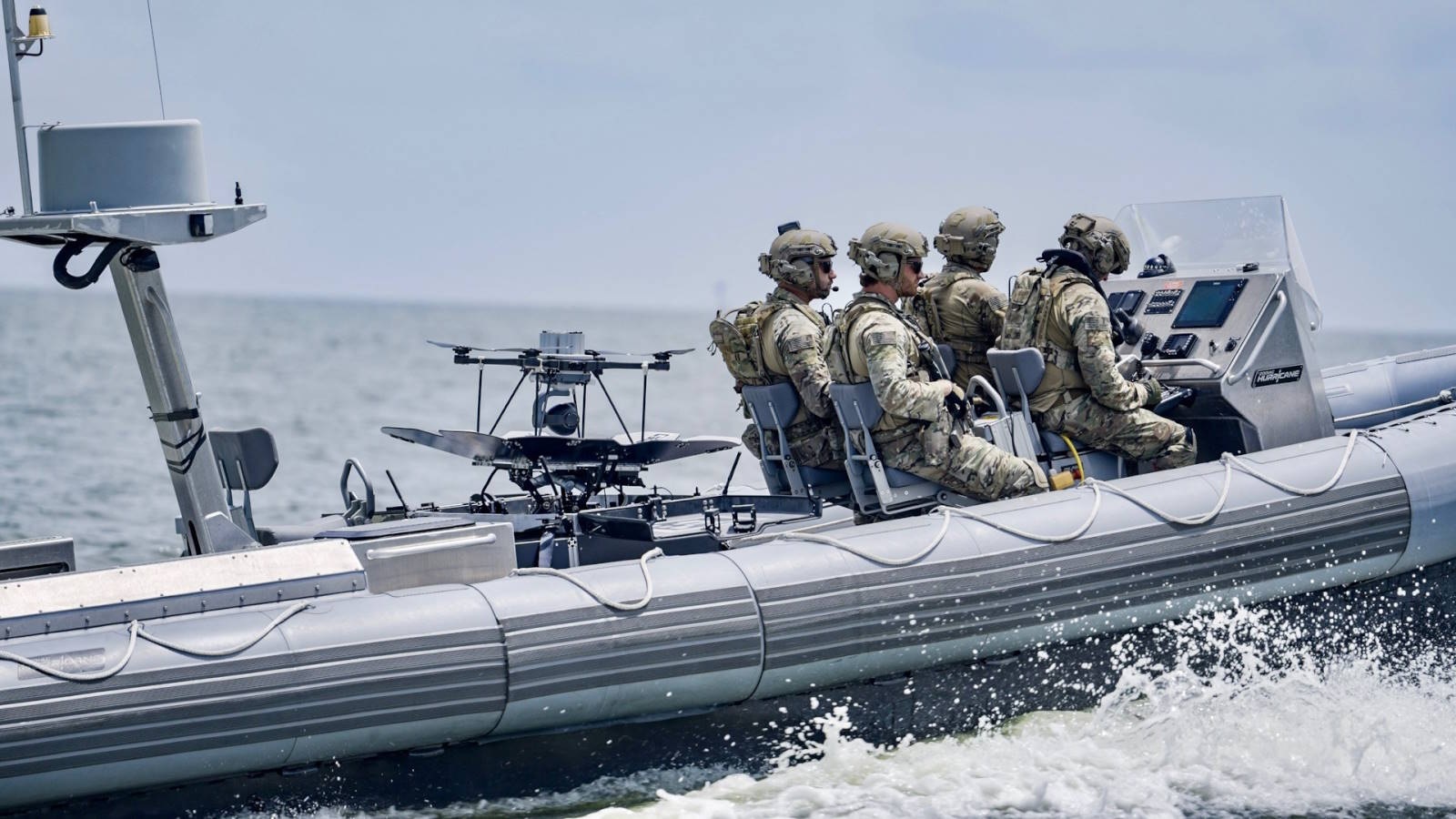
LONDON : At the Defence and Security Equipment International (DSEI) exhibition in London, Teledyne FLIR Defense, part of Teledyne Technologies, unveiled its groundbreaking SkyCarrier™ platform — an autonomous drone launch and recovery system designed to transform unmanned aerial system (UAS) operations for both military and civilian missions.
A Leap in Drone Autonomy
The SkyCarrier, described as a “drone in a box,” enables the fully autonomous deployment and retrieval of SkyRaider® and SkyRanger® quadcopter drones. It can be mounted on land vehicles, maritime vessels, or deployed at fixed sites, and crucially, it works even while the host platform is moving.
A ruggedized container unfolds into an articulating pad, providing drones with a stable launch and landing zone, while also protecting them during transit and storage.
Key Features & Innovations
-
Autonomous Takeoff & Landing: Operates reliably even on moving vehicles or vessels, compensating for up to 20° tilt. Precision navigation is guided by visual markers like QR codes, AprilTags, and near-infrared beacons.
-
Dual Modes: Available in free-flight and tethered versions. The tethered option provides continuous power supply and secure, silent data transfer.
-
Operational Independence: Built for environments where GPS or RF signals are jammed, relying on computer vision and onboard systems.
-
Rapid Turnaround: Fast charging, thermal regulation, and autonomous management of drone readiness.
-
Persistent Coverage: One operator can control up to 16 drones simultaneously through Autonomous In-Air Replacement (AIR), allowing continuous missions.
-
Rugged Build: Rated IP65, shock resistant, and capable of operating between –20 °C and +50 °C.
Specifications:
-
Free-flight unit: ~120 kg, charging in under 40 minutes, drone endurance 45+ minutes.
-
Tethered unit: ~170 kg, offering unlimited airborne endurance.
-
Compatible drones:
-
SkyRanger R70 (5 kg, 3.5 kg payload, up to 100 km/h speed, 15,000 ft ceiling, high wind tolerance).
-
SkyRaider R80D (4.5 kg, 2 kg payload, speeds up to 50 km/h).
-
Tested in Real-World Conditions
The SkyCarrier has been trialed on fast attack craft, RHIBs, and ground vehicles such as Ford F-Series trucks and Toyota Hilux pickups, performing at speeds of up to 50 km/h over rugged terrain. It has been evaluated by U.S. Air Force units, Norwegian defense forces, and coast guard operators, proving its reliability in demanding environments.
The system is expected to reach initial deployments in 2026, with a high technical readiness level (TRL 6–7).
Strategic Importance
Beyond military operations, the SkyCarrier supports a wide range of payloads: long-range imaging, targeting, electronic warfare, signals intelligence, CBRN detection, communications relay, and even kinetic responses. This versatility makes it suitable for missions such as battlefield surveillance, border security, hazmat response, and critical infrastructure protection.
“SkyCarrier represents a major leap forward in autonomous drone operations,” said Dr. JihFen Lei, President of Teledyne FLIR Defense. “Its ability to launch, recover, and manage drones from moving platforms — without GPS or constant operator control — makes it a true game-changer.”
The SkyCarrier™ sets a new benchmark in drone autonomy, offering unmatched portability, resilience, and endurance — a system equally suited for future battlefields and civilian crisis response.
✍️ This article is written by the team of The Defense News.