Skunk Works and XTEND Expand Joint All-Domain Command and Control With Multi-Class Drone Integration

Palmdale, California, December 18, 2025 — Lockheed Martin’s Skunk Works and drone technology company XTEND have announced a major advance in Joint All-Domain Command and Control (JADC2), following the successful integration of XTEND’s Operating System (XOS) into Skunk Works’ MDCX autonomy platform. The collaboration enables a single operator to simultaneously command and control multiple classes of uncrewed aerial systems (UAS), significantly improving situational awareness and reducing manpower requirements during complex missions.
Multi-Class Drone Control Demonstrated
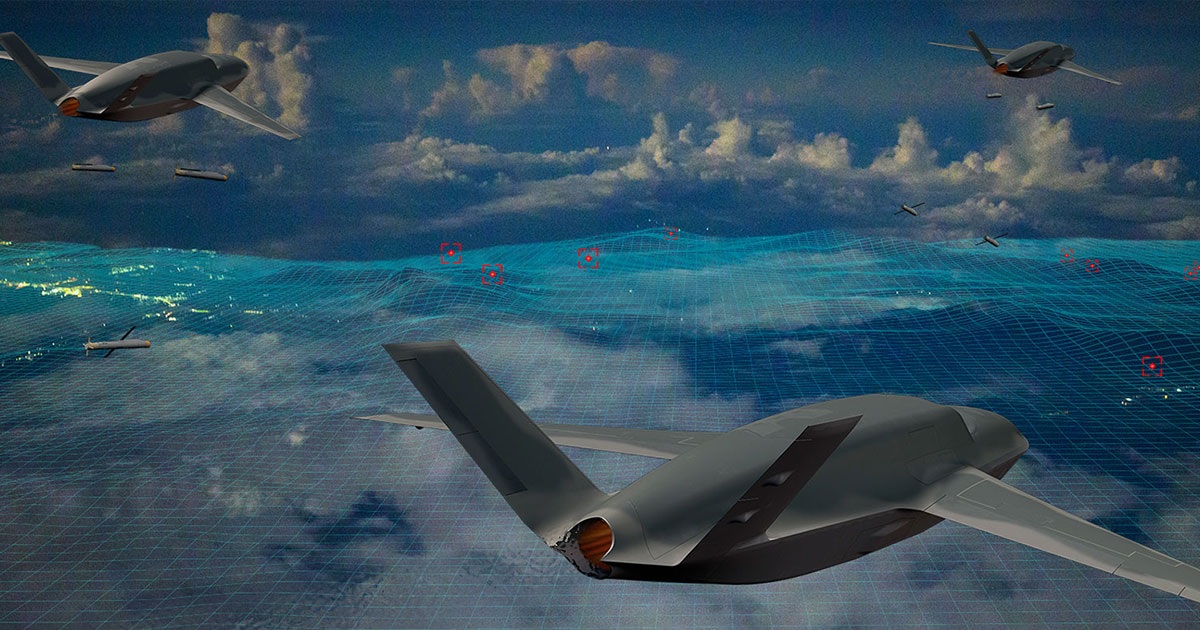
The integration allows simultaneous command and control (C2) of different UAS classes through a unified Multi-Class MDCX (MC-MDCX) workstation. In a demonstration conducted in November, the two companies showcased the capability during a marsupial drone mission, where a larger UAS deployed a smaller Class 1 drone to conduct a close-in task while remaining under unified operator control.
Traditionally, such missions required multiple operators, with control of smaller drones handed off to specialists using lower-level controls. These controls typically include first-person views, mark-and-fly commands, and immersive interfaces tailored for close-proximity operations. The new integration eliminates the need for such handoffs, allowing a single operator to manage both the carrier UAS and the deployed drone simultaneously.
Reduced Manpower, Faster Decisions
According to the companies, the demonstration confirmed a reduction in total manpower needed for complex, multi-layered missions. By removing operator handoffs, the integrated system improves continuity of control, enhances mission-wide situational awareness, and shortens data-to-decision timelines — a key requirement for future JADC2 operations.
The approach also supports lower-echelon mission execution by giving operators advanced autonomy tools without increasing cognitive workload, enabling faster and more coordinated responses across the battlespace.
XTEND’s Combat-Proven Drone Control Technology
XTEND is widely recognized for its combat-proven drone command-and-control solutions, currently deployed by militaries worldwide. Its XOS platform is designed to operate in highly contested environments, enabling drone missions even when GPS signals are denied or radio-frequency datalinks are jammed.
XOS provides a layered operational model that allows operators to perform missions at near expert-level proficiency, significantly reducing training time while improving operational effectiveness and decision-making accuracy. These attributes make the system particularly suited for high-tempo, contested JADC2 scenarios.
Advancing Autonomous and Manned–Unmanned Teaming
Skunk Works stated that the collaboration aligns with its broader focus on piloted and uncrewed teaming, aimed at enhancing operational flexibility, improving pilot safety, and accelerating autonomous mission execution. By integrating XTEND’s immersive and resilient control technologies into MDCX, Skunk Works is seeking to expand the role of autonomous systems across air, land, sea, space, and cyber domains.
Both companies are now exploring how the demonstrated capabilities can be further applied to JADC2 mission architectures, enabling faster decision loops and more effective employment of autonomous platforms in future conflicts.
A Step Forward for JADC2 Operations
The Skunk Works–XTEND collaboration represents a significant step toward scalable, resilient, and manpower-efficient command-and-control for multi-domain operations. As modern battlefields increasingly demand seamless integration of manned and unmanned systems, the ability to control multiple drone classes through a single, resilient interface could become a cornerstone of next-generation military operations.
About the Author
Aditya Kumar:
Defense & Geopolitics Analyst
Aditya Kumar tracks military developments in South Asia, specializing in Indian missile technology and naval strategy.