Secret Letter from Xi Jinping Sparks Diplomatic Thaw Between India and China Amid Trump’s Tariff Blitz
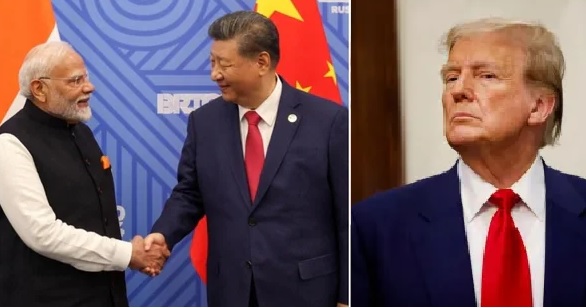
New Delhi / Beijing, August 29, 2025 — A discreet yet momentous shift in Asia’s geopolitics is underway. In March this year, as U.S. President Donald Trump escalated a global tariff war—slapping punitive duties on both China and India—Chinese President Xi Jinping covertly reached out to Indian President Droupadi Murmu. The confidential letter, relayed to Prime Minister Narendra Modi, is now seen as the catalyst for a striking India–China rapprochement.
The letter was framed as a cautious probe to “test the waters on improving ties,” signaling Beijing’s eagerness to recalibrate relations during a moment of intense external pressure. By June, the outreach had prompted India to reciprocate, reviving high-level diplomatic exchanges after years of tension.
Xi’s Concerns
Xi reportedly expressed deep worry that any U.S.–India trade deals or strategic arrangements could harm China’s interests. His fears included:
-
India siding with Washington’s tariff regime, which could worsen China’s economic challenges.
-
New Delhi joining supply chain initiatives designed to exclude Chinese firms.
-
Closer military or technology cooperation between India and the U.S., potentially shifting the regional balance.
-
India aligning with U.S. positions on the border dispute, Indo-Pacific security, and sanctions, which could embolden anti-China coalitions.
In a notable gesture, Xi also named a provincial official to serve as Beijing’s dedicated liaison for India, reflecting a seriousness beyond routine diplomatic channels.
From Border Tensions to Reset
This outreach came against the backdrop of the deadly 2020 Galwan Valley clash, which had frozen ties for years. But by early 2025, quiet de-escalation was already underway. China reinstated the Kailash Mansarovar pilgrimage, reopened direct flights, and signaled troop disengagement along parts of the Line of Actual Control.
India responded cautiously at first, but by June, officials initiated structured dialogue on border management, trade facilitation, and hydrological data sharing. Key trade passes were reopened, paving the way for Prime Minister Modi’s upcoming visit to Tianjin for the August 31 SCO Summit.
US Pressure Cooker
Meanwhile, India’s relations with Washington soured. Trump imposed 50% tariffs on Indian exports, citing New Delhi’s continued purchase of Russian oil. Indian officials condemned the move as “unfair and unreasonable.”
Tensions deepened further when Trump claimed he had personally mediated a ceasefire between India and Pakistan—a claim India flatly denied. Combined with economic strain, these moves accelerated New Delhi’s search for alternatives, making Beijing’s overture more attractive.
Strategic Ramifications
Analysts believe Xi’s move was aimed at pre-empting a stronger U.S.–India alignment by offering India a pragmatic partnership. By mid-2025, Modi’s acceptance of Chinese gestures sent a clear signal of India’s strategic autonomy—warning Washington that excessive pressure could push Delhi closer to Beijing.
At the same time, India has also strengthened ties with Japan, agreeing to expand cooperation in defense, AI, supply chains, and high-speed rail. This balancing act shows that India is not pivoting solely eastward, but hedging its bets across multiple partnerships.
As Modi heads to China for the SCO Summit—his first visit in seven years—expectations are high. Observers anticipate firm agreements on border protocols, trade corridors, and hydrological cooperation, testing whether the thaw is tactical or lasting.
The Xi-Murmu exchange may ultimately be remembered as one of the most consequential diplomatic signals of the decade—reshaping India-China ties, unsettling Washington, and redefining Asia’s power balance in an era of tariff wars and shifting alliances.
✍️ This article is written by the team of The Defense News.