Saudi Crown Prince Issues Stark Warning on Iran, Signals Nuclear Parity if Tehran Builds Bomb
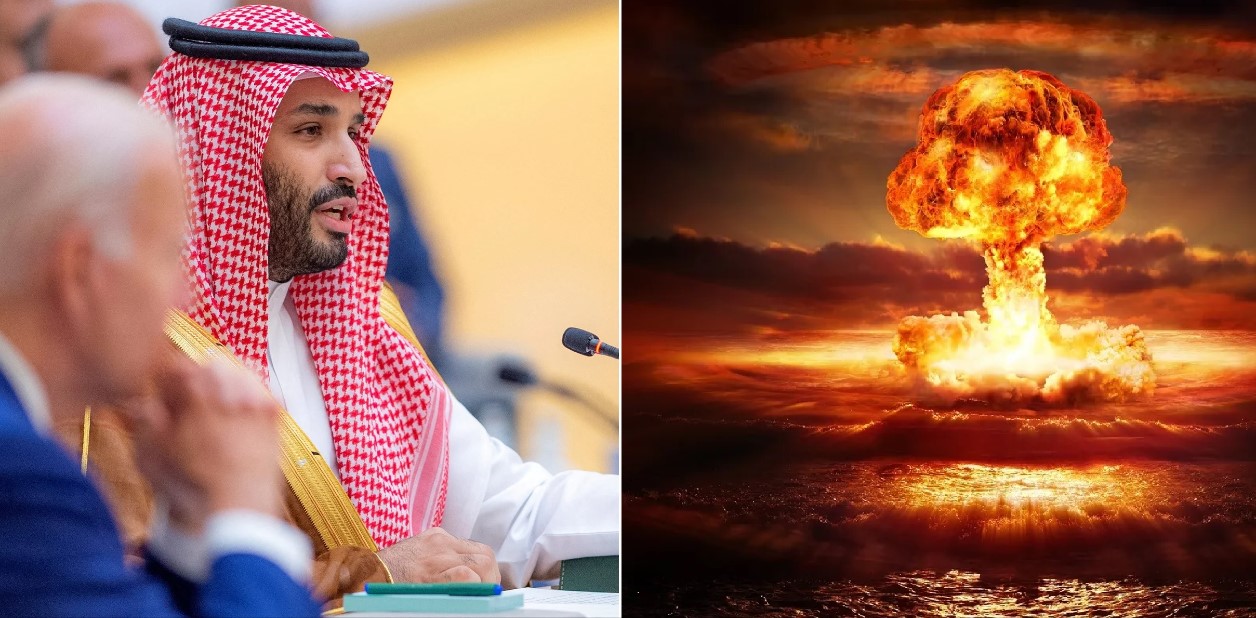
Riyadh / Washington : Saudi Arabia’s de facto ruler, Mohammed bin Salman, has issued one of his strongest and most consequential warnings yet over Iran’s nuclear ambitions, cautioning that the Middle East could face profound instability if Tehran acquires nuclear weapons — and making clear that Riyadh would respond in kind.
“The Ayatollah wants a project like Hitler,” the crown prince said, arguing that the world historically ignored growing threats until it was too late. “Saudi Arabia does not want nuclear weapons,” he added, “but if Iran gets one, we will follow.”
The remarks, originally delivered in a major U.S. television interview and frequently referenced since, underscore the depth of Saudi concern over Iran’s strategic trajectory and highlight the risk of a regional nuclear arms race.
A Warning Rooted in History and Rivalry
By invoking Adolf Hitler, Mohammed bin Salman framed Iran’s leadership as pursuing ideological expansion beyond its borders — a comparison intended to resonate with Western policymakers and emphasize a sense of urgency.
Saudi officials argue that Iran’s regional influence, exercised through aligned militias and proxy forces in Iraq, Syria, Lebanon and Yemen, already reflects a destabilizing project that would become far more dangerous under a nuclear shield.
Iran, led by Supreme Leader Ali Khamenei, has repeatedly denied seeking nuclear weapons, insisting its program is strictly civilian. However, Tehran’s advances in uranium enrichment, ballistic missile capabilities, and its strained cooperation with international inspectors have deepened skepticism across the Gulf, Israel and the West.
Saudi Arabia’s Position: Deterrence, Not Desire
Saudi Arabia maintains that it has no intention of becoming a nuclear-armed state under normal circumstances. Officials in Riyadh consistently describe the kingdom’s nuclear plans as civilian, focused on energy diversification, technological development, and reducing reliance on oil under Vision 2030.
Yet Mohammed bin Salman’s warning makes clear that this restraint is conditional. Saudi strategists argue that a nuclear-armed Iran would fundamentally alter the regional balance of power, leaving Riyadh with little strategic choice but to pursue nuclear parity to ensure deterrence and survival.
Analysts describe this stance as “follow-on deterrence” — a posture that has become central to discussions of Middle Eastern security risks.
International Implications and U.S Concerns
The crown prince’s remarks have complicated diplomacy between Saudi Arabia and the United States, particularly as both sides explore deeper cooperation, including civilian nuclear agreements.
Washington has stressed that any such cooperation must include strict safeguards, full transparency, and limits on sensitive technologies such as uranium enrichment. Past Saudi statements about matching Iran’s nuclear capability are frequently cited in U.S. congressional debates as justification for tough non-proliferation conditions.
Some analysts, however, argue that binding Saudi Arabia into internationally supervised frameworks may be the most effective way to prevent nuclear proliferation, rather than pushing Riyadh toward alternative partners with fewer restrictions.
A Region on the Brink
Mohammed bin Salman’s warning comes as regional tensions escalate, with conflicts involving Iran-aligned groups, recurring crises over Iran’s nuclear advances, and increasing military signaling across the Gulf.
Diplomats fear that if Iran were to cross the nuclear threshold, other regional powers — including Saudi Arabia, and potentially Turkey or Egypt — could reassess their long-standing non-nuclear policies, weakening global non-proliferation norms.
Such a development, experts warn, would increase the risk of miscalculation in one of the world’s most volatile regions.
The Message Behind the Rhetoric
Despite the blunt and provocative language, analysts say the Saudi crown prince’s core objective is strategic signaling, not immediate escalation. By drawing historical parallels and defining clear red lines, Riyadh aims to pressure the international community to prevent Iran from acquiring nuclear weapons — and to ensure that Saudi security concerns remain central to any future diplomatic settlement.
For now, Saudi Arabia continues to publicly reject the pursuit of nuclear arms. But Mohammed bin Salman’s warning leaves little ambiguity about what the kingdom believes is at stake — and how far it may be prepared to go if Iran’s nuclear program moves from capability to weaponization.
About the Author
Aditya Kumar:
Defense & Geopolitics Analyst
Aditya Kumar tracks military developments in South Asia, specializing in Indian missile technology and naval strategy.