Saudi Arabia to Purchase Nearly 300 M1 Abrams Tanks in One of the Largest U.S. Armor Deals in Years
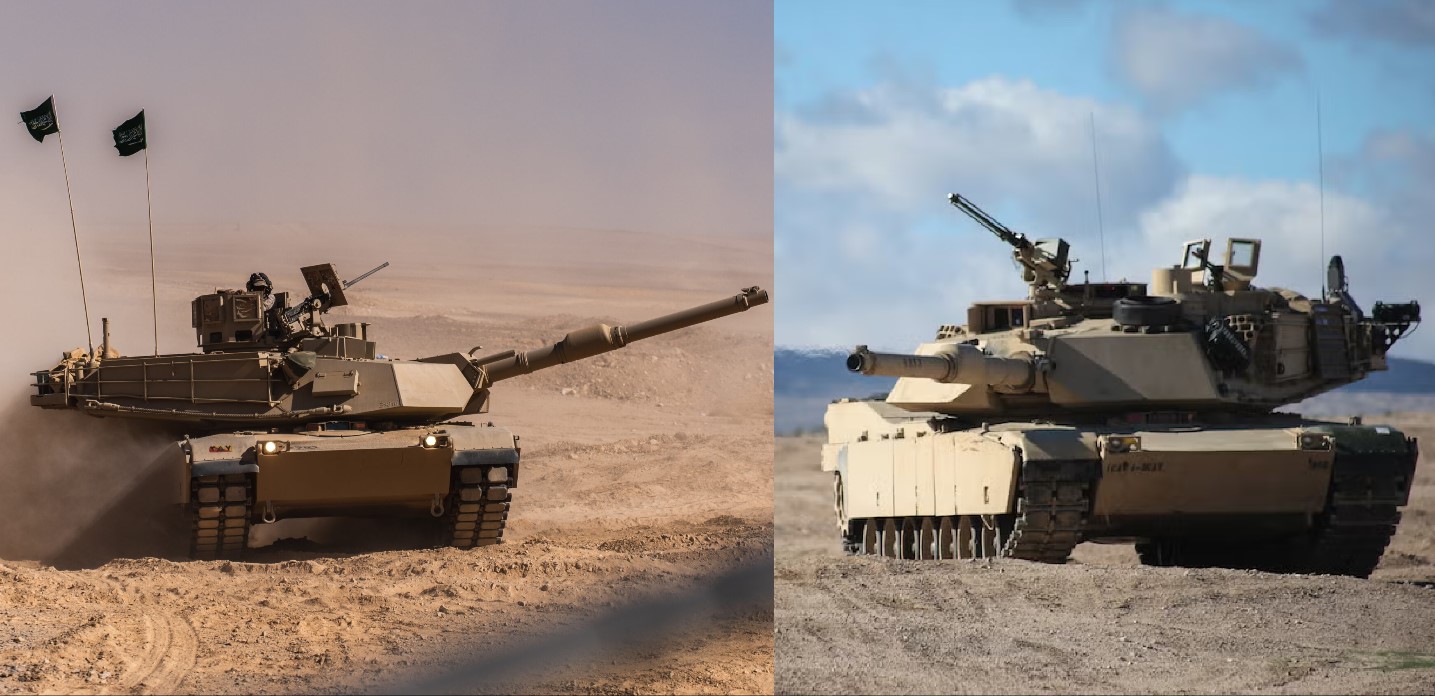
On 18 November 2025 the United States and Saudi Arabia have entered one of the most consequential phases of their modern partnership after President Donald J. Trump and Crown Prince Mohammed bin Salman formally concluded a sweeping Strategic Defense Agreement, anchored by Riyadh’s decision to purchase nearly 300 American-made M1 Abrams main battle tanks.
The White House confirmed the agreement late Tuesday, presenting it as both a reinforcement of U.S. leadership in the Middle East and a cornerstone of Saudi Arabia’s military modernization. The deal, which also incorporates civil nuclear cooperation, artificial intelligence partnerships and critical minerals access, is framed as the most far-reaching bilateral defense framework between the two countries in years.
A High-Stakes Pact With Economic and Strategic Weight
According to senior U.S. officials, the SDA elevates Saudi Arabia to Major Non-NATO Ally status and is tied to Riyadh’s plan to push nearly $1 trillion in investments into the U.S. economy. The administration described the package as a “strategic anchor” ensuring long-term military, economic and technological cooperation.
For Washington, the tank sale represents a multi-billion-dollar program that will sustain production at the Lima Army Tank Plant—the only remaining facility manufacturing the Abrams. For Saudi Arabia, it signals a renewed commitment to American defense technology after years of exploring alternative suppliers.
The Abrams Deal: Nearly 300 Tanks to Reshape Saudi Ground Power
While official documents mention nearly 300 U.S. tanks, defense analysts expect the order to be based on an export variant of the M1A2 SEP series, similar to the SEPv3 configuration now entering American service.
Key Specifications of the M1A2 Abrams Expected for Saudi Arabia
-
120 mm M256 smoothbore gun
-
Advanced thermal sights and hunter-killer capability
-
Composite armor with blow-off panels
-
1,500 hp AGT1500 turbine engine
-
Road speeds above 65 km/h
-
Digital systems ready for future Active Protection Systems
Export units are typically priced between $23 and $25 million, placing the tank segment of the deal in the $6.5–7.5 billion range before training and sustainment.
Saudi Arabia already operates more than 575 M1A2S tanks. The new batch will push the fleet close to 900 Abrams, making the kingdom one of the world’s largest operators of the platform.
Building a Heavier, Modernized Saudi Army
The addition of nearly 300 new tanks gives the Royal Saudi Land Forces the ability to stand up at least one new heavy armored division or reinforce several armored brigades. The expanded fleet is expected to phase out aging M60A3 Patton tanks, which suffered significant losses during the Yemen conflict.
Saudi officials say the enlarged Abrams fleet will:
-
Strengthen border operations near Yemen
-
Secure oil and infrastructure corridors
-
Improve deterrence against Iran
-
Standardize logistics and training on a single modern heavy platform
The move also prepares Saudi forces for closer U.S.-led coalition integration.
Yemen, Ukraine and Gaza: Lessons Driving Saudi Modernization
Saudi Arabia’s shift toward more advanced armor is rooted in battlefield lessons. In Yemen, Houthi fighters used Iranian-supplied anti-tank missiles and armed drones to damage or destroy several Saudi M1A2S tanks.
For Saudi commanders, the message was clear: modern survivability depends on active protection, electronic warfare, and integrated air defense rather than armor alone.
Recent wars in Ukraine and Gaza have reinforced the same point. Although the Abrams does not fire ATGMs like Russia’s T-90M, it offers superior crew protection, ammunition isolation, and upgrade potential.
Reasserting the U.S. Footprint in the Middle East
The tank deal arrives at a moment when Saudi Arabia has been reassessing its security partnerships, including limited overtures to China. The 2025 SDA is designed to anchor Riyadh firmly back inside the American defense ecosystem.
The White House said the agreement “cements the United States as the kingdom’s primary security partner,” while Saudi officials described it as a necessary recalibration for a region facing drone threats, proxy warfare, and strategic uncertainty.
A New Defense Architecture Takes Shape
With the SDA completed, both nations are preparing for expanded joint training, integrated defense planning, and closer industrial cooperation. The nearly 300 M1 Abrams tanks will serve as the visible backbone of this next phase—symbolizing a partnership rebuilt on heavy armor, shared strategy, and long-term geopolitical alignment.
The steel at the center of the deal is only part of the story. The strategic realignment it represents is far larger, and far more enduring.
About the Author
Aditya Kumar:
Defense & Geopolitics Analyst
Aditya Kumar tracks military developments in South Asia, specializing in Indian missile technology and naval strategy.