Saudi Arabia Raises U.S. Investment to $1 Trillion After Trump’s Push, but Khashoggi Remarks Spark Outrage
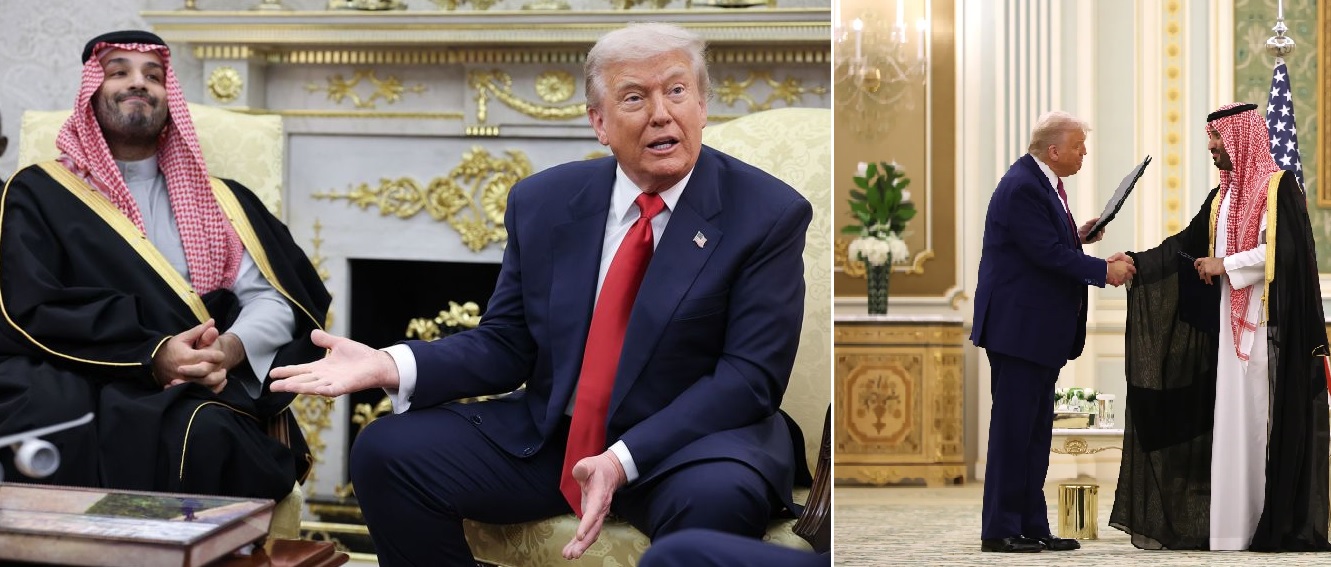
Oval Office meeting between former U.S. President Donald J. Trump and Saudi Crown Prince Mohammed bin Salman has ignited both economic enthusiasm and political controversy, after the Saudi leader agreed on the spot to expand planned Saudi investments in the United States from $600 billion to nearly $1 trillion.
The dramatic pledge, made during a live press availability, was quickly overshadowed by Trump’s startling comments appearing to downplay the 2018 assassination of American-Saudi journalist Jamal Khashoggi, prompting sharp criticism from human-rights groups and political opponents.
A Public Display of “The Art of the Deal”
The meeting began as a standard diplomatic engagement showcasing U.S.–Saudi economic cooperation. But it took a dramatic turn when Trump pressed the Crown Prince directly:
TRUMP: “You're saying to me now the $600 billion will be $1 trillion?”
MBS: “Definitely!”
The Crown Prince elaborated that the expanded investment would target technology, artificial intelligence, advanced manufacturing, energy, and next-generation materials, saying it would create “a lot of investment opportunities” inside the United States.
Saudi Arabia’s Public Investment Fund (PIF) has already poured tens of billions into U.S. tech, sports, defense, and infrastructure ventures. A jump to $1 trillion would represent one of the largest sovereign investment commitments in U.S. history.
Economic Significance
Analysts note that such an investment could reshape segments of the U.S. economy:
-
Major boosts to AI development, quantum research, and high-tech manufacturing.
-
Expanded joint ventures in defense, aerospace, and critical minerals.
-
Potential political leverage for Saudi Arabia in Washington policymaking.
-
A dramatic rise in Saudi-funded American jobs, especially in tech hubs.
Trump immediately framed the exchange as “the Art of the Deal in action,” calling it proof of his ability to negotiate with global leaders.
But the Celebration Was Short-Lived
During the same media session, Trump shocked many observers when he appeared to minimize the Saudi regime’s murder of Jamal Khashoggi, the Washington Post columnist killed and dismembered inside the Saudi consulate in Istanbul in October 2018.
Despite the CIA, under Trump’s own presidency, concluding that Crown Prince Mohammed bin Salman personally ordered the operation, Trump made remarks suggesting Khashoggi was a “controversial figure” whom “a lot of people didn’t like.”
Civil liberties organizations immediately condemned the comments as dangerous and irresponsible.
Human Rights Groups Respond
Amnesty International called Trump’s remarks “a disgraceful justification of a brutal murder.”
Reporters Without Borders warned that normalizing such attacks on journalists could have “global consequences for press freedom.”
Democratic lawmakers accused Trump of “siding with authoritarian killers over American journalism.”
Saudi Reaction and International Implications
Saudi officials did not publicly comment on Trump’s statements about Khashoggi, but Riyadh welcomed the focus on economic cooperation, presenting the investment pledge as part of Vision 2030 — the kingdom’s long-term economic transformation plan.
Internationally, the news has produced a mixed reaction:
-
European leaders expressed concern over Trump’s rhetoric on the Khashoggi case.
-
Investors reacted positively to the potential flood of Saudi capital.
-
Middle East analysts warned that Trump’s comments may further embolden Saudi Arabia’s regional posture.
Political Fallout in the U.S.
While Trump and the Crown Prince celebrated their economic announcement, critics argue that economic gains cannot overshadow human-rights considerations.
Political analysts say the incident may become a flashpoint in the 2026 political landscape, raising questions about:
-
Trump’s willingness to confront authoritarian abuses
-
The role of foreign investment in U.S. national security
-
Washington’s long-term strategy in the Middle East
For now, however, Trump has doubled down, calling the meeting “a historic success” and claiming that no other leader could have secured such a deal.
The Oval Office meeting delivered a monumental economic promise — nearly $1 trillion in Saudi investment — but Trump’s remarks about the murder of Jamal Khashoggi have triggered widespread backlash, once again placing the former president at the center of an intense geopolitical and moral debate.
The coming weeks will determine whether the economic triumph overshadows the political controversy, or whether Trump’s comments become yet another defining controversy in U.S.–Saudi relations.
About the Author
Aditya Kumar:
Defense & Geopolitics Analyst
Aditya Kumar tracks military developments in South Asia, specializing in Indian missile technology and naval strategy.