Russia’s S-400 Air-Defence System Exposed As Vulnerable, RUSI Report
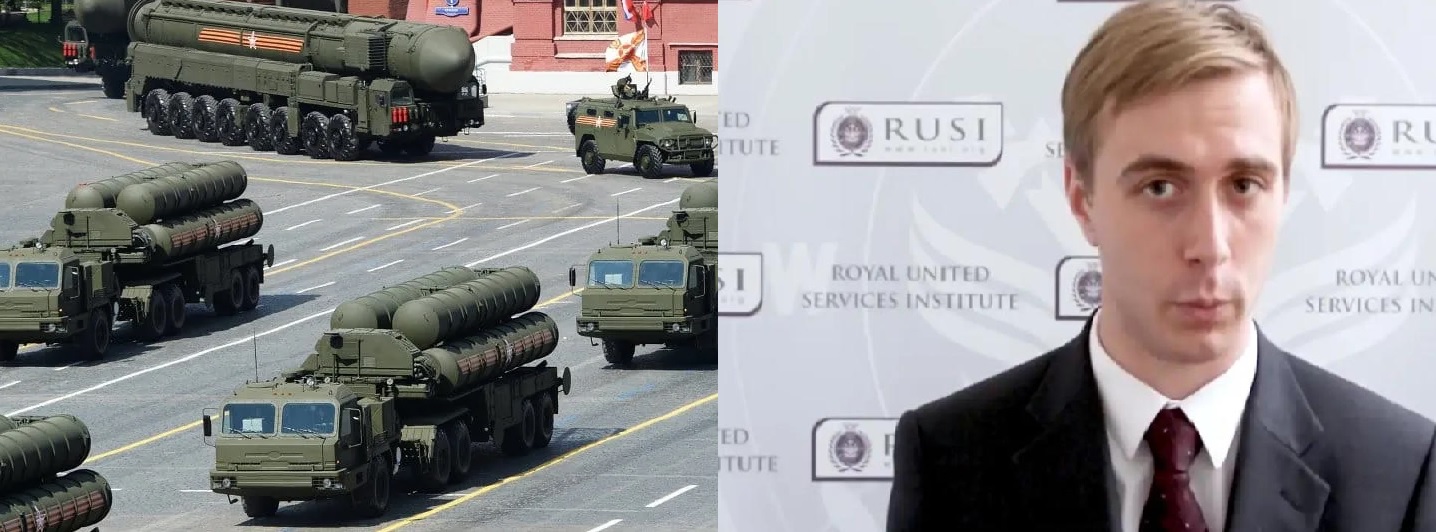
Russia’s much-promoted S-400 air-defence system suffers from serious structural and industrial weaknesses that undermine its long-term effectiveness, according to a detailed new report by the Royal United Services Institute (RUSI). The study finds that the system depends heavily on foreign-made electronics, Western software, and a small number of domestic production sites — factors that together leave it highly exposed to sanctions, cyber interference, and targeted attacks.
The report, Disrupting Russian Air Defence Production: Reclaiming the Sky, shifts attention away from battlefield performance and towards the industrial ecosystem sustaining the S-400. By mapping supply chains, manufacturing facilities and procurement routes, RUSI concludes that Russia’s ability to produce, maintain and replace S-400 components is far more fragile than official narratives suggest.
Foreign Electronics At The Core
Despite years of official claims about technological self-sufficiency, RUSI finds that critical parts of the S-400 rely on imported electronics and materials. These include high-frequency printed circuit board laminates produced by the U.S. firm Rogers Corporation, along with advanced test and measurement equipment manufactured by Keysight Technologies and National Instruments.
Such equipment is essential for calibrating radar systems, verifying missile electronics, and ensuring system reliability. According to RUSI’s analysis of trade data, large volumes of Western-made equipment have continued to reach Russian defence firms through indirect routes, often via China, Hong Kong and other intermediary jurisdictions. This dependence on a narrow group of foreign suppliers creates clear choke points that could be exploited through tighter export controls and enforcement.
Software And Cyber Exposure
The report also highlights Russia’s reliance on foreign design and simulation software used in the development of radar and radio-frequency systems. Tools such as Altium Designer, Ansys, and AWR Microwave Office remain widely used across Russia’s defence electronics sector, despite government-backed efforts to promote domestic alternatives.
RUSI notes that this software dependence introduces additional cyber vulnerabilities. Disruptions to licensing, updates, or vendor support could slow development timelines, while reliance on foreign code increases exposure to cyber-intrusion and supply-chain compromise. Job listings and procurement documents reviewed by the institute suggest Russia has not yet fully replaced these tools.
Concentrated Production Sites
Beyond foreign inputs, the physical geography of S-400 production presents another weakness. RUSI identifies a limited number of Russian enterprises responsible for key elements of the system, including missile design, final assembly, radar manufacturing, and engine production.
Many of these facilities are clustered at a small number of locations, creating single points of failure. The report notes that several sites are within range of Ukrainian long-range strikes or covert operations. Damage to specialised tooling or skilled labour hubs at these plants could have disproportionate effects on output.
Sanctions Leakage And Enforcement Gaps
RUSI’s findings underline persistent weaknesses in the global sanctions regime. While many identified components are classified as dual-use, their role in advanced weapons systems is well established. The report argues that inconsistent enforcement and limited oversight of re-export routes have allowed critical items to continue flowing into Russia’s defence sector.
The institute stresses that the problem is not the absence of sanctions, but their uneven application. Without coordinated pressure on intermediary suppliers and transit countries, Russia has maintained access to key technologies despite formal restrictions.
Implications For the War in Ukraine
Taken together, the report challenges the image of the S-400 as a resilient and self-contained system. RUSI concludes that sustained pressure on supply chains, software access, and production facilities could reduce the availability and reliability of Russia’s air-defence network over time.
Such disruption would not lead to immediate battlefield collapse, the authors caution, but could result in slower replacement of losses, longer maintenance cycles, and declining radar and missile performance — cumulatively weakening Russia’s ability to protect military assets and infrastructure.
A Strategic Shift
RUSI argues that degrading Russian air defence may be more achievable through industrial, economic and cyber measures than through direct military confrontation alone. By targeting specific materials, tools and facilities, Western governments and Ukraine’s partners could raise the cost and complexity of sustaining systems like the S-400.
The report concludes that Russia’s air-defence shield is ultimately only as strong as the supply chains behind it — and those supply chains, RUSI finds, remain exposed.
About the Author
Aditya Kumar:
Defense & Geopolitics Analyst
Aditya Kumar tracks military developments in South Asia, specializing in Indian missile technology and naval strategy.