Russian Su-57 Conducts First Flight With Next-Generation Izdeliye-177 Engine
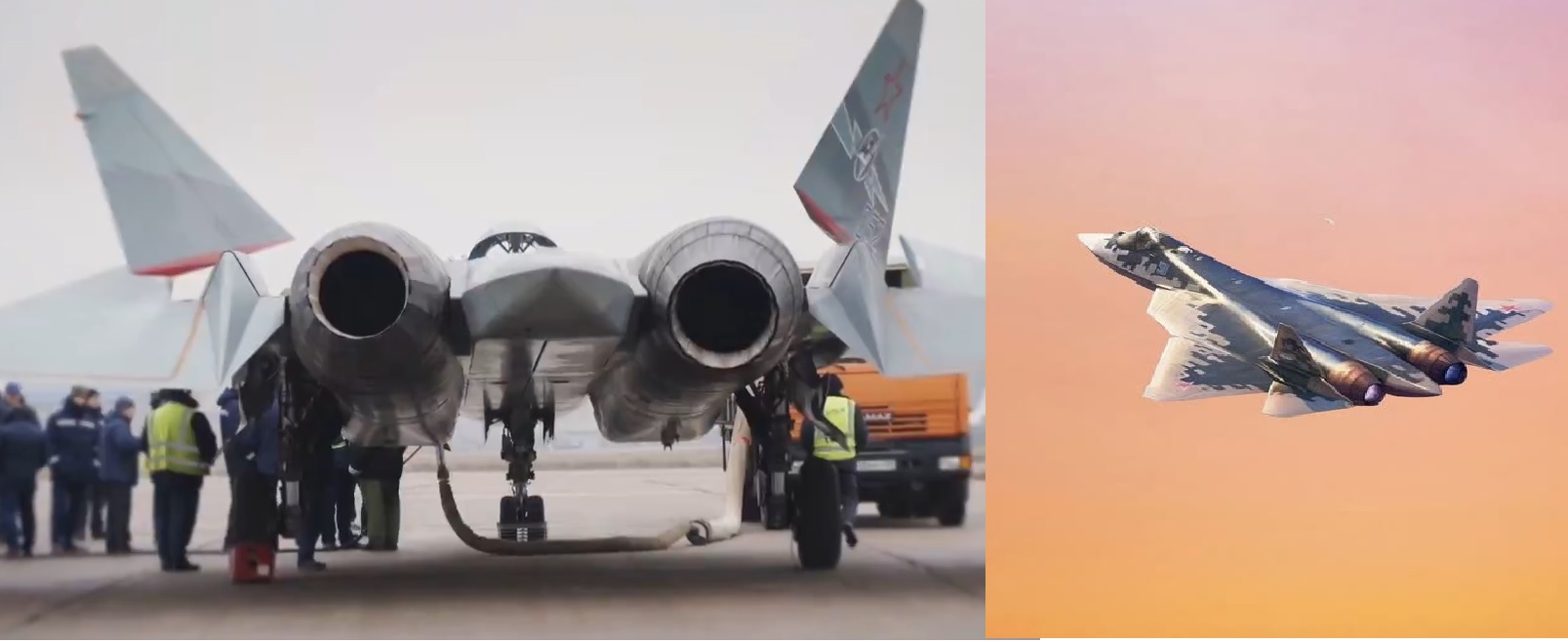
On 22 December 2025, Russia has taken a significant step forward in its fifth-generation fighter programme after the Sukhoi Su-57 successfully completed its first flight powered by the next-generation Izdeliye-177 (Product-177) engine. The flight marks the first confirmed airborne test of the new powerplant on the Su-57 platform and is being viewed as a crucial milestone in addressing long-standing performance and propulsion challenges.
The test flight was announced by Russia’s state defence and industrial conglomerate Rostec, which said the sortie was carried out as part of the Su-57 fifth-generation aircraft programme. The aircraft was flown by Honoured Test Pilot of Russia Roman Kondratyev, and the flight proceeded strictly according to plan, with no deviations or technical issues reported.
New Engine Enters Flight-Test Phase
According to Rostec, the flight marks the beginning of a dedicated flight-test campaign for the Izdeliye-177 engine. The programme is being conducted by specialists from the United Aircraft Corporation and the United Engine Corporation, both subsidiaries of the state corporation.
The Izdeliye-177, described as a fifth-generation engine, is expected to deliver higher thrust, improved fuel efficiency, and enhanced overall flight performance. Rostec said the engine also provides a technological foundation for future upgrades, allowing the Su-57 platform to evolve over time.
Interim Engines And Long-Standing Limitations
Until now, operational and production Su-57 fighters have primarily flown with an interim powerplant, the AL-41F1, also known as Izdeliye-117. While reliable, this engine is derived from earlier Russian fighter designs and has long been considered a stopgap solution rather than a true fifth-generation powerplant.
The reliance on the AL-41F1 has been one of the most persistent criticisms of the Su-57 programme. Defence analysts have pointed to limited sustained supercruise capability, lower fuel efficiency, higher infrared signature, and restricted growth potential as key shortcomings. Engine development delays have also contributed to slower production rates and postponed the arrival of a fully standardised Su-57 configuration.
Why Izdeliye-177 Is Critical
The transition to the Izdeliye-177 engine is intended to resolve these issues and move the Su-57 closer to its original design goals. While detailed specifications remain classified, Russian officials say the new engine offers greater thrust margins, better thermal efficiency, and reduced maintenance demands compared with its predecessor.
Rostec has indicated that the engine is designed not only to close existing capability gaps but also to support future variants of the Su-57, potentially incorporating enhanced avionics, new weapons systems, and expanded mission roles.
Role Of The Su-57 Fighter
The Su-57 is Russia’s primary fifth-generation multirole combat aircraft, designed to perform air-to-air, air-to-ground, and maritime strike missions. It is intended to operate around the clock, in adverse weather, and in electronically contested environments. Its low-observable design aims to reduce detection by modern air-defence systems, enabling deep penetration and precision strikes against high-value targets.
Next Steps In The Programme
With the first flight of the Izdeliye-177-powered Su-57 now completed, additional test sorties are expected to evaluate the engine across a broader flight envelope and under varied operational conditions. If the test campaign proceeds successfully, the new engine could represent a turning point for the Su-57 programme.
For Russia’s aerospace industry, the flight signals renewed momentum in a project that has faced years of scrutiny, placing the spotlight firmly on propulsion—long considered the aircraft’s weakest link—as it moves toward a fully realised fifth-generation fighter.
✍️ This article is written by the team of The Defense News.