Russian Navy Expected to Receive Velikiye Luki Submarine After Six-Year Delay
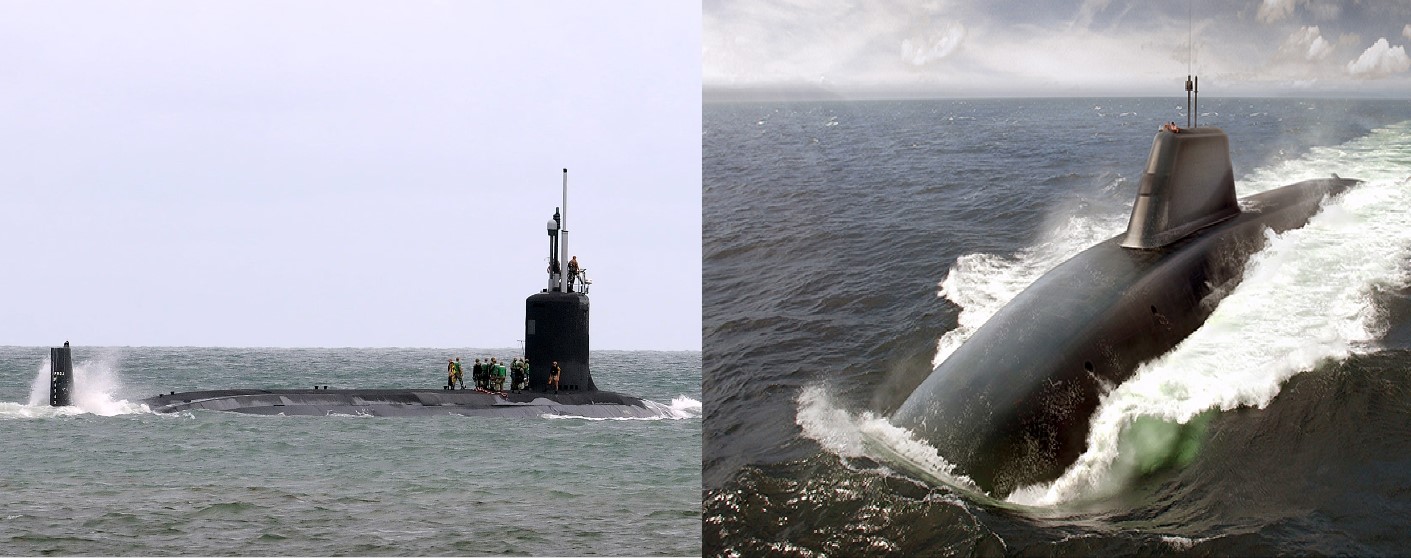
Russia’s attempt to finally bring the diesel-electric submarine B-587 Velikiye Luki into active fleet service represents more than the completion of a single naval platform—it reflects the struggle, recalibration, and persistence of an entire submarine program that has spent nearly two decades chasing its intended performance. As of late November 2025, indications from Russian naval observers suggest that Admiralty Shipyards hopes to deliver the submarine to the Navy before the New Year, closing one of the most extended development chapters in modern Russian non-nuclear shipbuilding.
The submarine remains in trials for now, but it is undergoing what officials and industry insiders quietly describe as the final sequence of its Baltic test program.
The Final Push After Years of Trial Cycles
For much of 2024 and 2025, the Velikiye Luki has repeatedly left port for test sorties, only to return to the shipyard days or weeks later for refinements. This rhythm—trial, return, adjust, and resume—has defined the submarine’s life since it began sea trials in December 2023.
What stands out is the methodical depth progression of its tests:
-
In December 2024, the boat descended to around 100 meters, validating basic integrity and key systems.
-
By July 2024, with Baltic Fleet support, it pushed toward 180 meters, testing emergency procedures, propulsion reliability, sonar performance, and system coordination at more demanding pressures.
Each trial has revealed something—sometimes an improvement, sometimes a problem requiring correction. That cycle, though normal for advanced naval vessels, appears to have been unusually prolonged for this submarine. Whether the delays reflect the complexity of integrating the revised Project 677M standard, or lingering issues inherited from earlier Lada-class prototypes, is something Russian officials have not clarified.
But the pattern is evident: the submarine is nearing its acceptance threshold, and its current trial phases are described as the last significant hurdle before commissioning.
A Submarine Defined by Delays, Redesigns, and Shifting Expectations
The Velikiye Luki was not always called by that name. Laid down in 2006 as Sevastopol, it was one of the early members of the Lada-class lineage—Russia’s intended successor to the aging Kilo-class.
But the Lada program ran into trouble almost immediately. The lead vessel, B-585 Sankt Peterburg, struggled with propulsion, noise levels, electrical performance, and onboard systems integration. By 2009, Russia paused work on the second and third boats, including the early Velikiye Luki hull.
A reassessment followed.
Years later—by 2014 and 2015—the program was revived, redesigned, renamed, and the submarine was re-laid under the improved Project 677M architecture. Initial optimism again led to ambitious deadlines: delivery in 2018, then in 2019, then 2021, 2022, and 2024.
By December 2022, the submarine was finally launched. It even appeared at the 2023 Main Naval Parade, signaling that progress was happening. But real testing—the kind that reveals whether a submarine truly performs as expected—did not start until late 2023, setting the stage for the long trial sequence that continues today.
Thus, the submarine arriving in the fleet around New Year 2025 would close a chapter stretching nearly two decades from first steel cutting to operational readiness.
A Closer Look at What Velikiye Luki Represents Technically
The submarine now aligns with the Project 677M Lada-class standard—a compact, low-noise, modernized design conceived for Russia’s shallow and acoustically complex internal seas.
Its technical attributes reflect this focus:
-
A submerged displacement of around 2,650 tons, far lighter and smaller than the more common Project 636.3 Kilo-class units.
-
A single-shaft diesel-electric propulsion system powered by two diesel generators and a main electric motor capable of speeds up to 21 knots underwater.
-
Two large battery groups intended to enhance submerged endurance, an area where Russia has historically lagged behind Western AIP-equipped designs.
-
Stealth-oriented design elements, from hull coatings to vibration isolation, meant to reduce detectability.
Weapons capability remains similar to the Kilo-class:
-
Six 533 mm torpedo tubes
-
A standard complement of up to 18 torpedoes or mines
-
The ability to fire Kalibr cruise missiles from torpedo tubes for land-attack or anti-ship missions
Even minor surface-defense features, such as stored Igla or Verba MANPADS, reflect how Russian designers imagined practical self-defense scenarios. Observers also noted the submarine temporarily carrying a heavy machine gun atop its sail during certain fitting periods—a sight not typical, but not unheard of for Russian submarines under construction.
Importantly, the Velikiye Luki does not incorporate an air-independent propulsion (AIP) module, even though such technology was studied for later variants. The absence of AIP slightly limits its submerged endurance compared to German or Swedish equivalents, but Russia has balanced that limitation with battery capacity and acoustic improvements.
The Larger Context: A Submarine Class Trying to Prove Its Worth
To understand why completing Velikiye Luki matters to Russia, one must see where the Lada-class stands today.
The program was intended to be Russia’s next-generation non-nuclear submarine family—lighter, quieter, more advanced, and more exportable than the Kilo line. But chronic engineering issues, funding interruptions, and shifting naval priorities have repeatedly stalled progress.
-
The lead boat Sankt Peterburg never achieved the performance levels envisioned and is reportedly slated for retirement rather than modernization.
-
The second boat, Kronstadt, took from 2005 to 2024 to enter service.
-
The two newer units, Vologda and Yaroslavl, laid down in 2022, have since had work suspended due to funding shortages.
Thus, Velikiye Luki, if delivered by year-end, becomes not merely another submarine but a proof-of-concept milestone for Russia’s ability to field operational 677M-class boats in meaningful numbers.
Why the Baltic Fleet Wants This Submarine
For the Baltic Fleet, a vessel like Velikiye Luki offers specific advantages:
-
It is compact and maneuverable in shallow waters.
-
Its acoustic profile is lower than the older Kilo-class submarines.
-
Its Kalibr-launch capability allows the Fleet to pose both regional and extended-range threats.
-
It is suitable for anti-submarine warfare, anti-surface missions, chokepoint monitoring, and coastal defense.
In a region where NATO’s maritime surveillance networks are dense, a stealthier submarine—if it performs as intended—provides Russia with greater flexibility and a more modern undersea asset.
What This Delivery Would Symbolize
If Admiralty Shipyards does succeed in handing over the submarine before the end of 2025, several implications follow:
-
The 677M design may finally be stabilizing, giving Russia confidence to proceed with additional units when funding allows.
-
The Navy would gain a submarine optimized for its most politically and militarily sensitive maritime region—the Baltic.
-
The shipyard would score a rare success amid sanctions and industrial constraints that have challenged Russia’s defense production.
-
The Lada-class, after years of doubt, would take a step closer to proving that it still has a future in Russia’s naval doctrine.
After nearly two decades, the Velikiye Luki stands on the threshold of joining the fleet. Its story is one of long delays, cautious optimism, and the persistent effort to bring a modern non-nuclear submarine program to maturity. Whether the handover happens this year or slips again into early 2026, the submarine’s final trial runs mark the closing phase of one of the Russian Navy’s most protracted development journeys.
About the Author
Aditya Kumar:
Defense & Geopolitics Analyst
Aditya Kumar tracks military developments in South Asia, specializing in Indian missile technology and naval strategy.