Russian Forces Reportedly Deploy Chinese Silent Hunter Laser System in Ukraine
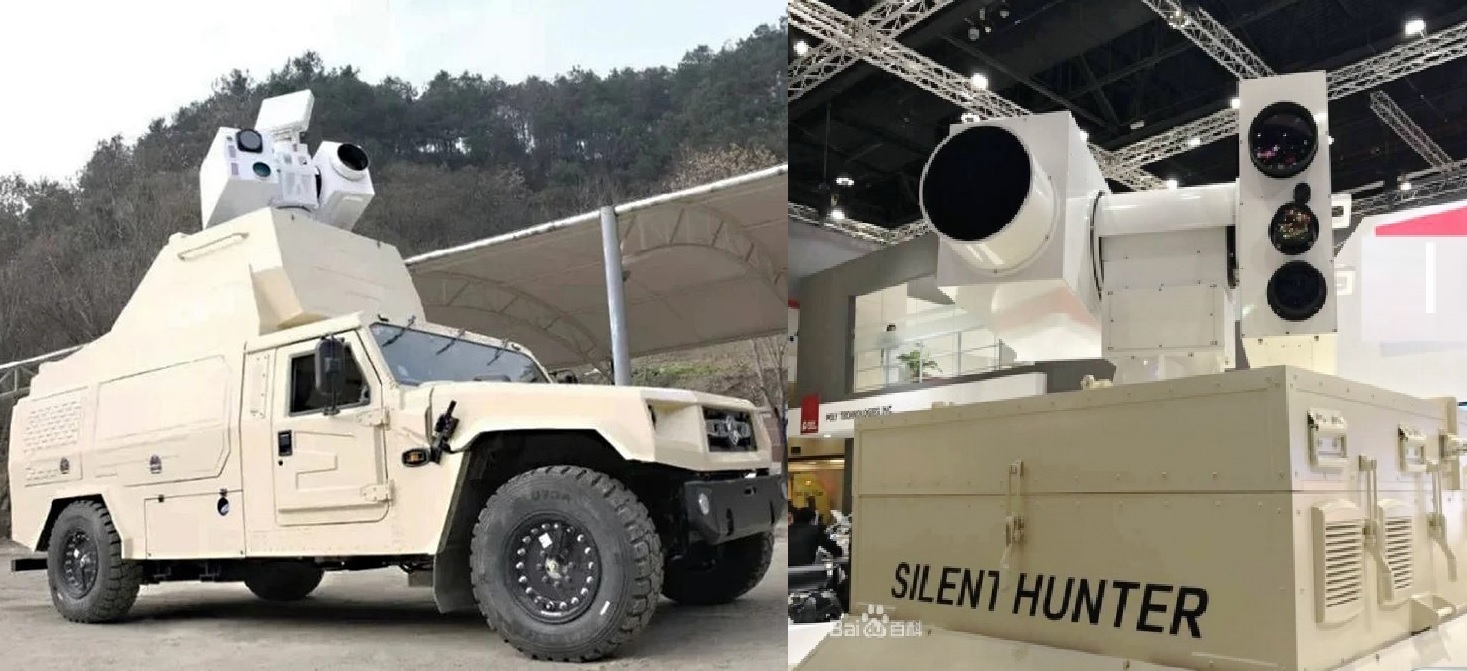
Russian military units operating in Ukraine have reportedly begun using the Chinese-developed Silent Hunter laser air defense system, according to material published on multiple Russian military–affiliated social media platforms and assessed by open-source intelligence analysts. While neither Moscow nor Beijing has officially confirmed the deployment, the system’s apparent presence in frontline conditions would mark the first known combat use of China’s export-oriented directed-energy weapon.
The reported deployment comes as both sides of the conflict seek cost-effective countermeasures against the rapid expansion of drone warfare. With unmanned aerial vehicles (UAVs) now dominating reconnaissance, strike, and harassment roles, traditional missile-based air defense systems have struggled to keep pace with the scale, speed, and economics of the threat.
Visual Evidence Points to Silent Hunter
Footage circulating online shows a laser-equipped combat vehicle mounted on a modified 6×6 tactical truck, featuring a roof-mounted laser turret, electro-optical tracking sensors, and a dedicated onboard power generator. Analysts note that the configuration closely matches the Silent Hunter system previously displayed by Poly Technologies at international defense exhibitions.
Although no official confirmation has been issued, the turret design, sensor layout, and beam optics leave little doubt about the system’s identity. The platform appears consistent with Chinese export variants marketed for counter-UAV and point-defense roles, suggesting operational rather than experimental use.
Capabilities and Tactical Significance
The Silent Hunter is a high-energy fiber-optic laser air defense system designed to neutralize low-altitude aerial threats, particularly small and medium-sized drones. Depending on the variant, the system reportedly produces between 30 and 100 kilowatts of laser power, enabling effective engagement at ranges of up to 1.5 kilometers.
The laser disables targets by burning through drone airframes, sensors, or propulsion systems, often within seconds. It can operate autonomously using its optical tracking suite or receive targeting data from external radar and sensor networks. Unlike conventional air defenses, Silent Hunter emits no radar signals during engagement and requires no ammunition, offering a significant logistical advantage.
For Russian forces, the system’s key value lies in its low per-engagement cost, rapid reaction time, and ability to counter persistent UAV saturation, a challenge that has repeatedly strained Russian air defenses across multiple sectors of the front.
China’s Expanding Role Behind the Scenes
The appearance of Silent Hunter on the battlefield highlights China’s expanding but carefully managed role in supporting Russian military capabilities. Since the launch of Russia’s full-scale invasion of Ukraine in February 2022, Beijing has publicly maintained a neutral diplomatic posture while opposing Western sanctions.
In practice, China has supplied Russia with dual-use technologies, including semiconductors, thermal imaging components, navigation equipment, and UAV-related systems. The reported fielding of a Chinese-directed energy weapon would represent a notable escalation, placing advanced Chinese military hardware directly into an active high-intensity conflict.
For Beijing, Ukraine provides a real-world testing environment to evaluate advanced systems under combat conditions. Successful battlefield validation of Silent Hunter could significantly boost China’s position in the global arms export market, particularly among states seeking affordable counter-drone solutions.
Ukraine Also Deploys Laser-Based Capabilities
Evidence has also emerged suggesting that Ukraine is fielding its own laser-based systems. Video footage published on December 20, 2025, by crew members of a Turkish amphibious vessel docked in Odessa shows Ukrainian air defense positions emitting two distinct laser beams near anti-aircraft artillery emplacements.
Open-source analysts and former NATO targeting specialists reviewing the footage describe the beams as stable, coherent, and actively focused, indicating operational use. Ukrainian authorities have released no official details, but defense experts identify several likely operational roles.
These include counter-optics missions to blind or disrupt drone electro-optical sensors, laser designation for guiding precision munitions such as APKWS-type rockets, and integration into broader air defense and target acquisition networks. The origin of the systems remains unclear, ranging from indigenous development to foreign-supplied or modified commercial platforms.
Directed-Energy Weapons Enter Combat Reality
The parallel appearance of laser weapons on both sides of the war marks a significant turning point. Directed-energy weapons, long confined to testing environments and static base defense, are now entering mobile frontline service.
This shift reflects the realities of modern warfare, where drone swarms, loitering munitions, and low-cost UAVs have exposed the limitations of traditional air defense models. Despite challenges such as weather sensitivity and line-of-sight dependence, lasers offer a rare combination of speed, precision, and sustainability.
Implications for NATO and Western Militaries
The developments in Ukraine are being closely monitored by NATO and Western defense planners. The United States and its allies have invested heavily in high-energy laser programs, including the U.S. Army’s DE M-SHORAD, the U.S. Navy’s HELIOS, and the United Kingdom’s DragonFire. None of these systems, however, have yet seen confirmed combat deployment.
By contrast, the reported use of China’s Silent Hunter and Ukraine’s tactical laser systems provides the first sustained glimpse into how directed-energy weapons perform in a drone-saturated, high-intensity war. The lessons emerging from Ukraine are likely to influence future procurement decisions, operational doctrine, and the broader great-power competition shaping the next generation of military technology.
As the conflict continues, Ukraine is increasingly serving as both a battlefield and a proving ground, where laser air defense systems are no longer theoretical concepts but an operational reality of modern warfare.
✍️ This article is written by the team of The Defense News.