Russian Duma Ratifies Defence Treaty Enabling Indian and Russian Troop Deployments, Clears RELOS Logistics Pact
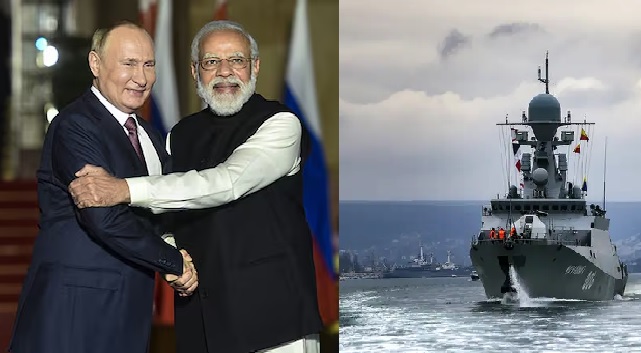
Russia’s State Duma has ratified a sweeping new India–Russia defence treaty that, for the first time, permits the deployment of troops, warships and military aircraft on each other’s territory. The breakthrough approval comes alongside the formal ratification of the Reciprocal Exchange of Logistic Support (RELOS) pact, significantly expanding operational cooperation just ahead of President Vladimir Putin’s visit to New Delhi.
The treaty authorises both sides to simultaneously deploy up to five warships, ten aircraft and 3,000 troops on the partner country’s soil for an initial five-year period, extendable by mutual consent. Russian lawmakers described the move as a major step toward a more integrated strategic relationship.
A Structural Shift in Military Access
The new treaty brings long-awaited clarity to military deployments. It replaces case-by-case permissions with a standing legal framework that covers joint exercises, training missions, counter-terror operations, evacuations and humanitarian assistance.
The agreement also regularises the use of ports, airfields, training ranges and airspace, allowing for faster, streamlined movement of personnel and equipment. It marks one of the most significant upgrades to India–Russia defence ties since the civil nuclear and energy agreements of the early 2000s.
RELOS: The Logistics Backbone
Ratified in parallel, the RELOS agreement puts India–Russia military cooperation on par with India’s logistics pacts with the United States, France, Australia and Japan.
With RELOS operational, both nations can:
-
Refuel, restock and perform maintenance at each other’s bases.
-
Use ports and airfields without lengthy diplomatic channels.
-
Reduce mission costs for long-distance naval or air deployments.
-
Conduct joint training and humanitarian missions with greater ease.
Crucially, RELOS opens up Russian facilities from Vladivostok to Murmansk, giving India unprecedented access to the Arctic and Northern Sea Route, a region gaining geopolitical and economic value.
India’s Strategic Gain After the Tajikistan Airbase Setback
India previously operated Ayni/Ayni-Farkhor airbase facilities in Tajikistan with Russian support, giving the Indian Air Force a rare presence in Central Asia. However, that arrangement did not progress into a long-term operational basing agreement due to political sensitivities and Tajikistan’s constraints.
While India’s direct access weakened after that period, the new India–Russia deployment treaty restores strategic leverage in Central Asia through Moscow’s footprint:
-
Tajikistan hosts Russia’s 201st Military Base, their largest overseas deployment.
-
With India now legally able to operate alongside Russian forces under defined terms, New Delhi gains indirect but credible access pathways into Central Asia for training, evacuations, counter-terror operations and logistical emergencies.
-
Russia’s continued influence in Tajikistan allows India to benefit from coordinated deployments, joint training opportunities and overflight facilitation, even if India does not have an independent base there.
In effect, the new treaty reopens Central Asian operating potential for India, something that had stagnated since the decline of the Tajikistan arrangement.
Strengthening India’s Reach From the Indian Ocean to the Arctic
The combined effect of the troop-deployment treaty and RELOS gives India several advantages:
Extended Deployment Range:
Indian warships and aircraft can now operate efficiently in the Russian Far East, Arctic, Baltic Sea and Central Asian theatres, backed by Russian logistics hubs.
Lower Operational Costs:
Standardised logistics support will significantly reduce expenses for long missions, naval task-group deployments and multinational exercises.
A Multi-Aligned Approach:
The ability to host Russian forces—while maintaining similar agreements with the U.S., France and Australia—underscores India’s independent strategic posture, avoiding alignment with any single bloc.
Revived Central Asia Connectivity:
The treaty creates operational opportunities in Central Asia that India has lacked since the Tajik base arrangement slowed, giving New Delhi renewed influence in a region critical for counter-terrorism and connectivity.
Russia’s Calculated Advantage
For Moscow, the agreements offer continued integration with one of the largest defence markets and long-term partners, while also providing direct access to Indian ports across the Indian Ocean Region. The pact serves as clear evidence that Russia retains viable and resilient strategic partnerships in Asia, even as Western sanctions attempt to limit its global engagement. The timing, arriving just ahead of President Putin’s India visit, underscores Moscow’s intent to strengthen its relationship with New Delhi at a moment of broad geopolitical realignment.
Ahead of the Modi–Putin Summit
With both treaties now ratified, the upcoming summit is expected to concentrate on formalising the implementation of RELOS, alongside reviewing major defence programmes, advancing the bilateral 2030 strategic roadmap, and expanding cooperation in the Russian Far East, energy corridors and emerging Arctic shipping routes.
A New Era of India–Russia Military Interoperability
Together, the troop-deployment treaty and the RELOS logistics pact signal the beginning of a more operational, flexible and less transactional phase in India–Russia defence relations.
For India, the agreements provide global reach from the Indian Ocean to the Arctic, renewed leverage in Central Asia, reduced deployment and operational costs, and broader strategic autonomy across multiple theatres.
For Russia, the framework ensures secure access to the Indian Ocean, a strengthened Asian partnership, and a reaffirmation of its continued geopolitical relevance despite international pressures.
These agreements are expected to move into active implementation within weeks, marking one of the most consequential upgrades in India–Russia military cooperation in recent decades.
About the Author
Aditya Kumar:
Defense & Geopolitics Analyst
Aditya Kumar tracks military developments in South Asia, specializing in Indian missile technology and naval strategy.