Russia and North Korea Sign Partnership Deal Amid Rising Tensions with the West
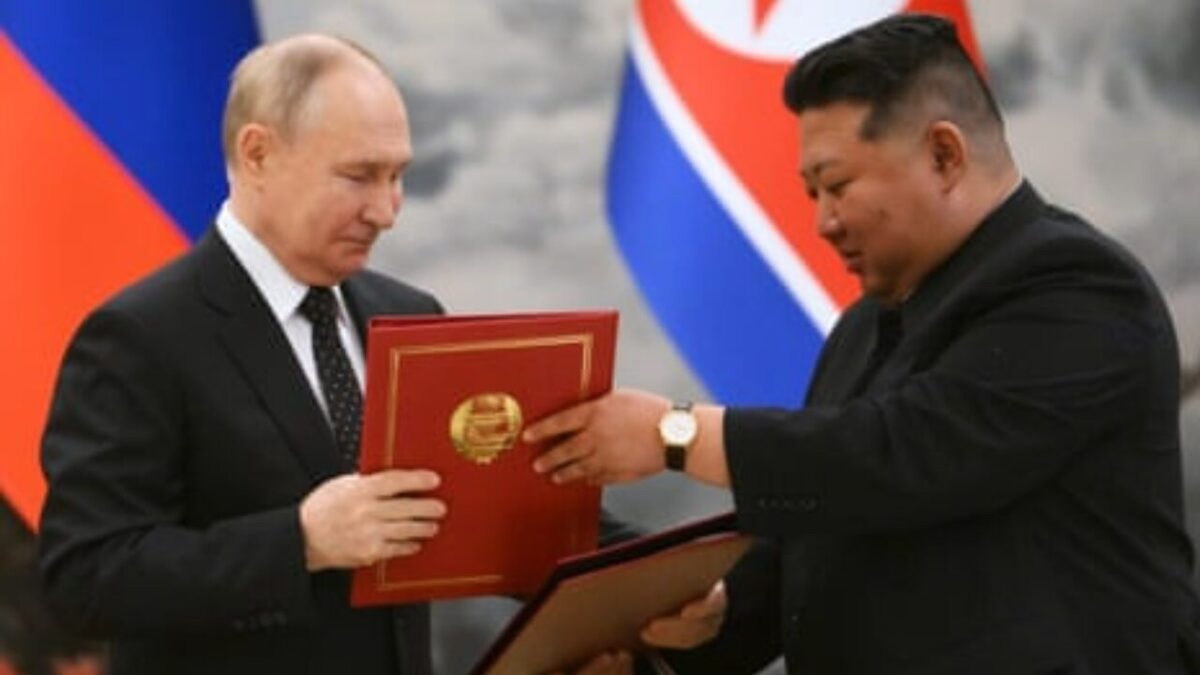
Putin and Kim Jong Un sign a mutual aid agreement, strengthening ties between Russia and North Korea amid rising tensions with the West, while details of their pact remain undisclosed.
Russian President Vladimir Putin and North Korean leader Kim Jong Un signed a mutual aid agreement on Wednesday, pledging support if either country faces aggression. This pact marks a significant step in their relationship amid escalating conflicts with Western nations.
The specifics of the agreement remain undisclosed, but it's considered the strongest alliance between Moscow and Pyongyang since the Cold War. Both leaders emphasized the agreement's importance, which encompasses security, trade, investment, and cultural cooperation.
The summit took place during Putin's first visit to North Korea in 24 years. This comes as concerns grow over potential arms deals, with Pyongyang possibly supplying Moscow with munitions for the war in Ukraine in exchange for economic aid and technology transfers.
After North Korea, Putin traveled to Vietnam to strengthen ties with another long-time partner. In Hanoi, he met Communist Party General Secretary Nguyen Phu Trong and new President To Lam, reinforcing Russia's connections in the region.
In North Korea, Kim described the relationship with Russia as a "fiery friendship" and the agreement as their "strongest ever treaty." He expressed full support for Russia's war in Ukraine. The leaders' summit featured significant displays of unity, including a motorcade through Pyongyang, decorated with Russian flags and portraits of Putin.
The historical context includes a 1961 treaty between North Korea and the Soviet Union, which required Moscow to intervene militarily if the North was attacked. This treaty was replaced in 2000 with weaker security assurances. It's unclear if the new agreement reinstates a similar level of military commitment.
The summit featured a ceremonial welcome for Putin, including an honor guard, red carpet, and thousands of spectators waving flags and flowers. Kim introduced key officials to Putin, including his powerful sister, Kim Yo Jong.
Putin thanked Kim for North Korea's support in Ukraine, framing it as a struggle against U.S. hegemonic policies. He highlighted historical ties, referencing Soviet support during the Korean War.
Details on the mutual assistance pledged remain vague, with no specifics on whether it includes military support or other forms of aid. Both nations deny accusations of weapons transfers, which would violate U.N. sanctions.
The visit concluded with cultural events and gift exchanges. Putin presented Kim with a Russian-made Aurus limousine, a tea set, and a naval officer's dagger, while Kim gave Putin artwork depicting the Russian leader. They attended a concert showcasing North Korean soldiers and patriotic performances.
In Washington, U.S. Secretary of State Antony Blinken criticized Putin's visit, interpreting it as Russia seeking support amid its war in Ukraine. South Korea's Unification Ministry is still analyzing the summit's implications.
China, North Korea's primary ally, has refrained from detailed comments but acknowledged the high-level exchanges. Analysts suggest the partnership aims to make the West uneasy and demonstrate Moscow's global influence.
Potential outcomes of the summit include increased North Korean labor exports to Russia and expanded cooperation in agriculture, fisheries, and mining. The heightened tensions on the Korean Peninsula continue, with frequent weapons tests and military exercises from both sides.
✍️ This article is written by the team of The Defense News.