Russia Will Carry Out More Oreshnik Missile Tests in Conflict with Ukraine
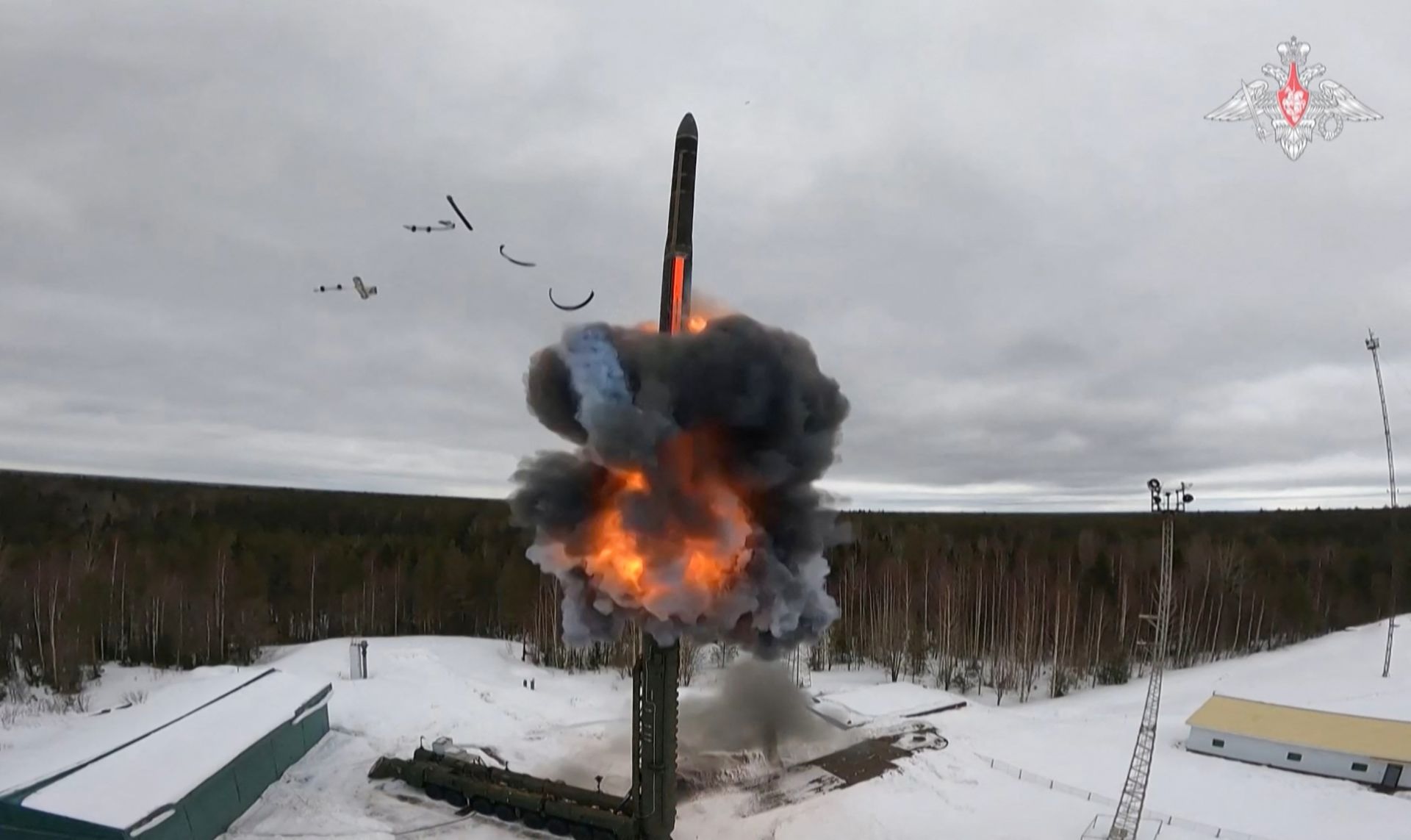
In a bold declaration that underscores Russia's escalating military posture, President Vladimir Putin announced plans to intensify testing of the hypersonic Oreshnik ballistic missile under "combat conditions." Speaking during a televised meeting with top military officials on Friday, Putin framed the move as a direct response to evolving security threats and recent actions by Ukrainian forces employing Western-supplied weaponry.
The Oreshnik missile, unveiled as a hallmark of Russia's advanced weapons technology, is designed to fly at a blistering speed of Mach 10, or ten times the speed of sound. The missile’s test deployment over the Ukrainian city of Dnipro on Thursday marked a significant step in Moscow’s strategy, introducing a new generation of high-speed, high-precision ballistic weaponry to the nearly three-year-long conflict. Putin referred to the weapon as a critical safeguard for Russia's sovereignty and territorial integrity, emphasizing its unique capabilities in the global arena.
“We will continue these tests, including in combat conditions, depending on the situation and the nature of security threats posed to Russia,” Putin stated. His address highlighted the missile's ability to adapt to strategic requirements, enhancing its value as both a deterrent and a response tool.
A Leap in Hypersonic Technology
The Kremlin has touted the Oreshnik missile as a testament to Russia’s technological edge in hypersonic weaponry. Unlike conventional ballistic missiles, hypersonic variants such as the Oreshnik can maneuver mid-flight, making them harder to detect and intercept. Putin claimed that no other country currently possesses comparable technology, asserting that while other states might catch up in a year or two, Russia has already achieved operational capability.
This strategic advantage was further solidified by Putin’s directive to commence serial production of the Oreshnik missile. “The decision has, in effect, been taken,” he said, expressing confidence in the missile's "particular strength and power." This push for mass production suggests that the missile will soon become a staple in Russia’s arsenal, ready for deployment in a broader range of military scenarios.
Escalation in Response to Western Arms
The timing of the Oreshnik’s deployment and subsequent announcements is significant. Russia’s test strike on Dnipro came shortly after Ukrainian forces used U.S. and U.K.-supplied missiles to target Russian territory. This marked a notable shift in the dynamics of the conflict, prompting Putin to issue stark warnings about potential retaliatory measures.
In a national address, Putin cautioned that Russia reserved the right to strike military facilities in nations whose arms are being used against it. The implicit threat directed toward the United States and Britain further highlights the Kremlin's willingness to escalate the conflict beyond Ukraine’s borders if deemed necessary.
A Symbol of Strength and Sovereignty
For Russia, the Oreshnik missile is more than just a weapon; it is a symbol of national resilience and technological supremacy. Putin described the missile system as a "faithful guarantee" of Russia's security, linking its development to the broader narrative of defending the country against external threats.
The decision to showcase the missile during a time of heightened conflict serves dual purposes: demonstrating Russia’s military capabilities to adversaries while rallying domestic support. By emphasizing the missile's advanced features and unparalleled speed, Putin seeks to reinforce the image of Russia as a dominant force in modern warfare.
As the Ukraine conflict continues to intensify, the introduction of the Oreshnik missile signals a dangerous new phase in the confrontation. With serial production on the horizon and further tests planned, the missile is poised to become a key element in Russia’s strategy, reshaping the geopolitical landscape in its wake.
✍️ This article is written by the team of The Defense News.