Russia Weighs Sharing Yasen-Class Nuclear Submarine Technologies With Zircon Missile For India’s Project-77 SSN Fleet
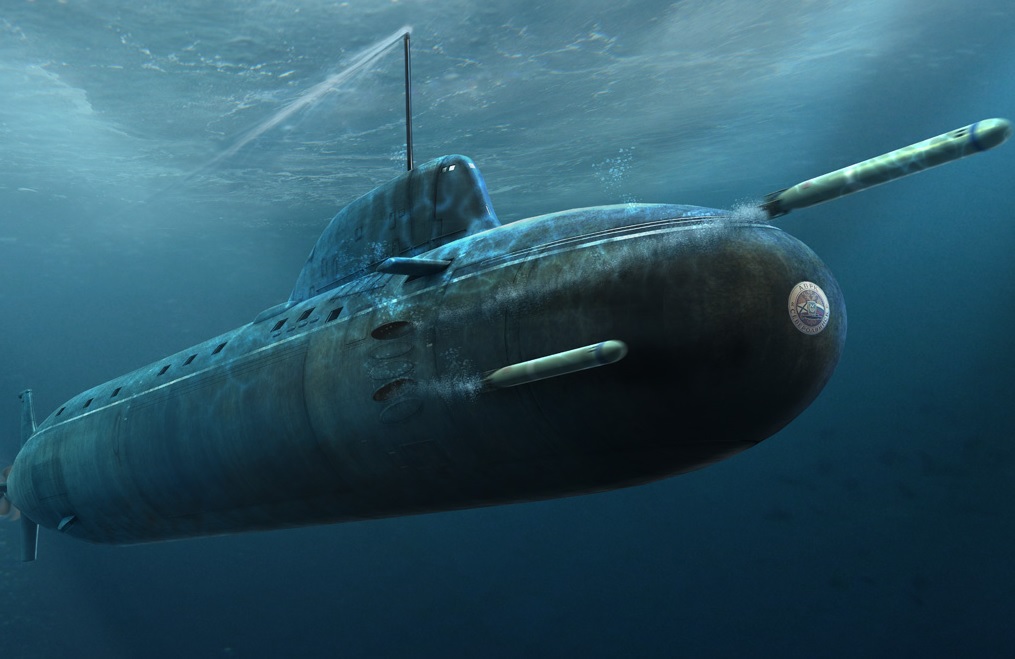
Russia is examining a plan to share critical technologies from its Yasen-class nuclear attack submarines with India in support of Project-77, New Delhi’s flagship programme to build a new fleet of indigenous nuclear-powered attack submarines (SSNs). The exploratory proposal, discussed in recent informal and track-II interactions between the two sides, centres on pump-jet propulsion, advanced sonar suites, acoustic-dampening materials, hydrodynamic design features, and potential integration pathways for long-range hypersonic weapons such as the 3M22 Zircon.
While neither government has officially confirmed such a package, the reported contours fit both India’s long-term naval plans and Russia’s push to monetise its most advanced underwater technologies for trusted partners.
Project-77: India’s Nuclear “Hunter-Killer” Fleet
Project-77 is the Indian Navy’s long-planned class of six nuclear-powered attack submarines, intended to give India a true blue-water, continuous under-sea deterrent and sea-denial capability across the Indian Ocean and into the wider Indo-Pacific. The programme, cleared in principle by the Cabinet Committee on Security, envisages large SSNs in the 6,000–10,000-ton class, designed by the Navy’s Warship Design Bureau and built at the Ship Building Centre in Visakhapatnam with very high indigenous content.
India plans to equip these submarines with a new generation pressurised light-water reactor being developed by the Bhabha Atomic Research Centre, scaling up experience from the Arihant-class ballistic missile submarines. Navy leaders have publicly stated a target force of six SSNs, with the first hulls expected to enter service in the mid- to late-2030s, and later boats benefiting from incremental design and technology upgrades.
Within that roadmap, New Delhi has been looking for “design consultancy” and niche technology inputs—not complete foreign designs—to accelerate work on hydrodynamics, quieting, combat systems and future weapon integration, while keeping core nuclear and structural design sovereign. Russia, India’s long-time undersea partner, remains the most politically feasible source for such assistance.
What Russia is Putting on the table
According to reports in the Indian defence press and Russian military-watch outlets, Moscow has indicated a willingness to discuss the transfer or co-development of several technologies derived from its Project 885/885M Yasen-class boats.
Key elements under exploratory discussion reportedly include:
-
Pump-jet propulsion:
Yasen-M boats are widely believed to use a pump-jet rather than a traditional open propeller, dramatically reducing cavitation and broadband noise at higher speeds. Transferring design data or assisting India in developing its own pump-jet would be one of the most sensitive parts of any deal, but also the single biggest acoustic upgrade for Project-77. -
Next-generation sonar and combat system architecture:
The talks are said to cover conformal bow sonars, flank arrays, towed passive arrays and high-speed processing suites, improving detection ranges against quiet submarines and surface ships. Russia could offer algorithms, array layout know-how and integration experience rather than turnkey systems, allowing India to blend them with its own DRDO and BEL hardware. -
Acoustic-dampening materials and quiet hull design:
Yasen-class submarines incorporate advanced anechoic tiles, raft-mounted machinery, and optimised hull forms to cut radiated noise. India is already working with new hull steels and composite structures for deeper-diving, quieter boats; Russian consultancy on tile recipes, machinery foundation design, and hydrodynamic shaping would shorten the trial-and-error cycle. -
Digital control and automation:
Project-77 submarines are planned with digital combat management, integrated platform management systems and high automation to reduce crew size and improve safety. Russian input from Yasen-M’s integrated control architecture could help India refine human–machine interfaces and redundancy concepts.
None of these areas involve handing over a complete Yasen blueprint, but even partial access to such design experience would be a significant leap for India’s still-maturing SSN design ecosystem.
Zircon and Hypersonic Strike: How Far Could Weapon Integration Go?
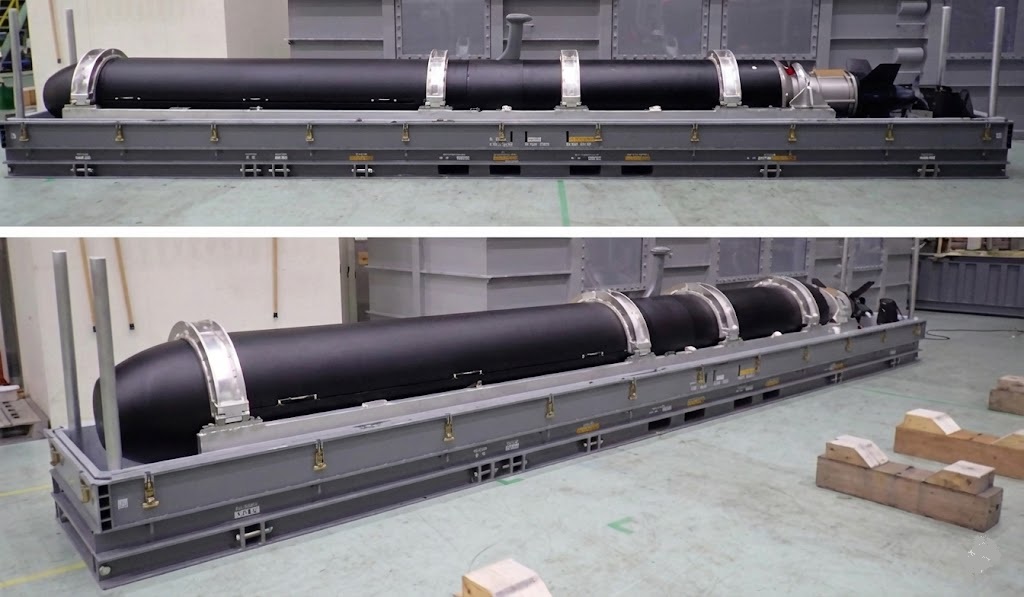
The most eye-catching aspect of the emerging narrative is the suggestion that Russia could help India integrate long-range weapons, including the 3M22 Zircon hypersonic missile with an advertised range around 1,000–1,500 km, onto future Indian SSNs.
Zircon is a Mach 8–9, scramjet-powered, sea-launched hypersonic cruise missile, already in limited operational service with the Russian Navy and used in the Ukraine war, and is designed to launch from standard 3S-14 vertical cells on ships and submarines.
However, any talk of direct Zircon export to India remains highly speculative and would run into multiple constraints:
-
Russia has not publicly confirmed export clearance for Zircon to any country.
-
India and Russia are already co-developing BrahMos-II/BrahMos-2K, a hypersonic missile family that is expected to draw heavily on Zircon technologies—airframe design, high-temperature materials and scramjet know-how—rather than being a one-for-one export.
-
Indian officials have signalled a preference for indigenised hypersonic weapons in the long run, including DRDO’s parallel hypersonic cruise missile work.
In that context, Russian assistance for Project-77 is more likely to focus on:
-
Designing universal vertical launch systems (VLS) on Indian SSNs that can accommodate future hypersonic cruise missiles and longer-range BrahMos variants in the 1,500–2,000 km class; and
-
Sharing interface standards and launch envelope data so those cells could, in theory, host an exportable derivative of Zircon if and when politics and export rules allow.
For India, the strategic draw is obvious: a nuclear-powered, hypersonic-armed SSN able to threaten high-value targets and carrier groups far from home waters would be a major deterrent signal to both China and Pakistan.
Why Russia is Courting India with High-End Submarine Tech
Moscow’s readiness to talk about Yasen-linked technologies for India sits at the intersection of economics, geopolitics and industrial strategy.
First, Russia faces budget and industrial pressures as it ramps up naval and missile production for its own fleet while absorbing heavy costs from the Ukraine conflict. Technology-for-cash deals with long-term partners like India provide both revenue and a way to keep key design bureaus and shipyards funded between domestic orders.
Second, India remains one of the few major powers willing to balance Western, Russian and indigenous platforms. New Delhi’s insistence on strategic autonomy and refusal to join sanctions over Ukraine make it a particularly attractive market for high-end Russian offerings—from Su-57E fighter packages with potential Zircon integration to submarine and hypersonic collaborations.
Third, by embedding its technology into India’s next-generation systems, Moscow ensures long-term interoperability and dependence on Russian spares, upgrades and consultancy, anchoring the relationship deep into the 2040s.
Benefits And Risks for India
For India, serious Yasen-derived technology transfer would bring clear advantages:
-
Time savings: Learning curves on quieting, hydrodynamics and propulsion could be compressed by years, if not a decade, compared with a purely solo approach.
-
Capability leap: A Project-77 boat that starts its life with pump-jet propulsion, low-observable design cues and hypersonic-ready VLS would be competitive with the most advanced SSNs in the wider Indo-Pacific.
-
Continuity: India has decades of operating experience with Russian nuclear submarines—from leased Charlie-class and Akula-II boats making crew transition and shore infrastructure adaptation smoother.
But there are also risks and constraints:
-
Technology ceilings: Russia is unlikely to part with its very latest or most sensitive design secrets, particularly around reactor physics and core acoustic signatures.
-
Sanctions exposure: Any deal that visibly deepens India–Russia defence integration, especially around hypersonic strike systems, will come under intense scrutiny from the United States and its allies, with potential CAATSA-style sanctions pressure.
-
Indigenous priorities: The Indian Navy and DRDO have repeatedly stressed that foreign help must not derail the goal of a largely indigenous SSN design ecosystem, particularly for future batches beyond the first six boats.
The Road Ahead: Exploratory Talks, Cautious Commitments
For now, the reported Yasen–Project-77 linkage remains at an exploratory stage—a blend of quiet discussions, industry outreach and signalling through semi-official media in both countries rather than a signed inter-governmental agreement.
Over the next few years, several markers will show how serious the proposal really is:
-
The fine print of Project-77 contracts signed by New Delhi—especially the language on “foreign design consultancy” and specific Russian partners involved.
-
Any visible move to standardise Indian SSN launch systems around dimensions compatible with Russian hypersonic weapons or their Indian derivatives.
-
Announcements on BrahMos-II/BrahMos-2K sea-based variants, which would naturally dovetail with the weapon architecture of future SSNs.
Even if Zircon itself never sails aboard an Indian hull, the broader package of Russian submarine know-how being offered could shape the design of India’s nuclear “hunter-killer” fleet for decades. For New Delhi, the challenge will be to extract maximum technological value from Moscow, preserve room for Western and indigenous inputs, and still steer Project-77 toward the fully sovereign capability that Indian planners ultimately want.
About the Author
Aditya Kumar:
Defense & Geopolitics Analyst
Aditya Kumar tracks military developments in South Asia, specializing in Indian missile technology and naval strategy.