Russia Offers Su-57 Technology Transfer to Help India’s AMCA Programme
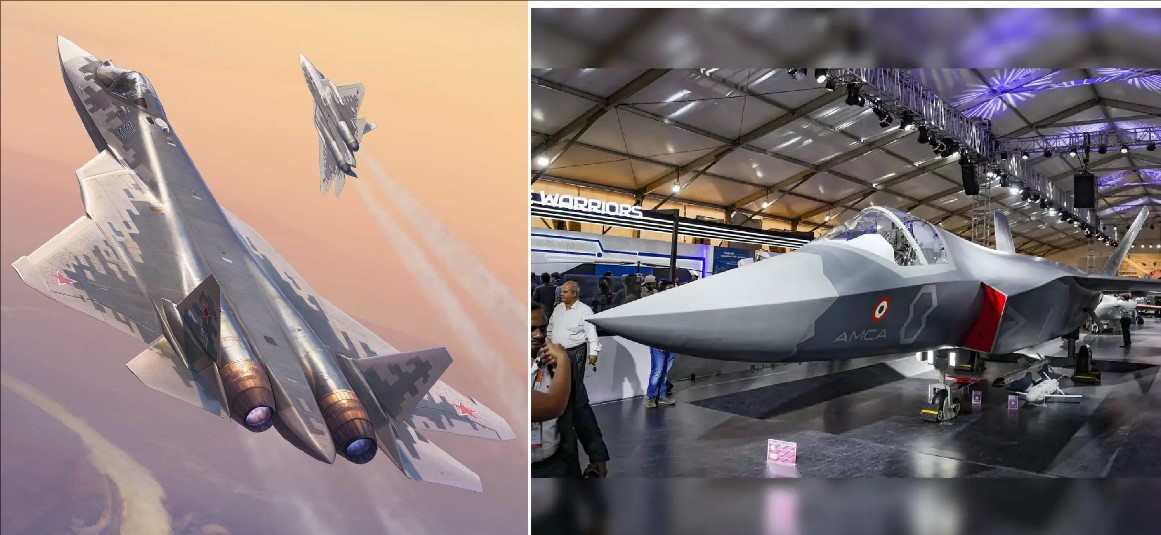
In a significant development for India’s defense ambitions, Russian Ambassador Denis Alipov has announced that Moscow is ready to support India’s Advanced Medium Combat Aircraft (AMCA) programme through the licensed local production of the Su-57 fighter jet. The proposal includes transferring critical technologies in areas such as stealth coatings, supercruise engines, and integrated avionics, with the potential for co-production by Indian companies like Hindustan Aeronautics Limited (HAL), Tata Advanced Systems, and Larsen & Toubro (L&T). This initiative is designed to directly aid India’s indigenous stealth fighter development and strengthen the country’s strategic air capabilities.
The Su-57, Russia’s fifth-generation stealth fighter, comes equipped with advanced radar-absorbing materials and coatings, which drastically reduce its visibility to enemy radar. By sharing these technologies, Russia aims to help India enhance the AMCA’s low-observability features, a key requirement for operating in high-threat environments. In addition, the transfer of supercruise engine technology—engines capable of sustained supersonic flight without afterburners—would allow India to develop aircraft that are not only faster but also more fuel-efficient, enhancing the operational range and survivability of its future stealth fleet.
Integrated avionics is another critical area where Russia’s assistance could prove invaluable. The Su-57’s avionics suite combines advanced sensors, communication systems, and electronic warfare capabilities into a single, highly coordinated system. By gaining access to such technology, Indian engineers could develop a more sophisticated and capable avionics infrastructure for the AMCA, improving situational awareness and combat effectiveness in complex operational scenarios.
The collaboration is expected to involve major Indian defense manufacturers. HAL, which has extensive experience assembling the Su-30MKI, would play a central role in producing the Su-57 under license, while Tata Advanced Systems and L&T would contribute to manufacturing critical components. This arrangement aligns with India’s "Make in India" initiative, promoting self-reliance in defense production while simultaneously strengthening the domestic industrial base.
Importantly, the Su-57 could serve as an interim solution to fill capability gaps until the AMCA becomes operational. With China rapidly expanding its fleet of advanced stealth aircraft, India faces increasing pressure to maintain air superiority in the region. The introduction of the Su-57 would provide the Indian Air Force with a modern, stealth-capable platform, helping to counter emerging threats while offering valuable experience in operating fifth-generation fighters ahead of the AMCA’s induction.
Russia’s offer reflects the deepening strategic partnership between the two countries. By providing technology transfer and co-production opportunities, Moscow is not only supporting India’s indigenous development efforts but also helping it achieve greater autonomy in defense manufacturing. This move has significant implications for India’s long-term air combat capabilities, ensuring that the country remains well-positioned to face evolving regional challenges.
As India advances its stealth fighter programme, the potential collaboration with Russia represents a critical step in bridging technological gaps and accelerating the development of its next-generation air combat assets. The combination of Su-57 technology and indigenous AMCA development promises to strengthen India’s defense posture and enhance its ability to respond effectively to regional threats.
About the Author
Aditya Kumar:
Defense & Geopolitics Analyst
Aditya Kumar tracks military developments in South Asia, specializing in Indian missile technology and naval strategy.