Russia Offers Krasukha-2 to India, Pitching a 250-km “Soft-Kill” Shield Against AWACS and Guided Weapons
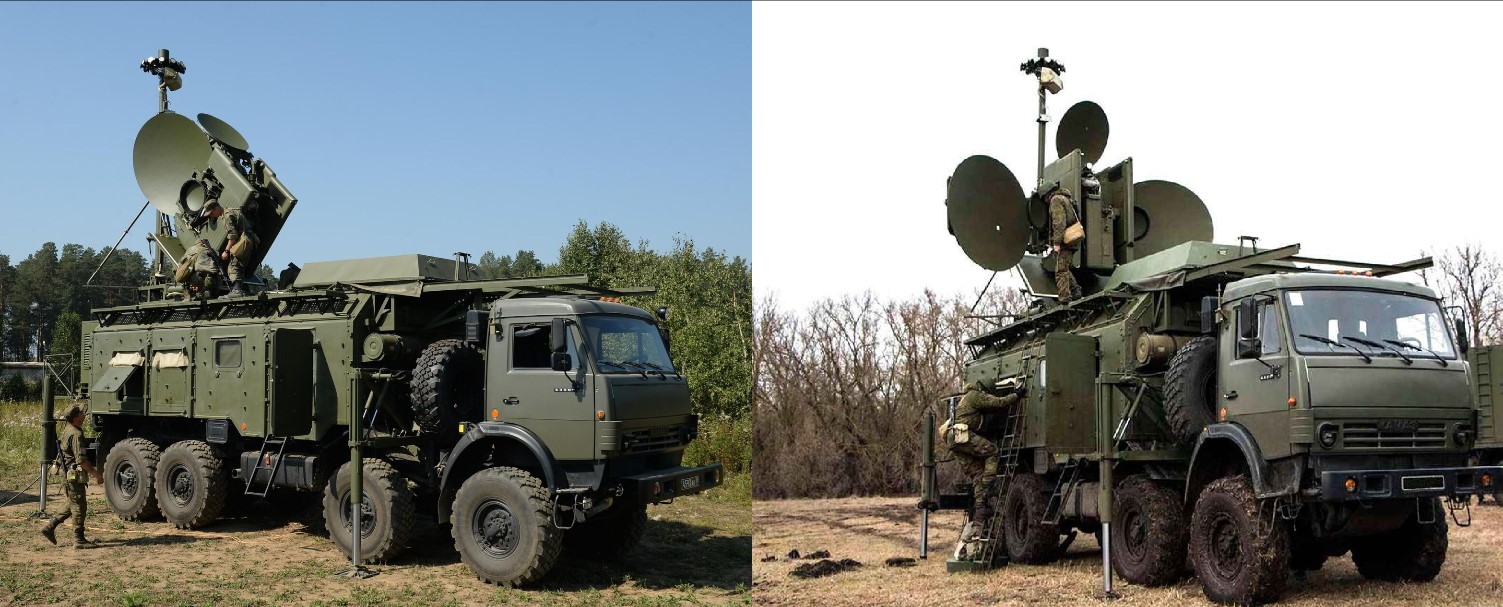
New Delhi/Moscow : Russia has offered India the 1L269 Krasukha-2 ground-based electronic warfare (EW) system, according to multiple Indian defence-media reports, in a proposal that would add a non-kinetic layer to India’s air-defence and counter-air toolkit by targeting the airborne radars that enable modern air operations.
At the heart of the pitch is a capability aimed at blinding enemy Airborne Warning and Control Systems (AWACS) by jamming S-band radars—the frequency range commonly associated with wide-area airborne surveillance radars. Open-source references describe Krasukha-2 as an S-band jammer designed to suppress such radars at ranges of up to 250 km, potentially forcing high-value airborne sensors to operate farther away from contested airspace and reducing the quality of the air picture available to enemy commanders.
A 250-km EW “Deny Zone,” Built for Mobility
The Krasukha-2 is presented as a highly mobile EW asset rather than a fixed site. Technical descriptions available in open sources indicate an operating band of roughly 2.86–3.54 GHz (S-band) and a stated deployment time of about 20 minutes, supporting a “move, emit, relocate” employment model meant to complicate enemy targeting.
That mobility is central to the system’s appeal for air-defence protection missions. By shifting positions and limiting exposure time, a jammer can reduce its vulnerability to counter-fires and anti-radiation weapons—while still contributing to the air-defence battle by degrading the enemy’s ability to detect, track, and cue fighters or standoff munitions.
“Soft-Kill” Logic: Saving Interceptors by Confusing the Kill Chain
Russian and independent open-source writeups describe Krasukha-2 as a “soft-kill” tool that can mislead radar-guided threats rather than physically destroying them. The concept is to disrupt or distort the radar picture used for detection and engagement, including creating false cues and confusing tracking—effects that can translate into phantom targets and misidentification at the cockpit and command-post level when conditions allow.
In Indian discussions around the reported offer, this has been framed as a way to protect high-value assets—such as long-range surface-to-air missile sites—by electronically complicating the enemy’s reconnaissance and strike process, potentially reducing the number of expensive interceptors required in some scenarios.
How It Could Fit Around S-400 Sites
While open sources do not confirm any India-specific integration plan, the reported offer has been widely linked in Indian coverage to the idea of shielding strategic air-defence nodes—particularly S-400 batteries—by creating an electronic “shadow” that makes it harder for hostile platforms to build and maintain accurate tracks. This is consistent with how EW is commonly used in layered defence architectures: missiles, guns, deception, dispersion, and jamming working together rather than relying on interceptors alone
When Was Krasukha-2 Inducted Into Russian Military Service?
Open-source references broadly place Krasukha-2’s induction in the early 2010s, though different sources describe the timeline in slightly different ways. An IEEE Spectrum survey of Russian EW systems lists Krasukha-2 as first fielded in 2011, while other open references describe the Krasukha family as being in Russian service from 2014 onward—a difference that may reflect how “first fielded,” “accepted into service,” and “series deployment” are reported across sources and variants.
Export Interest Has Been Signaled Before
Russia’s state-linked defence-industry messaging has previously highlighted foreign interest in the Krasukha line. A 2015 report by TASS quoted a senior KRET executive saying there were foreign buyers interested in Krasukha-2 and Krasukha-4, underscoring that the system has been marketed internationally for years even as details remain tightly controlled.
What Happens Next
As of December 31, 2025, the reported proposal appears to be at the “offer” stage in Indian media coverage rather than an announced procurement, with no public contract value, quantity, or delivery timeline disclosed.
Even so, the reported Krasukha-2 pitch highlights where the air-defence competition is heading: beyond missiles and radars alone, toward the electromagnetic spectrum as a battlefield where jamming, deception, and rapid mobility can shape outcomes—especially against the high-end sensors like AWACS that orchestrate long-range air power
✍️ This article is written by the team of The Defense News.