Russia Offers India Co-Production of Next-Gen S-500 Air Defence with Full ToT
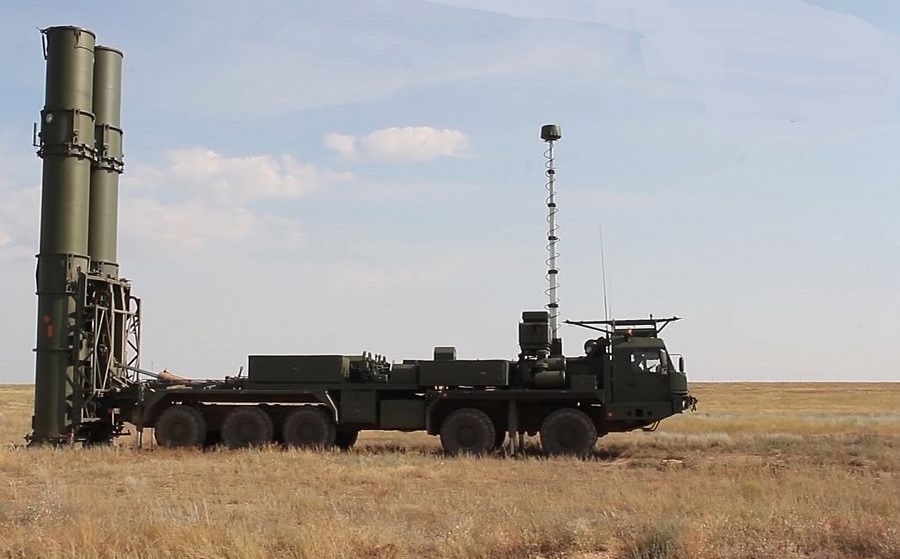
In a move that could redefine India’s air defence capabilities, Russia has reportedly offered its most advanced S-500 ‘Prometey’ missile defence system to New Delhi under a government-to-government (G2G) arrangement. The proposal is said to include full transfer of technology (ToT) and a co-production framework that would allow India to manufacture major components domestically, a step that dovetails with the country’s Make in India and Aatmanirbhar Bharat defence initiatives.
A Leap Beyond the S-400
The S-500 represents a generational upgrade over the S-400 ‘Triumf’, which India has already inducted along its sensitive northern and western borders. Developed by Russia’s Almaz-Antey, the S-500 is designed to counter an unprecedented range of aerial threats — from stealth aircraft and hypersonic cruise missiles to intercontinental ballistic missiles (ICBMs) and even satellites in low Earth orbit.
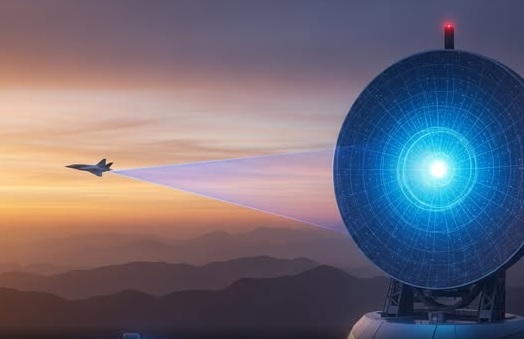
With an anti-aircraft engagement range of up to 600 km and the ability to intercept ballistic missiles up to 500 km away, the S-500 pushes the boundaries of air defence technology. Its advanced radar systems, combined with 77T6 and 76N6 interceptors, allow engagements at altitudes as high as 200 km, effectively providing a shield not just against air-breathing threats, but also near-space targets.
Strategic Timeliness
India’s interest in such a system comes amid intensifying regional security challenges. China is rapidly advancing its hypersonic missile programmes, fielding systems like the DF-21D and DF-26, while Pakistan continues to expand its ballistic and cruise missile arsenal. The S-500, integrated with India’s existing S-400 units and indigenous Akash missile batteries, would create a multi-layered defensive network capable of countering threats across different altitudes and ranges.
Sources in the Indian defence establishment note that the S-400 played a decisive role in Operation Sindoor in May 2025, helping counter aerial incursions by Pakistani JF-17 and J-10CE fighters. The S-500’s longer range and anti-space capabilities would further strengthen deterrence.
A Geopolitical Win-Win
For Russia, the offer is as much about strategic economics as defence. Western sanctions have squeezed its state-owned defence firms, limiting their global market reach. By co-producing the S-500 in India, Moscow can tap into new export markets via a trusted partner, bypassing restrictions and maintaining a footprint in the global arms trade.
For India, the benefits are twofold: enhanced security and a boost to its domestic defence industry. The proposed plan reportedly includes local production of radars, command-and-control units, and interceptor missiles, with Indian firms potentially becoming suppliers for global customers approved under the arrangement.
Future Export Potential
Defence analysts suggest that co-production could make India a hub for advanced air defence exports, targeting friendly nations in Southeast Asia, the Middle East, and Africa that may be reluctant to procure directly from Russia. This mirrors India’s growing success in defence exports, highlighted by recent deals such as the sale of Pinaka rocket systems to Armenia.
While India is already exploring the procurement of two more S-400 squadrons, the S-500 proposal offers a long-term vision for the India–Russia defence partnership. If accepted, it would not only give India one of the most advanced missile defence systems in the world but also firmly position it as a manufacturing and export hub for high-end military technology — a combination that could reshape the balance of power in Asia’s skies.
✍️ This article is written by the team of The Defense News.