Russia Offers India 5% Discounted Oil Amid U.S. Tariffs
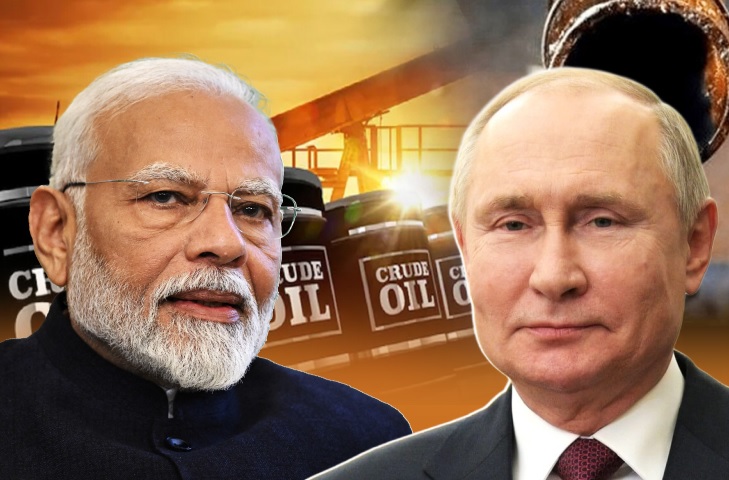
New Delhi, August 2025 – Russia has reaffirmed its energy partnership with India by offering a 5 percent discount on crude oil sales, despite mounting U.S. and international pressure over Moscow’s war in Ukraine. The move highlights Russia’s strategy to deepen its energy footprint in Asia after being shut out of Western markets, while placing India in the middle of a growing trade standoff with Washington.
The announcement was made by Evgeniy Griva, Russian Deputy Trade Representative to India, who said the discount reflects a traditional commercial practice where price fluctuations often hover around the ±5% range. According to Griva, India’s oil imports from Russia are expected to remain stable, underscoring the “mutual trust and pragmatic cooperation” that define their energy relationship.
Moscow’s Energy Lifeline in Asia
With European markets largely closed due to sanctions, Russia has shifted its focus to India and China, which together now account for more than half of its crude oil exports. Moscow’s discounted pricing, coupled with flexible shipping arrangements through non-European routes, has made Russian oil highly competitive compared to Middle Eastern suppliers.
Roman Babushkin, Russia’s Deputy Chief of Mission in New Delhi, acknowledged the challenging environment created by Western sanctions but described India as a “dependable and resilient partner.” He emphasised that energy cooperation is anchored in strategic trust that withstands geopolitical pressure.
Industry analysts note that Russia’s discounts provide India with crucial breathing space at a time when global oil prices remain volatile. India, the world’s third-largest oil importer, sources nearly 85 percent of its crude needs from abroad, making affordability a key factor in sustaining economic growth.
U.S. Retaliation: Tariffs on Indian Exports
In sharp contrast, the United States has escalated economic pressure by imposing 50 percent tariffs on Indian exports, a measure announced under the Trump administration. Washington has accused India of acting as a “global clearinghouse” for Russian crude, re-exporting refined petroleum products to international markets and indirectly funding the Kremlin’s war effort.
White House Trade Adviser Peter Navarro argued that such measures were necessary to deny Moscow access to global financial streams, while Press Secretary Karoline Leavitt described the tariffs as part of a broader “secondary pressure” campaign designed to accelerate the end of the Ukraine conflict.
However, New Delhi has condemned the U.S. move as “unfair, unjustified, and unreasonable,” warning that punitive tariffs will harm Indian industries such as textiles, marine products, and leather goods — all heavily reliant on U.S. market access. Indian officials fear prolonged tariff regimes could threaten tens of thousands of jobs and derail trade talks that had been showing progress.
India’s Balancing Act
Prime Minister Narendra Modi has responded firmly, reiterating that India will not bow to external economic coercion. He has underlined India’s policy of strategic autonomy, making clear that New Delhi will safeguard its national interests even as it values ties with both Washington and Moscow.
This balancing act has become increasingly delicate. On one side, cheap Russian oil bolsters India’s energy security and supports industrial growth. On the other, U.S. tariffs threaten to undercut Indian exports at a critical moment when New Delhi is trying to position itself as a global manufacturing hub.
Geopolitical experts warn that U.S. economic pressure could inadvertently push India closer to Russia and China, undermining Washington’s broader Indo-Pacific strategy that relies on India as a counterweight to Beijing.
Global Strategic Implications
Russia’s discounted oil offer reflects its urgent need to maintain cash flows amid sanctions, but it also signals a long-term pivot to Asia as its primary energy market. India’s acceptance of these terms underscores its ability to leverage geopolitical competition for economic gain, while refusing to take sides outright in the Ukraine conflict.
For Washington, however, the new tariff measures are a gamble. While they increase economic pressure on Moscow, they risk alienating India, a nation seen as a critical partner in balancing Chinese influence in the Indo-Pacific.
The unfolding dynamic illustrates the complex triangular relationship between India, Russia, and the United States. Russia’s oil discounts strengthen India’s energy security, while U.S. tariffs place stress on its export-driven industries. By standing firm, India is signalling its intent to pursue strategic autonomy, navigating between great-power rivalries without compromising its core interests.
In the months ahead, New Delhi’s challenge will be to maintain access to discounted Russian oil while negotiating pathways to ease U.S. tariff pressures. The outcome will not only shape India’s energy and trade future but could also tilt the balance of global power alignments in Asia.
✍️ This article is written by the team of The Defense News.