Russia Launches 20 Satellites Including Iran’s Nahid-2 in Landmark Soyuz Mission

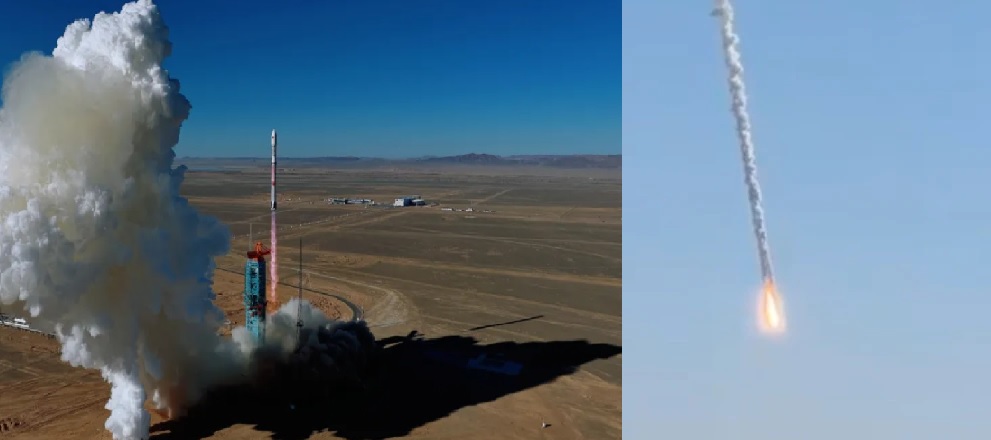
In a significant boost to international space collaboration, Russia successfully launched 20 satellites into orbit on Friday, July 25, 2025, aboard a Soyuz-2.1b rocket equipped with a Fregat upper stage, the Russian state space agency Roscosmos announced. The launch took place from the Vostochny Cosmodrome in the Amur region at 08:54 Moscow Time, marking another milestone in Russia’s space program and its growing cooperation with countries like Iran.
The payload included the Nahid-2, an Iranian telecommunications satellite, alongside two Russian Ionosfera-M satellites and 17 additional Russian small satellites, serving both scientific and commercial purposes.
A Strategic Liftoff from Vostochny
The Soyuz-2.1b/Fregat launch vehicle followed a polar trajectory to place the satellites into low Earth orbit (LEO). The Fregat upper stage executed multiple burns to deploy payloads into different orbits, concluding a precise and smooth mission lasting over an hour.
This mission adds to Roscosmos’s growing launch cadence in 2025 and underscores the reliability of the Soyuz platform for multi-payload missions to Sun-synchronous and low Earth orbits.
Nahid-2: Iran’s Leap in Space Communications
The spotlight of this mission was the Iranian-built Nahid-2 satellite. Weighing around 110 kilograms, Nahid-2 is designed for telecommunications and space research, marking a major leap in Iran’s efforts to build an independent space infrastructure.
Developed by the Iranian Space Research Center and operated by the Iranian Space Agency (ISA), Nahid-2 will reside in a 500 km LEO and is expected to operate for at least two years, with a design life of up to five years. The satellite is equipped with propulsion systems capable of maneuvering within ±50 km of its designated orbit, enabling precise station-keeping and altitude adjustments.
This marks Iran’s second successful satellite launch in a single week, highlighting a dramatic acceleration in its space program. Earlier this year, satellites like Khayyam, Pars-1, Hodhod, and Kowsar were also launched with Russian assistance, reflecting the deepening cooperation between the two nations following their formal space partnership agreement signed in early 2025.
Ionosfera-M No. 3 and No. 4: Enhancing Space Weather Monitoring
The primary Russian scientific payloads onboard were Ionosfera-M No. 3 and No. 4, which will complete a four-satellite constellation in sun-synchronous orbit at approximately 800 km altitude. These satellites are designed to study:
-
The Earth's ionosphere
-
Electromagnetic disturbances
-
Electron density patterns
-
Solar-terrestrial interactions
-
Ozone distribution
This data is critical to understanding space weather, which can severely impact satellite communication, GPS navigation, and power grids on Earth. The Ionosfera-M satellites will contribute to real-time forecasting models and deepen Russia’s space-based environmental and geophysical surveillance capabilities.
Russia’s Mini-Satellite Payload: Commercial & Educational Missions
The remaining 17 satellites on the flight were developed by various Russian organizations, including academic institutions and private space companies such as Geoscan. These satellites support:
-
Earth imaging and remote sensing
-
Aircraft and ship traffic monitoring
-
Technology demonstration
-
University-level research
Many are classified as CubeSats, underscoring the growing importance of small satellite constellations in modern space ecosystems. This group represents Russia’s push to develop its commercial space sector, encouraging innovation and participation from emerging aerospace startups.
Geopolitical Implications: A Strengthening Iran-Russia Space Axis
The inclusion of Nahid-2 in the mission, Russia’s sixth launch of an Iranian satellite since 2022, comes amid increasing global scrutiny. While both nations maintain that the mission is peaceful and for civilian purposes, Western analysts warn of the potential dual-use applications of such technologies, especially in the context of Iran’s missile development capabilities.
However, Iran and Russia appear committed to enhancing mutual space capabilities. Tehran has emphasized Nahid-2’s utility in national communications, scientific research, and as a precursor to future GEO (geostationary orbit) missions.
The move also reflects Russia’s shifting partnerships in the post-sanctions world, as Roscosmos continues to find new international clients and partners, particularly those outside traditional Western alliances.
Key Payloads
| Satellite | Country | Orbit | Purpose | Estimated Life |
|---|---|---|---|---|
| Ionosfera-M 3 & 4 | Russia | ~800 km (SSO) | Ionosphere & space weather monitoring | Multi-year |
| Nahid-2 | Iran | ~500 km (LEO) | Telecommunications & technology validation | 2–5 years |
| 17 mini/cube satellites | Russia | Variable | Earth imaging, tracking, education | Mission-specific |
This successful mission not only bolsters Russia’s status as a launch provider but also opens a new chapter in international space cooperation. Iran’s growing ambitions and Russia’s technical support could shape a new strategic axis in outer space affairs—one that challenges the existing norms set by Western-led space programs.
With more missions already planned for late 2025, including scientific and defense-oriented launches, both Roscosmos and the Iranian Space Agency are poised to accelerate their footprints in low Earth orbit and beyond.
✍️ This article is written by the team of The Defense News.