Russia Foils ISI Spy Network Attempting to Steal Top-Secret Military Technology
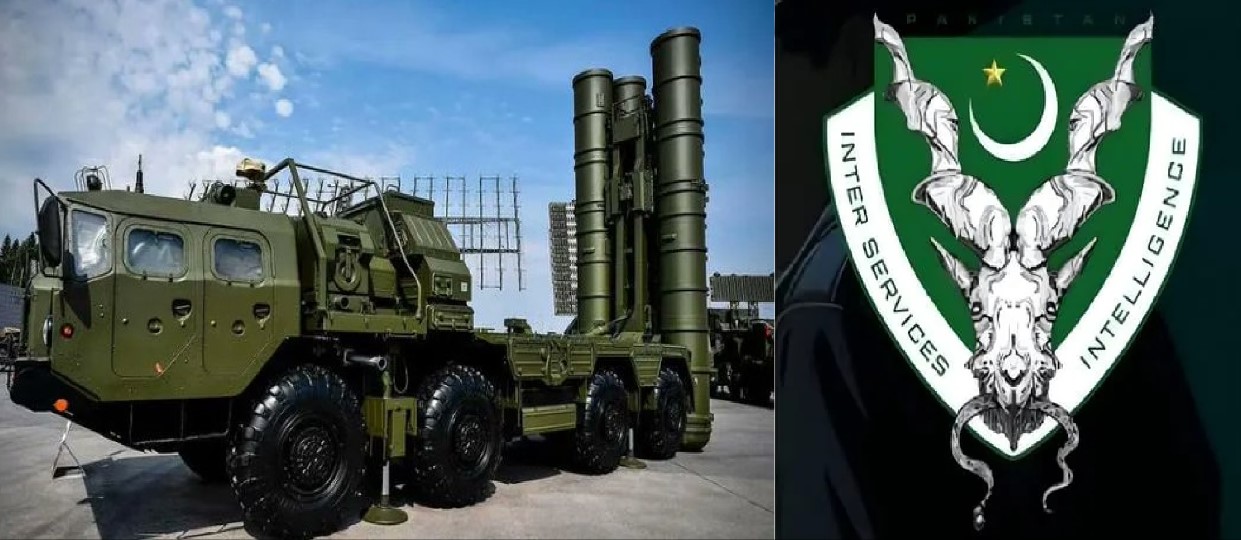
In a major counterintelligence breakthrough, Russia’s security agencies have dismantled a spy network linked to Pakistan’s Inter-Services Intelligence (ISI), accused of attempting to smuggle classified Russian military technologies to foreign actors. The arrest of a Russian national in St. Petersburg has brought to light a sophisticated espionage attempt targeting the S-400 air defense system and the Mi-8AMTShV/VA military transport helicopters — two of Russia’s most advanced and strategically sensitive defense assets.
Espionage Uncovered in St. Petersburg
According to the Federal Security Service (FSB), the suspect — a Russian national whose identity has not been publicly disclosed — was caught trying to exfiltrate secret technical documents from a defense enterprise in St. Petersburg. Investigators say the files contained blueprints, component specifications, and operational data for Russia’s next-generation Mi-8AMTShV helicopter series and the S-400 Triumf long-range air defense missile system.
The Mi-8AMTShV, a modernized derivative of the legendary Mi-8 platform, is built for assault, transport, and special operations, while the Mi-8AMTShV (Arctic variant) features enhanced insulation, de-icing systems, and extended-range fuel tanks for operations in sub-zero conditions. The S-400, on the other hand, is a cornerstone of Russia’s air defense network, capable of intercepting aircraft, drones, and ballistic missiles at ranges up to 400 kilometers.
The FSB said the documents were being prepared for illicit transfer to a foreign intelligence service, and early investigations have traced the coordination back to contacts linked with Pakistan’s ISI.
A Wider Web of Espionage
Russian media reports suggest this is not an isolated incident but part of a wider intelligence-gathering effort targeting Russia’s high-end defense programs. Investigators are probing whether ISI operatives were working directly or serving as intermediaries for a third country — possibly China or the United States — seeking to acquire S-400 technical data through proxy networks.
Security analysts believe Pakistan’s ISI may have been acting as a cut-out — a middle channel for relaying intelligence to a more powerful state actor with strategic interest in Russia’s systems. The S-400, in particular, is of high interest to both China, which already operates a variant of the system, and to Western agencies, which are eager to study the radar and missile guidance architecture used to defeat stealth aircraft.
A senior Moscow-based defense analyst told Kommersant that “this operation bears the hallmarks of multi-tier espionage — where smaller nations’ agencies are used to collect data that later flows into the hands of larger intelligence ecosystems.”
Why the S-400 Is a Prime Target
The S-400 Triumf is among the most powerful surface-to-air missile systems ever produced. It can track up to 300 aerial targets simultaneously and engage multiple threats at various altitudes. The system’s ability to detect and engage low-observable (stealth) aircraft and hypersonic targets has made it one of Russia’s most valuable exports.
India, China, and Turkey have all procured variants of the S-400, making its protection a top priority for Moscow. Any breach of its classified data could compromise air defense operations globally, especially for India, which relies on the system to protect its northern borders against aerial incursions.
If even partial design data or radar codes were to fall into foreign hands, adversaries could develop countermeasures to reduce the S-400’s effectiveness — a potential game-changer in modern air defense strategy.
How the Operation Was Exposed
According to reports from TASS and Defenseworld.net, the FSB had been monitoring unusual communications between a Russian defense employee and foreign entities for several months. The suspect allegedly used encrypted channels and offshore email accounts to coordinate with handlers abroad.
When security agents intervened, they recovered digital storage devices, schematics, and transmission logs prepared for smuggling. The FSB described the operation as a “preventive strike” that stopped classified data from leaving the country.
The suspect now faces charges under Article 275 of the Russian Criminal Code — “High Treason by Espionage” — which carries a sentence of up to 20 years in prison.
Growing Threat to Defense Supply Chains
The attempted theft highlights a broader concern within Russia’s security establishment — the growing global competition for advanced military technology. With the rapid modernization of military systems, espionage efforts increasingly focus on digital blueprints, software, and radar algorithms, rather than physical equipment.
Russia’s defense supply chains, particularly those linked to export-grade systems like the S-400 and Su-30MKI, have become frequent targets for cyber and human intelligence operations. Analysts warn that such activities pose a risk not only to Russian national security but also to partner nations such as India, which rely on Russian systems for their strategic deterrence.
A senior researcher from the Moscow Centre for Strategic Technologies noted,
“If adversarial networks gain access to even fragments of the S-400’s electronic warfare or radar configuration, it could undermine the system’s battlefield integrity. This is not just an attack on Russia’s defense industry — it’s an attack on a shared defense ecosystem.”
Implications and Aftermath
Following the arrest, the Russian Ministry of Defence has reportedly tightened access protocols at several key defense production facilities, especially those linked to export contracts. India’s Defense Ministry is also monitoring developments closely, given the potential link between the targeted data and its deployed S-400 regiments.
Meanwhile, Moscow’s intelligence community is exploring whether foreign agencies encouraged ISI involvement to avoid direct attribution. Some experts believe this reflects a new era of proxy espionage, where smaller intelligence services act as conduits for powerful nations seeking plausible deniability.
The foiling of Pakistan’s ISI-linked spy network represents one of Russia’s most significant counterintelligence victories in recent years. By intercepting the attempted theft of classified data on the S-400 air defense system and Mi-8AMTShV helicopters, Moscow has not only safeguarded its defense secrets but also exposed the global shadow war over military technology.
Whether the ISI acted independently or under the influence of a larger intelligence consortium remains under investigation. But one thing is clear — the race to access and exploit next-generation defense systems has escalated into a new front of espionage, where stolen blueprints may prove as dangerous as stolen missiles.
About the Author
Aditya Kumar:
Defense & Geopolitics Analyst
Aditya Kumar tracks military developments in South Asia, specializing in Indian missile technology and naval strategy.