Russia Developed Two New-Gen AESA Radars to Sharply Enhance S-350 and S-400 Air Defence Systems
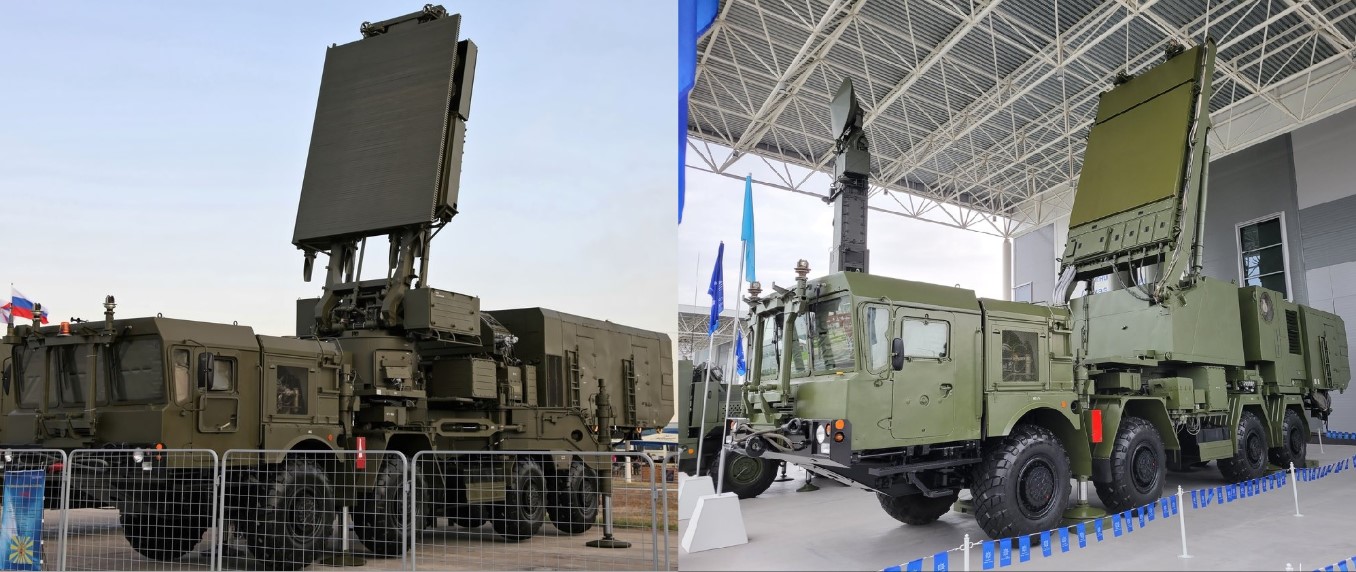
Moscow : Russia has taken a major step in strengthening its Integrated Air Defence (IAD) network with the development and integration of two advanced AESA (Active Electronically Scanned Array) radars for its frontline S-350 and S-400 surface-to-air missile (SAM) systems. The new radars significantly enhance detection range, survivability, electronic-warfare resistance, and hypersonic tracking, reflecting a broader push to modernise Russian air defence architecture.
96L6-TsP AESA Radar Strengthens S-350 Vityaz
The first system, the 96L6-TsP AESA radar, has been developed specifically for the S-350 Vityaz medium-range air defence missile system. This radar represents a next-generation evolution of the 96L6 family, transitioning from traditional PESA designs to a fully active phased-array configuration.
According to available technical details, the 96L6-TsP consists of two independent AESA panels—one dedicated to transmission and the other to reception—combined with three 96L6-VP passive modules. The radar makes extensive use of modern Russian gallium-arsenide (GaAs) microwave electronics, improving sensitivity, reliability, and resistance to jamming.
A key operational advantage lies in the 96L6-VP passive modules, which allow the S-350 system to remain on covert combat alert even when the central radar post and the 50N6A multifunction engagement radar are switched off. This capability is designed to reduce electromagnetic signature and enhance survivability against anti-radiation missiles.
Mounted on special folding towers extending to heights of 15–20 metres, the passive modules enable the detection and precise localisation of low-observable cruise missiles and active airborne radars. This includes threats such as SCALP-EG, Taurus, and Storm Shadow stand-off missiles, which rely on terrain-hugging flight profiles and reduced radar cross-sections.
Yenisei AESA Radar Integrated with S-400
The second and more powerful development is the Yenisei AESA radar, initially designed for the S-500 Prometey strategic air and missile defence system. Russia has now begun integrating this radar with the S-400 Triumf, dramatically expanding the system’s surveillance and tracking envelope.
The Yenisei is based on a multi-element, jam-resistant AESA architecture, optimised for long-range detection and engagement support against ballistic, hypersonic, and aerodynamic targets. The radar is reportedly capable of tracking targets at altitudes up to 120 kilometres and at speeds of 4,800 m/s (17,280 km/h), with future growth potential to 7,000 m/s (25,200 km/h).
In terms of detection performance, the figures mark a substantial leap:
-
Low-observable targets with an RCS of 0.05 m² can be detected at distances of up to 200 km
-
Extremely stealthy objects with an RCS of around 0.01 m² are detectable at up to 150 km, nearly twice the range of standard S-400 radars
-
Conventional aircraft and helicopters with an RCS of about 5 m² can be detected at ranges of 550–600 km
These capabilities significantly improve the S-400’s effectiveness against stealth aircraft, stand-off weapons, and hypersonic glide vehicles.
Electronics and Materials Breakthroughs
The enhanced performance of the Yenisei AESA radar is attributed to Russian advances in high-power, low-noise microwave transistors built on LTCC (Low Temperature Co-Fired Ceramic) substrates. These heat-resistant ceramics allow for higher power density, improved thermal management, and greater long-term reliability.
Technologically, the Yenisei represents a direct evolutionary step from earlier Russian radar systems such as the RLM-S and 96L6 PESA radars, combining their proven design philosophies with modern AESA processing, digital beam-forming, and electronic-counter-countermeasures (ECCM).
Strategic Impact
The introduction of the 96L6-TsP and Yenisei radars significantly strengthens Russia’s layered air defence concept. The S-350, enhanced with passive detection and AESA surveillance, gains greater survivability and effectiveness against low-flying cruise missiles, while the S-400, upgraded with Yenisei, approaches capabilities previously associated only with the S-500.
Defence analysts note that these upgrades could complicate enemy air operations, particularly those relying on stealth, electronic warfare, and hypersonic speed. At the same time, recent conflicts have shown that advanced radars remain high-value targets, making their real-world survivability and operational resilience a critical factor to watch.
As deployment progresses, the performance of these new Russian AESA radars will be closely monitored, as they have the potential to reshape the air defence balance in regions where S-350 and S-400 systems are deployed.
✍️ This article is written by the team of The Defense News.