Russia Deploys First S-500 Prometheus Missile Defense Regiment on Combat Duty
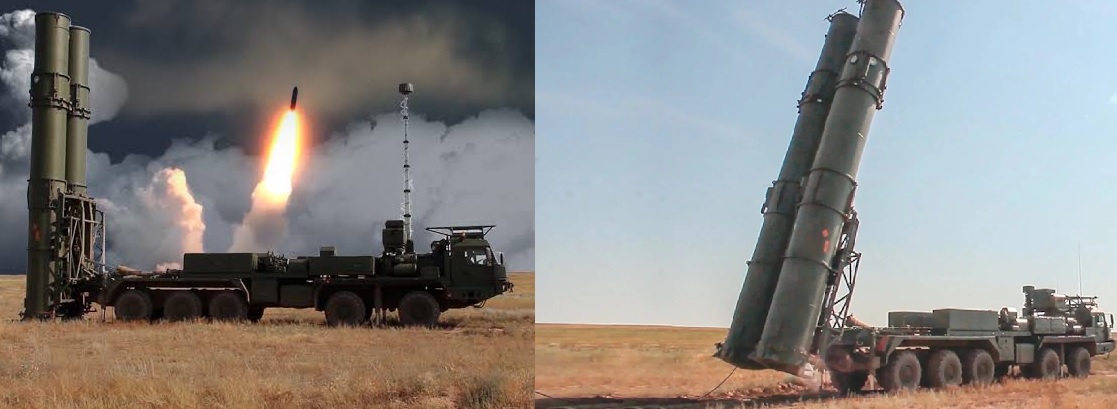
Russia has formally placed its first regiment equipped with the S-500 Prometheus surface-to-air and missile defense system on combat duty, marking a major step in the evolution of the country’s strategic air and missile defense posture. Speaking on December 17, 2025, at an expanded meeting of the Russian Ministry of Defense board, Defense Minister Andrei Belousov confirmed that the regiment had begun operational service, emphasizing that the system is capable of engaging targets operating in near space.
In the same address, Russian officials announced that the Aerospace Forces have, for the first time, established a combined air defense and missile defense division. This organizational change signals that the S-500 is being fielded as part of an integrated air and missile defense architecture, rather than as a simple extension of existing S-400 units.
What the S-500 Is Designed to Do
Developed by Almaz-Antey, the S-500 Prometheus (Prometey) represents Russia’s most ambitious effort to merge long-range air defense with elements of terminal ballistic missile defense in a mobile, ground-based system. Russian statements and open-source assessments describe the system as capable of intercepting aircraft, cruise missiles, hypersonic threats, and ballistic missile warheads, including targets operating at near-space altitudes.
Unlike earlier systems that relied on a single interceptor family, the S-500 is believed to employ multiple interceptor types. One class is optimized for air-breathing targets, while another is tailored for high-speed ballistic and near-space threats. Engagement ranges are commonly estimated in the 500–600 kilometer class, with an altitude envelope extending well beyond that of traditional long-range surface-to-air missile systems.
At the core of the system is a sophisticated radar architecture, reportedly combining long-range acquisition radars with specialized engagement and fire-control radars. This sensor network is designed to track and engage fast, high-altitude objects with reduced reaction time, a critical requirement for ballistic missile defense missions.
Near-Space Engagement and Strategic Impact
The repeated emphasis on near-space intercept capability is strategically significant. If the S-500 can reliably intercept targets at altitudes approaching or exceeding 100 kilometers, it effectively blurs the line between air defense and missile defense. Such a capability would allow Russia to contest the terminal phase of ballistic missile trajectories and potentially threaten high-altitude intelligence, surveillance, and reconnaissance (ISR) platforms operating in low Earth orbit.
Some interceptors associated with the S-500 are believed to use hit-to-kill technology, relying on kinetic energy rather than proximity-fused warheads. If confirmed, this would represent a doctrinal shift toward higher-precision intercepts, aligning certain aspects of Russian missile defense with practices long used in Western systems.
Operational Role Within Russia’s Defense Network
An S-500 regiment on combat duty should be understood primarily as a strategic protection asset, not a battlefield air defense system. Its likely missions include the defense of national command authorities, strategic infrastructure, major air bases, and elements of Russia’s nuclear deterrent. Even limited deployment strengthens the upper tier of Russia’s layered air defense network.
Operational effectiveness depends heavily on integration with shorter-range systems such as the S-400, S-350, Pantsir-S1, and supporting electronic warfare assets. These systems are expected to shield the S-500 from low-altitude threats, including drones, cruise missiles, and strike aircraft, reducing vulnerability to saturation attacks.
Development History and Capability Uncertainty
The S-500 program has faced repeated development delays over more than a decade. While Russia has reported successful tests and initial deliveries, Western analysts caution that early operational units may not yet reflect the full advertised capability set. Declaring a regiment on combat duty serves as a signal of readiness and deterrence, but does not necessarily confirm large-scale production, full interceptor inventories, or extensive combat-realistic training.
Key uncertainties remain regarding missile availability, radar performance against countermeasures, and the system’s resilience under electronic and kinetic attack. As with all advanced air and missile defense systems, real-world performance can differ from controlled test conditions.
Comparison With Western Missile Defense Systems
In comparative terms, the S-500 occupies a unique but contested niche. The U.S. THAAD system is optimized for terminal ballistic missile defense and exo-atmospheric intercepts, but is not designed for long-range air defense against aircraft. The Aegis Ballistic Missile Defense system, using SM-3 interceptors, focuses on midcourse intercepts in space from naval platforms.
Israel’s Arrow-3 is purpose-built for space intercepts and has demonstrated operational use, while European systems such as SAMP/T NG emphasize mobility, network integration, and NATO interoperability rather than extreme altitude reach. Russia’s approach with the S-500 reflects an effort to combine multiple mission sets into a single, nationally controlled system.
Strategic Weight Beyond the Battlefield
The entry of the S-500 Prometheus into combat duty strengthens the upper tier of Russia’s integrated air and missile defense and complicates any potential high-end strike campaign against Russian territory. Even limited deployment can force adversaries to adapt by relying more on low-altitude penetration, decoys, hypersonic systems, and coordinated suppression of enemy air defenses (SEAD).
For now, the S-500 should be viewed as a potentially significant strategic capability whose political and deterrent value may exceed its proven operational record. Its long-term impact will depend on production scale, operational integration, and demonstrated performance under contested conditions.
About the Author
Aditya Kumar:
Defense & Geopolitics Analyst
Aditya Kumar tracks military developments in South Asia, specializing in Indian missile technology and naval strategy.