Russia Close to Developing a Vaccine for Cancer
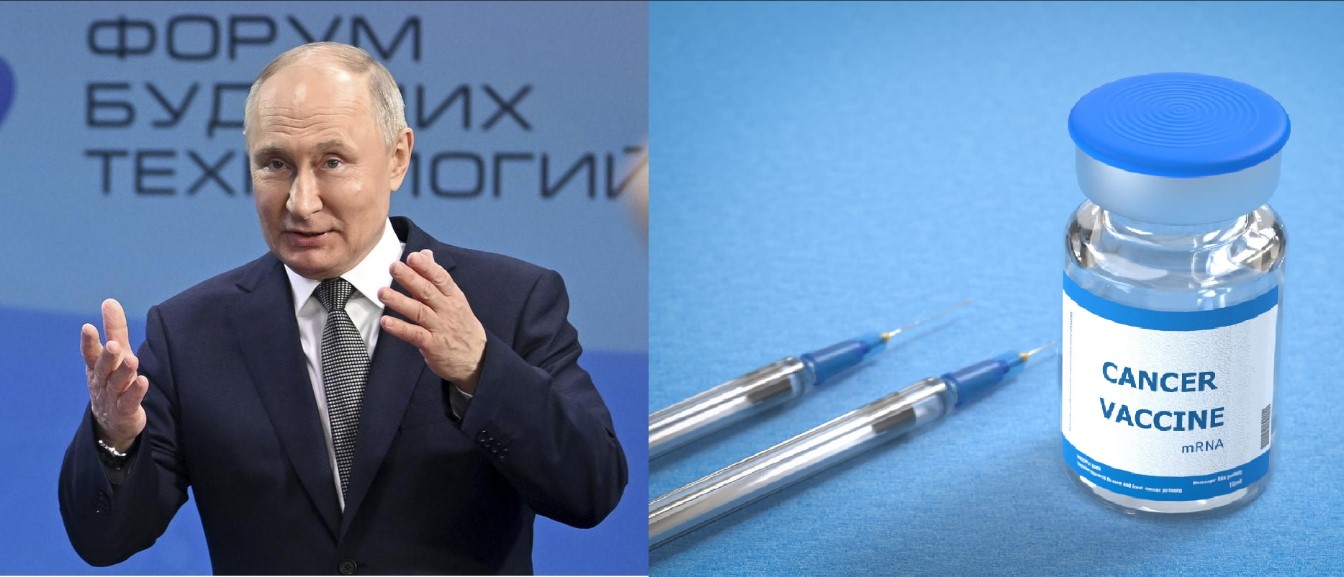
Science , Russia :- Russian President Vladimir Putin has shared exciting news about the progress made by Russian scientists in developing vaccines for cancer. He mentioned that these vaccines could be available for patients soon. During a televised forum on future technologies in Moscow, Putin stated, "We have come very close to the creation of so-called cancer vaccines and immunomodulatory drugs of a new generation."
While Putin didn't specify the types of cancer the vaccines would target or how they would work, he expressed hope that these vaccines would be used effectively as individual therapy methods.
Currently, there are six licensed vaccines against human papillomaviruses (HPV) that can cause various cancers, including cervical cancer, according to the World Health Organization. Additionally, vaccines against hepatitis B (HBV), a virus that can lead to liver cancer, are available.
Several countries and companies are actively working on cancer vaccines. The UK government, for instance, has partnered with Germany-based BioNTech to launch clinical trials for personalized cancer treatments, aiming to help 10,000 patients by 2030. Pharmaceutical companies Moderna and Merck & Co are also in the process of developing an experimental cancer vaccine that has shown promising results in reducing the chance of recurrence or death from melanoma, the deadliest skin cancer.
The World Health Organization (WHO) recently released estimates on World Cancer Day, revealing that about 1 in 5 people develop cancer in their lifetime, with 1 in 9 men and 1 in 12 women succumbing to the disease. In 2022, cancer claimed 9.7 million lives, and close to 20 million new cases were detected globally.
According to WHO, lung cancer tops the list as the most commonly occurring cancer worldwide, with 2.5 million new cases, accounting for 12.4% of total new cases. Female breast cancer ranks second, followed by colorectal cancer, prostate cancer, and stomach cancer. The global burden of cancer underscores the urgent need for collaborative efforts, innovative treatments, and comprehensive prevention strategies to ease its impact on societies worldwide.
✍️ This article is written by the team of The Defense News.