Russia Brings Back Nuclear-Powered Heavy Cruiser 'Admiral Nakhimov ' After Costly Rebuild
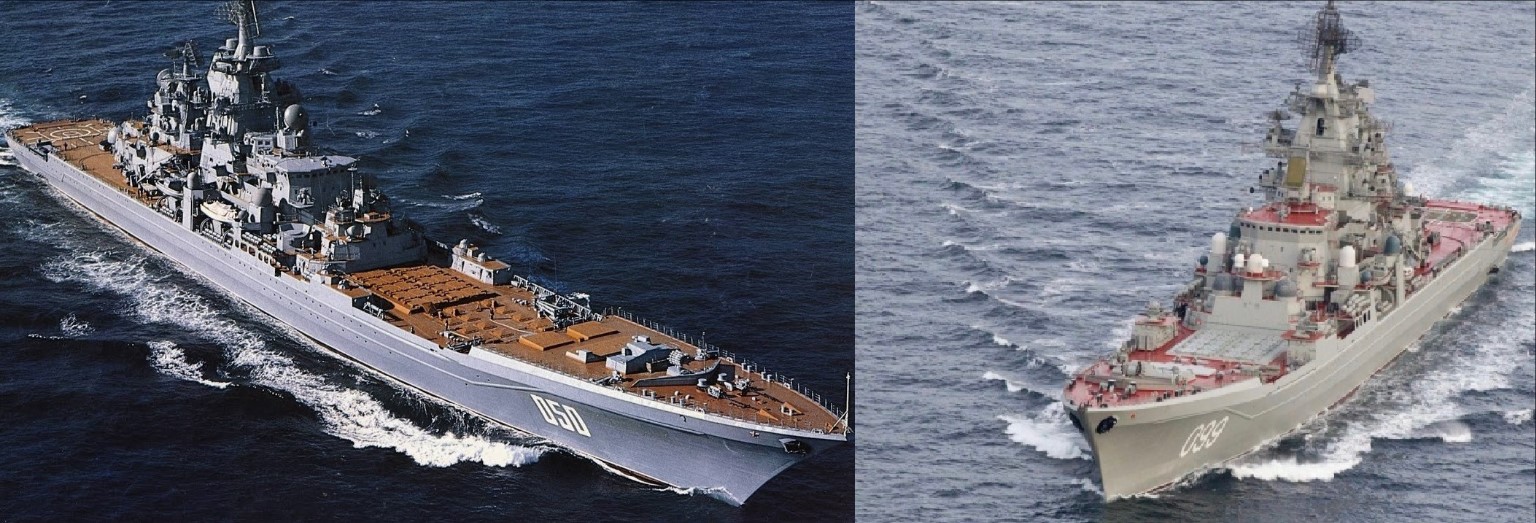
After more than two decades out of frontline service, Russia’s nuclear-powered heavy cruiser Admiral Nakhimov is approaching a long-awaited return, marking the most ambitious surface-warship modernization undertaken by Moscow since the end of the Cold War. Originally commissioned in 1988—then under the name Kalinin—the ship was one of the final expressions of Soviet blue-water naval power. It was renamed Admiral Nakhimov in 1992 following the collapse of the Soviet Union.
The cruiser was withdrawn from active service in 1999 as Russia’s post-Soviet navy struggled with funding shortfalls and maintenance challenges. What followed was a prolonged period of inactivity before the ship entered a comprehensive modernization program that would redefine its role for the 21st century.
Today, Admiral Nakhimov stands as both a symbol of renewed capability and a reflection of the constraints shaping the modern Russian Navy, which now operates only two Kirov-class ships and increasingly prioritizes corvettes and submarines over large surface combatants.
From Cold War Giant To Modern Missile Platform
The decision to return Admiral Nakhimov to service was formalized in the early 2010s, when Russia committed to salvaging its most powerful remaining cruiser hulls rather than building new ones from scratch. In 2013, a major contract was signed to begin a deep modernization at the Sevmash shipyard, officially designated Project 1144.2M.
Unlike a routine refit, the ship underwent a near-total rebuild. Large sections of legacy Soviet-era equipment were removed, and the cruiser was reconstructed around modern electronics, sensors, and digital combat-management systems. The goal was not preservation, but transformation: to turn an aging Cold War platform into a missile-centric surface combatant capable of operating in modern high-threat environments.
Missile Capacity On Par With Modern Destroyers
At the core of the modernization is a radical overhaul of the ship’s weapons architecture. Admiral Nakhimov is assessed to carry approximately 174–176 vertical launch system (VLS) cells, placing it among the most heavily armed surface warships in the world.
Around 80 UKSK universal launch cells are dedicated to strike missiles, including Kalibr land-attack cruise missiles, Oniks supersonic anti-ship missiles, and the Zircon hypersonic missile. An additional 94–96 cells are reserved for air-defense missiles, giving the cruiser a missile load comparable in scale—though not in design philosophy—to China’s Type 055, the U.S. Arleigh Burke-class, and South Korea’s Sejong the Great-class destroyers.
This concentration of firepower reflects Russia’s emphasis on long-range strike and deterrence, leveraging missile capability to offset a smaller overall surface fleet.
A Layered Air-Defense Shield
Air defense forms the backbone of Admiral Nakhimov’s redesigned mission profile. The cruiser is expected to deploy a multi-layered air-defense network, combining long-range Fort-M systems—often associated with S-400-class technology—with medium- and short-range Redut (S-350 Vityaz) missiles.
Close-in protection is provided by six to eight Pantsir-M systems, supplemented by AK-630 close-in weapon systems. This configuration is designed to counter threats ranging from aircraft and cruise missiles to drones and sea-skimming targets.
In parallel, the ship retains strong anti-submarine warfare (ASW) capability through Paket-NK torpedo systems, reinforcing its role as a heavily protected fleet centerpiece rather than a standalone strike ship.
Cost, Delays, And Industrial Reality
The modernization of Admiral Nakhimov has been defined by escalating costs and repeated delays. When the main refit contract was signed in 2013, the official value was placed at around 50 billion rubles, with an original target of returning the cruiser to service by 2018.
That timeline slipped repeatedly as the scope of work expanded. Independent analysts now estimate the final cost to exceed 100 billion rubles, with some unofficial figures suggesting totals approaching 200 billion rubles. The delays underscore the difficulty of modernizing a nuclear-powered cruiser built in the Soviet era, particularly amid broader challenges facing Russia’s shipbuilding industry.
Firepower Versus Fleet Scale
Despite its formidable capabilities, Admiral Nakhimov’s operational impact will be shaped by context. Once fully operational, it will be one of only two active Kirov-class cruisers, limiting its ability to influence events across multiple theaters simultaneously.
Modern naval warfare increasingly favors numbers, networking, and sustained presence. While Western and Asian navies deploy large fleets of interoperable destroyers, Russia’s surface fleet relies on a smaller number of high-end platforms supported by submarines and coastal forces. In this environment, Admiral Nakhimov is likely to serve primarily as a flagship, deterrent asset, and strategic signal rather than as part of a large surface task force.
A Symbol Of Capability, Not A Fleet Model
The long journey of Admiral Nakhimov—from commissioning in 1988, through retirement in 1999, to a refit launched in 2013—illustrates the arc of Russian naval power over the past four decades. Its return will restore one of the world’s most heavily armed surface warships to active duty, but it will not herald a new era of cruiser construction.
Instead, the ship stands as a prestige platform and a reminder of past ambitions, coexisting with a navy increasingly focused on smaller surface combatants and submarines. Admiral Nakhimov’s re-emergence is thus less a blueprint for the future than a powerful, and costly, statement of what Russia can still bring to sea.
✍️ This article is written by the team of The Defense News.