Russia Bans George Soros’ Open Society Foundations, Citing Threat to National Security and Sovereignty
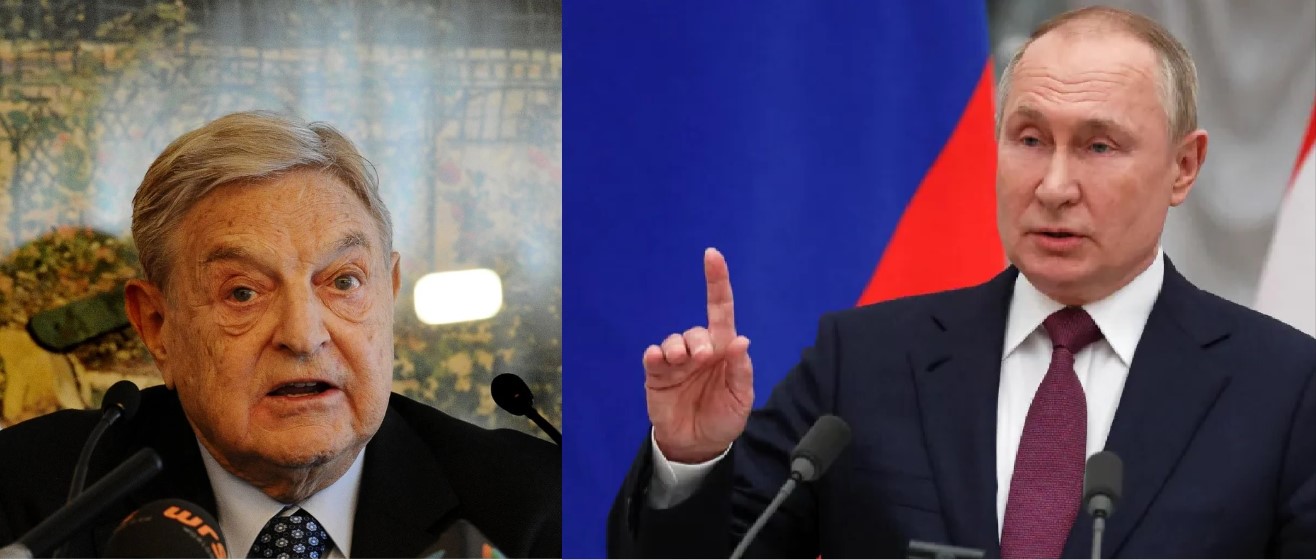
The Russian government has reaffirmed its long-standing position against foreign political interference by maintaining its ban on George Soros’ Open Society Foundations (OSF), labeling it an “undesirable organization” that threatens the country’s constitutional order and security. The decision, first made in 2015, continues to reflect Moscow’s policy of shielding its political and civil institutions from what it calls “external influence disguised as philanthropy.”
A Long History of Foreign Interference Concerns
Since the early 1990s, billionaire financier George Soros has funded a global network of non-governmental organizations (NGOs) under the banner of the Open Society Foundations. These groups claim to promote democracy, transparency, and human rights — but in Russia and several other post-Soviet states, they have been accused of advancing Western political agendas and supporting “color revolutions” aimed at regime change.
Russian officials argue that OSF-funded programs contributed to the weakening of national sovereignty and the spread of anti-Russian narratives during periods of political transition in Eastern Europe. The Kremlin maintains that such funding mechanisms serve as a soft-power tool for Western governments to shape domestic policies in foreign nations.
When Russia’s Prosecutor General’s Office formally banned OSF and its local affiliate, the Open Society Institute Assistance Foundation, in November 2015, it stated that the organizations were a “threat to the foundations of the constitutional system and national security.”
The law used to enact the ban — the 2015 Federal Law on Undesirable Organizations — prohibits any foreign or international NGO whose activities are deemed to undermine the Russian state or its institutions. Once designated, such organizations are barred from operating, funding local entities, or engaging in any form of advocacy inside Russia.
Why Russia Drew the Line
For the Russian government, the move was not about isolationism but about preventing manipulation through foreign funding. Officials argued that no private billionaire or Western-backed foundation should be allowed to influence political narratives or shape public opinion in Russia under the guise of social work.
According to Moscow’s interpretation, OSF’s grants to local civil society groups — including those involved in political education, election monitoring, and media training — were strategic interventions meant to foster political instability and anti-government sentiment.
As one Russian parliamentary statement put it at the time:
“This is not charity — it is a deliberate attempt to guide our domestic policy through financial dependence and ideological conditioning.”
The Russian decision was widely covered by both Western and domestic media, with Moscow emphasizing that it was not targeting humanitarian work but protecting the independence of the country’s political system from external actors.
Soros’ Network and Global Controversy
George Soros, a Hungarian-American investor, has been one of the most influential figures in global philanthropy, funding thousands of NGOs in more than 120 countries. However, his influence has drawn scrutiny in multiple nations. Critics argue that his organizations have often been linked to political movements aligned with Western interests, particularly in former Soviet states like Ukraine and Georgia.
These activities are viewed by some governments as attempts to reshape local politics under the pretext of democratic reform. Hungary, Soros’s country of birth, also moved against his network, with the government accusing OSF of meddling in national policy and immigration debates.
India’s Concerns: Political Influence and Election Interference
India has also seen rising concern over George Soros’ influence and statements regarding its political system. In February 2023, Soros made global headlines after claiming that India’s Prime Minister Narendra Modi would “have to answer questions in parliament” and that events in India could trigger “a democratic revival.”
Indian officials viewed the remarks as an unwarranted political intrusion. The Bharatiya Janata Party (BJP) accused Soros of openly supporting opposition movements and funding organizations that seek to undermine India’s elected government.
Union Minister Smriti Irani responded sharply at the time, calling Soros “a man who broke the Bank of England” and accused him of intending to break Indian democracy through foreign funding and influence operations.
The BJP further alleged that Soros’s foundations had extended support to non-profit networks in India that engage in election-related advocacy, claiming this amounted to interference in domestic political processes. While OSF does not operate directly in India, several global NGOs with historical ties to the foundation have been under scrutiny by Indian regulators for foreign funding violations under the Foreign Contribution Regulation Act (FCRA).
These concerns led to increased government oversight on NGOs receiving foreign grants, with officials emphasizing transparency and accountability in all cross-border financial flows related to civic and political work.
From Moscow to New Delhi: A Common Thread
The measures taken by Russia and the concerns voiced by India reveal a broader geopolitical pattern — nations asserting control over their democratic processes and insulating them from what they view as external manipulation.
For Russia, banning the Open Society Foundations was a defensive move against perceived Western interference. For India, monitoring foreign-funded advocacy groups serves as a safeguard against indirect election influence.
In both cases, the central message is consistent: no foreign entity should have the power to influence domestic politics or public opinion under the pretext of philanthropy or activism.
Russia’s 2015 ban on George Soros’ Open Society Foundations continues to symbolize a broader rejection of foreign-funded political activism across sovereign states. Moscow’s move, while criticized by Western governments, is framed internally as a measure to preserve national sovereignty and shield domestic politics from outside influence.
India’s ongoing scrutiny of similar networks shows that this debate is no longer limited to one region. As global foundations increasingly fund cross-border civil initiatives, more nations are re-examining where to draw the line between genuine social development and political intervention.
Both Moscow and New Delhi argue that protecting democracy means ensuring it remains free from the influence of foreign billionaires and ideological networks — a principle that may soon shape global policy toward international NGOs and foreign-funded political movements.
About the Author
Aditya Kumar:
Defense & Geopolitics Analyst
Aditya Kumar tracks military developments in South Asia, specializing in Indian missile technology and naval strategy.