Rostec Claims Su-57 Stealth Fighter Evaded Ukrainian Radars and Electronic Warfare in Combat
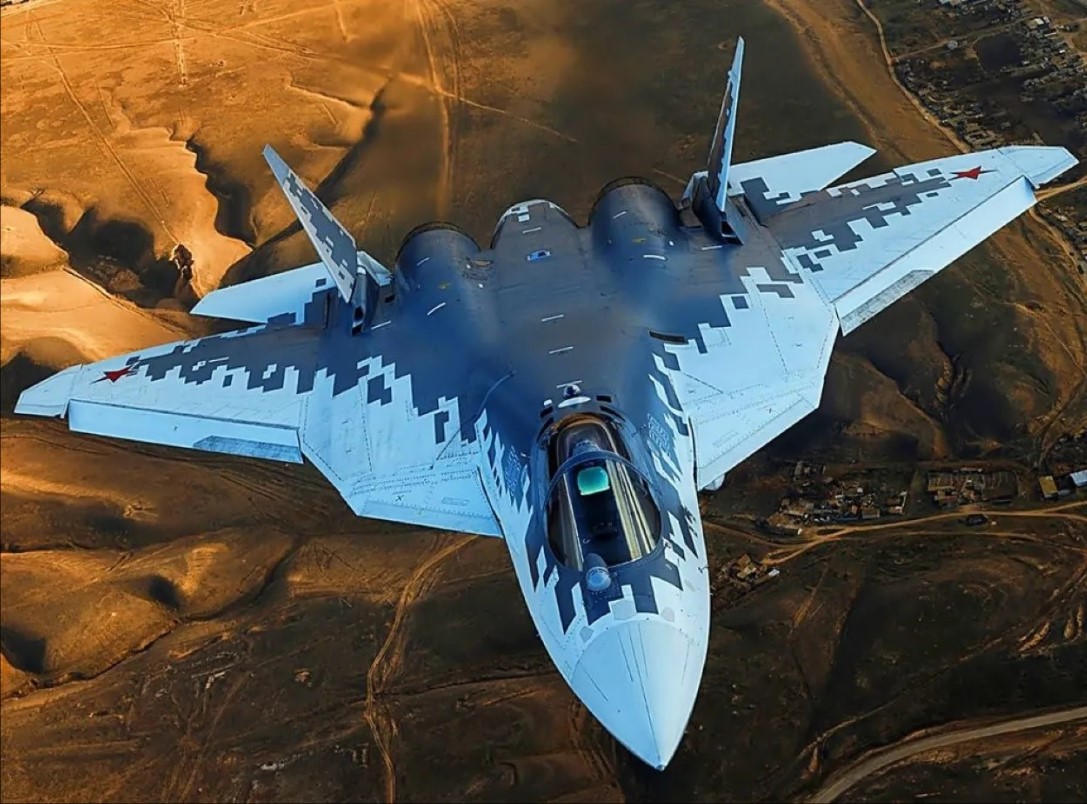
Moscow : Russian state defence conglomerate Rostec has claimed that its fifth-generation stealth fighter, the Su-57, has successfully operated in contested airspace over Ukraine, evading enemy radars and electronic warfare (EW) systems. The assertion, made by Rostec chief executive Sergey Chemezov, highlights Moscow’s confidence in its most advanced combat aircraft, while also drawing attention to the increasingly electronically dense battlefield created by the Russia-Ukraine war.
Speaking to Russian media, Chemezov stated that the Su-57 “evades all kinds of obstacles, including radars and electronic warfare systems,” adding that Russian pilots are satisfied with the aircraft’s performance in real combat conditions. While the comments underline official confidence, independent verification remains limited, and analysts stress that such claims require technical and operational context.
What “Evading Radars and Electronic Attacks” Actually Means
In modern air warfare, “evading radars” does not mean invisibility. Instead, it refers to reducing detection and tracking ranges, complicating an enemy’s ability to lock on and engage. The Su-57 incorporates stealth shaping, internal weapons bays, and radar-absorbent materials, all designed to lower its radar cross-section (RCS), particularly against high-frequency fire-control radars used by surface-to-air missile systems.
Electronic warfare survivability is equally critical. Fighters rely on onboard electronic countermeasures, electronic support measures, and sensor fusion to detect hostile emissions, jam or deceive radars, and disrupt missile guidance links. Russian sources emphasize that the Su-57’s integrated avionics allow pilots to identify threats early, select low-risk flight profiles, and strike targets without entering the most dangerous engagement zones.
Operational factors also matter. Aircraft may launch stand-off precision weapons, exploit temporary gaps in air-defence coverage, or rely on broader EW activity in the battlespace. Any of these scenarios can result in a mission being completed without interception, which officials often describe as successful “evasion.”
Ukraine’s Radar and Electronic Warfare Environment
Ukraine operates a layered air-defence and EW network built from a mix of Soviet-era systems, Western-supplied radars, Israeli tactical sensors, and indigenous electronic warfare solutions. Long-range systems such as S-300 variants form the backbone of strategic air defence, supported by medium-range Buk systems and associated fire-control radars.
At shorter ranges, Ukraine employs modern three-dimensional surveillance radars, including Western-supplied systems optimized for detecting low-flying aircraft, cruise missiles, and drones. Israeli-origin RADA tactical radars, widely reported to be in service, enhance short-range air-defence and early warning, particularly against small and fast-moving aerial threats.
Alongside radar coverage, Ukraine has rapidly expanded its electronic warfare capabilities, deploying domestically developed jammers and counter-drone systems designed to disrupt navigation signals, datalinks, and radar performance. These systems are frequently repositioned, used intermittently, or paired with decoys and passive sensors, making the battlespace highly unpredictable.
Limited Use but High Strategic Value
Open-source assessments indicate that the Su-57 has been used in limited numbers during the conflict, often in carefully controlled roles rather than sustained frontline patrols. Analysts argue this reflects both the aircraft’s small fleet size and Russia’s intent to minimize risk while gaining combat experience.
Experts also caution that stealth advantages are never absolute. Low-frequency radars, passive detection methods, and multisensor fusion can still reveal the presence of low-observable aircraft, even if precise targeting remains difficult. In Ukraine’s rapidly evolving conflict, survivability depends as much on tactics and electronic support as on airframe design.
A Claim That Requires Context
Chemezov’s statement reinforces Russia’s messaging around the Su-57 as a combat-proven stealth platform, but it remains a claim from an interested party in an information-intensive war. Without detailed data on engagement ranges, specific Ukrainian systems encountered, and mission profiles, the full significance is difficult to assess. What is clear, however, is that the war over Ukraine has become a real-world testing ground for stealth technology, radar networks, and electronic warfare, where success is defined not by invisibility, but by the ability to operate, strike, and survive in contested skies.
About the Author
Aditya Kumar:
Defense & Geopolitics Analyst
Aditya Kumar tracks military developments in South Asia, specializing in Indian missile technology and naval strategy.