Following the successful intercept, Roketsan will now push LEVENT toward its next stage of maturity at sea. The system will undergo trials in varying sea states to validate its stability and sensor performance in real maritime conditions. Engineers will also subject it to multi-target scenarios and saturation-attack profiles to assess how effectively it can manage simultaneous threats. Integration work with the Turkish Navy’s combat systems will continue in parallel, ensuring that LEVENT can operate seamlessly within existing and future command networks. If development stays on schedule, the system is expected to achieve full operational certification in the late 2020s, enabling installation on upcoming naval platforms and retrofitting onto vessels already in service.
Roketsan Confirms LEVENT’s First Successful Live Seeker-Guided Intercept
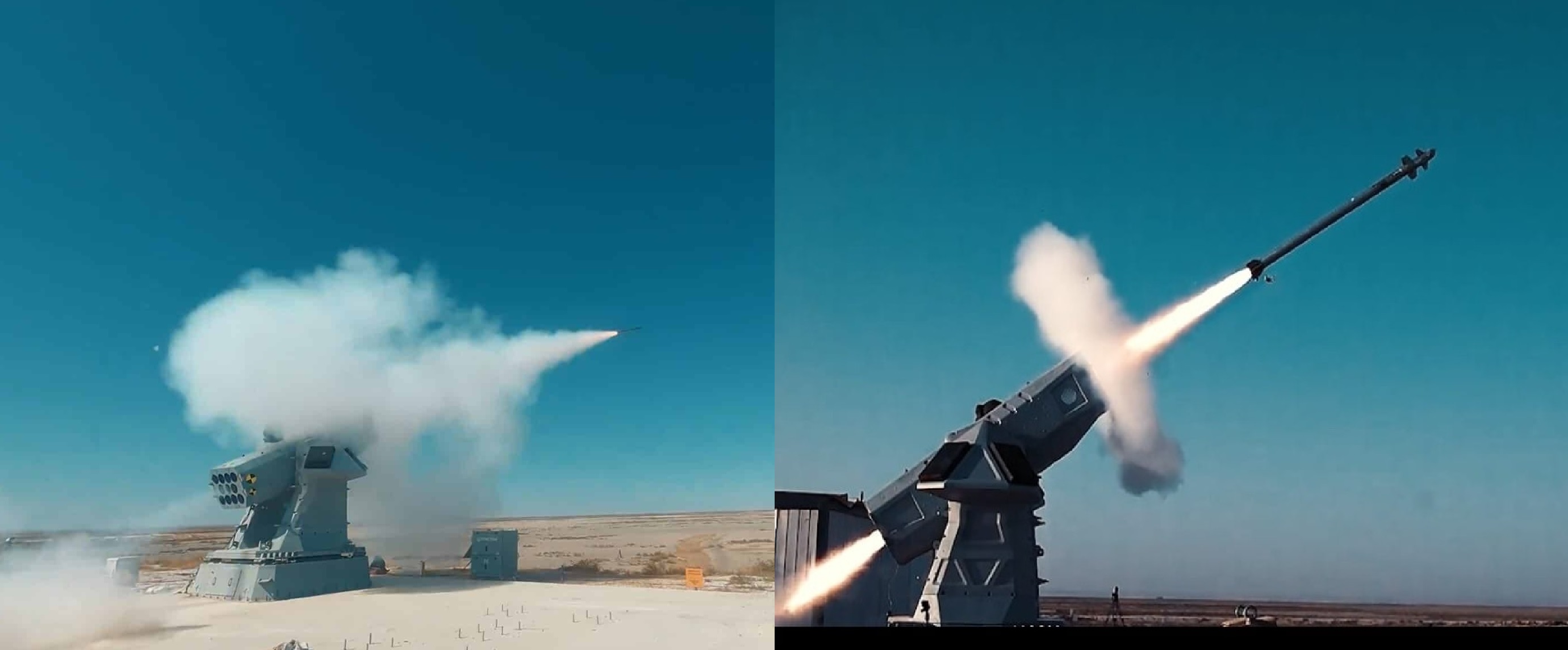
Türkiye’s growing push for a fully sovereign naval air-defence shield reached a decisive milestone this week, as Roketsan confirmed that its LEVENT close-in air-defence system successfully carried out its first seeker-guided live intercept against a real airborne target. The test, announced on the company’s official X account, represents the most concrete demonstration to date that LEVENT is transitioning from a development concept to a deployable capability for Turkish warships.
The intercept test involved a full-profile engagement, with LEVENT’s onboard sensors detecting the target, handing it off to the missile’s hybrid seeker, and achieving a direct hit. Defence officials described the event as a “critical validation step” in Türkiye’s effort to field a layered maritime air-defence solution tailored for the Black Sea, Aegean, and Eastern Mediterranean, regions where drone swarms, stand-off munitions, and sea-skimming cruise missiles represent a growing operational threat.
A New Pillar in Türkiye’s Naval Air-Defence Architecture
The LEVENT system is being developed to sit inside Türkiye’s multi-tiered naval air-defence structure, complementing medium- and long-range missiles already in production. Its role forms the inner defensive ring—the last shield between an incoming weapon and the ship.
For decades, this segment has been dominated by imported designs such as the US–German RIM-116 Rolling Airframe Missile (RAM) and, at longer ranges, MBDA’s Sea Ceptor (CAMM). LEVENT marks Türkiye’s intent to break dependence on these systems, avoiding export restrictions, foreign supply chains, and political constraints.
Specifications and Capabilities of LEVENT
Although Roketsan has not publicly released the full technical data sheet, open-source disclosures and defence-industry reporting provide a clear picture of the system’s profile:
Key Specifications
-
Effective Range: ~11 km
-
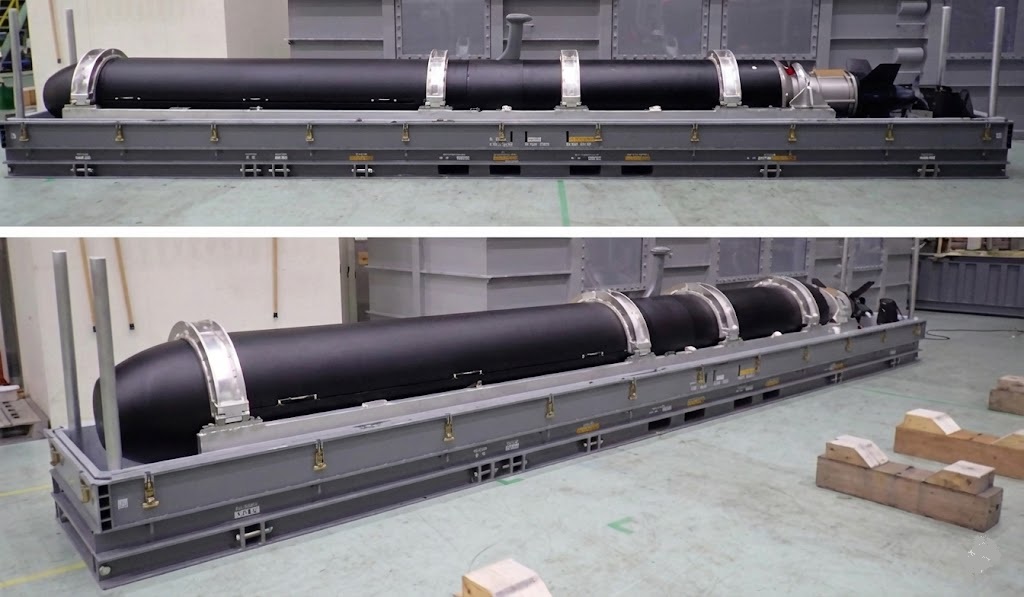
Missile Type: National missile architecture derived from Türkiye’s MANPADS/SHORAD family
-
Guidance: Hybrid seeker (imaging infrared + RF guidance components) for high accuracy against low-observable threats
-
Radar/Sensor Integration: Designed to sync with shipborne combat management systems for rapid reaction
-
Launcher Configuration: Vertical and inclined-launcher compatible, optimized for corvettes, frigates, and offshore patrol vessels
-
Reaction Time: Rapid engagement cycle suitable for high-speed threats such as sea-skimming cruise missiles
-
Targets: UAVs, subsonic anti-ship missiles, loitering munitions, helicopters, and fast attack craft
Why the Test Matters
The successful seeker-guided intercept demonstrates that LEVENT can:
-
Detect, track, and destroy real airborne threats at operational ranges
-
Engage agile, evasive targets, including small drones and complex missile trajectories
-
Provide a larger defensive footprint compared with gun-based CIWS like Phalanx or Gokdeniz
-
Integrate into layered defence alongside Türkiye’s SIPER and HISAR systems
Positioning Between RAM and Sea Ceptor
From a capability standpoint, LEVENT is emerging as a uniquely balanced option:
-
Against RAM:
-
RAM offers ~9–10 km range with dual-mode seekers, but remains US-German and subject to export controls.
-
LEVENT adds ~11 km range, similar guidance capability, and full national ownership—an advantage for countries seeking independence from Western supply chains.
-
-
Against Sea Ceptor (CAMM):
-
Sea Ceptor extends out beyond 25 km, forming a medium-range area-defence layer.
-
LEVENT slots below it, optimized for close-range, rapid-reaction intercepts, not long-range engagements.
-
The system thus fills a critical operational gap—a missile-centric CIWS that is both sovereign and cost-efficient.
Strategic Significance for Türkiye and Export Markets
The geopolitical environment surrounding the Black Sea and eastern Mediterranean—defined by drone proliferation, saturation attacks, and contested maritime zones—has driven Ankara to accelerate domestic air-defence innovation. With the LEVENT project maturing, Türkiye aims to:
-
Equip its I-class frigates, Hisar-class OPVs, and Ada-class corvettes with indigenous short-range missile defence
-
Reduce reliance on foreign CIWS and RAM-type missiles
-
Offer a competitive export product to navies that cannot acquire RAM or CAMM due to budget constraints or political restrictions
Analysts note that countries in the Middle East, Asia, and Africa have already expressed interest in LEVENT as part of wider naval-modernisation packages involving Turkish-built vessels.
Towards Operational Deployment at Sea
Long-Term Implications
By proving that LEVENT can intercept a real airborne threat, Türkiye has taken a major step toward establishing a fully indigenous naval air-defence ecosystem. As drone warfare and precision-guided weapons continue to reshape maritime operations, the country’s ability to defend its fleets with locally developed systems is becoming not just a technological preference, but a strategic necessity.
LEVENT’s progress signals that Türkiye is rapidly closing the gap with established Western CIWS manufacturers—and in some areas, carving out competitive advantages of its own.
About the Author
Aditya Kumar:
Defense & Geopolitics Analyst
Aditya Kumar tracks military developments in South Asia, specializing in Indian missile technology and naval strategy.