Renault To Produce Shahed-Style Attack Drones In France, Targeting 600 Units Per Month
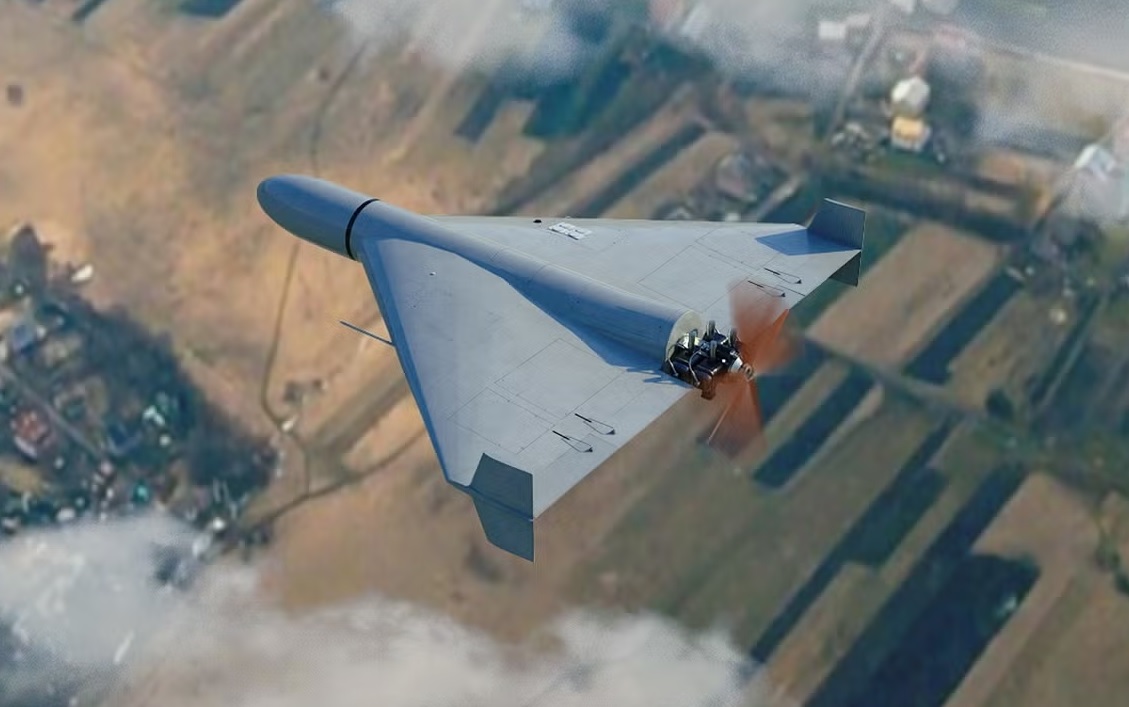
Paris : Renault Group is entering the defence sector, preparing to manufacture a long-range, one-way attack unmanned aerial vehicle (UAV) known as Chorus, in partnership with French aerospace and defence specialist Turgis et Gaillard. The initiative would see production established at Renault facilities in Le Mans and Cléon, with a stated target capacity of up to 600 drones per month once operations reach full scale.
Industrial Conversion At Le Mans And Cléon
Under the plan, Renault’s contribution is primarily industrial. The carmaker will provide factory space, tooling, logistics and workforce expertise drawn from its automotive manufacturing lines, while Turgis et Gaillard leads on design, avionics and systems integration. Assembly work is expected to be concentrated at Le Mans, with propulsion and engine-related production centred at Cléon in Normandy, according to people familiar with the programme.
The project is being conducted under the supervision of France’s defence procurement authority, the Direction générale de l’armement, which is responsible for certification, export controls and contractual oversight. Renault has emphasised that the move does not represent a wholesale pivot away from cars, describing the drone programme as a targeted reallocation of selected personnel and equipment rather than a permanent transformation of its core business.
Chorus And Its Battlefield Lineage
Chorus is described by defence analysts as a French adaptation of the Shahed family of one-way attack drones, systems originally developed in Iran and later produced and deployed in large numbers by Russia. Known in open-source reporting as Shahed-131 and Shahed-136 variants, these loitering munitions have become emblematic of high-volume, low-cost strike warfare in the Middle East and, more recently, in Ukraine.
The French-developed system is intended to replicate the operational concept rather than copy components outright, incorporating domestic supply chains and Western-standard electronics. Depending on configuration, Chorus is expected to support long-range strike missions as well as reconnaissance and surveillance tasks, reflecting a modular design philosophy aimed at meeting varied operational requirements.
Strategic Rationale And European Rearmament
Renault’s entry into drone production reflects a broader shift in European defence policy, as governments seek to expand manufacturing capacity for systems that can be produced quickly and in large numbers. French officials have openly encouraged non-traditional defence suppliers — including automotive and heavy-industry firms — to adapt their production lines in response to sustained demand generated by the war in Ukraine and wider NATO readiness objectives.
Automotive plants are viewed as particularly suitable for this role, offering established supply chains, standardised processes and a workforce accustomed to high-throughput manufacturing. Defence planners argue that such attributes are critical for producing expendable systems like one-way attack drones, where scale and cost can be as decisive as technical sophistication.
Political, Legal And Workforce Scrutiny
The programme has sparked political and social debate inside France. Trade unions and workers’ representatives have voiced concern over the ethical, safety and reputational implications of producing lethal military equipment, as well as the potential long-term impact on Renault’s civilian manufacturing footprint. The company has said it is consulting with employee representatives and complying with all applicable labour and safety regulations.
From a legal standpoint, any export of Chorus drones will be subject to strict French and European Union arms-control regimes. Officials stress that production, transfer and end-use will be tightly regulated, particularly given the sensitivity surrounding loitering munitions and their role in active conflict zones.
Scale, Impact And Next Steps
Military analysts note that the defining feature of Shahed-type systems has been their ability to overwhelm air defences through sheer numbers. If Renault and its partner achieve the planned output of 600 units per month, Chorus could become a significant component of allied drone inventories. However, experts caution that battlefield effectiveness will ultimately depend on integration with intelligence, targeting and air-defence networks, not production figures alone.
Renault Group and Turgis et Gaillard say further details on pilot production, line conversion schedules and potential customers will be released once final contracts and regulatory approvals are secured. For now, the initiative stands as a clear signal of how Europe’s industrial landscape is being reshaped by modern warfare, increasingly blurring the traditional line between civilian manufacturing and defence production.
About the Author
Aditya Kumar:
Defense & Geopolitics Analyst
Aditya Kumar tracks military developments in South Asia, specializing in Indian missile technology and naval strategy.