Rebel Forces Seize Control in Aleppo Amid Escalating Syrian Conflict
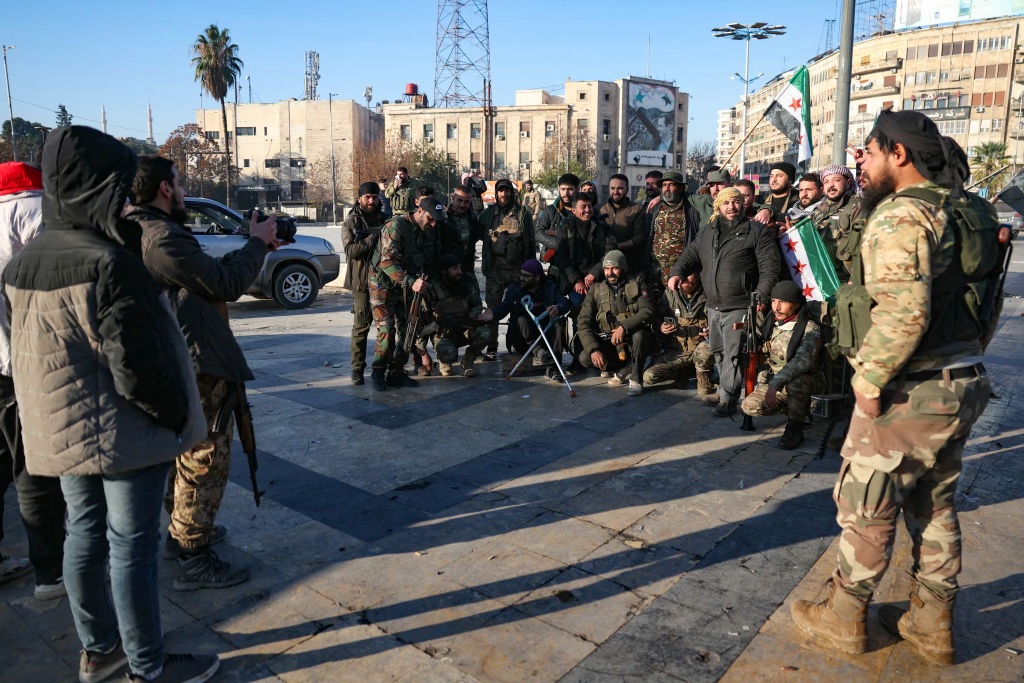
The long-standing conflict in Syria took a dramatic turn as jihadist-led rebel forces, spearheaded by Hayat Tahrir al-Sham (HTS), seized control of most of Aleppo, Syria’s second-largest city, in a rapid and strategically executed offensive. The operation, which began earlier this week, has resulted in the capture of Aleppo’s airport and dozens of nearby towns. It marks one of the most significant shifts in territorial control since the city was reclaimed by government forces in 2016.
A Swift and Devastating Advance
The offensive was launched on Wednesday, coinciding with a fragile ceasefire in neighboring Lebanon. Within days, HTS and its Turkish-backed allies overran key strategic locations with minimal resistance, according to the Syrian Observatory for Human Rights. The Britain-based war monitor reported that government forces had retreated from Aleppo’s urban core and surrounding areas, leaving prisons, government offices, and key infrastructure under rebel control.
Aleppo, a city of roughly two million and once a hub of Syria's industrial strength, has become a focal point in this renewed wave of violence. In an alarming development, the army reportedly pulled back from Hama, Syria's fourth-largest city, located about 140 kilometers south of Aleppo. However, Syrian state media denied the reports of withdrawal, maintaining that government troops were holding their positions.
Moscow and Tehran’s Response
The rebel offensive prompted Moscow, a key ally of Syrian President Bashar al-Assad, to conduct its first airstrikes in Aleppo since 2016. Despite these strikes, which targeted rebel-held areas overnight, the overall response from Russia and Iran has been restrained. This muted reaction has led to speculation that Assad’s regime is increasingly isolated, a point highlighted by Rami Abdel Rahman, head of the Observatory, who noted a lack of substantive support from Damascus' allies.
Iran expressed "extreme concern" over the developments, with its consulate in Aleppo reportedly coming under attack. Iranian Foreign Minister Abbas Araghchi is set to travel to Damascus and Ankara for consultations. Meanwhile, Russia has emphasized the need for joint efforts with Turkey to stabilize the region, highlighting the delicate balance of alliances at play.
Civilian Impact and International Reactions
The renewed violence has had a devastating impact on civilians. The Observatory reported that at least 327 people have been killed since the offensive began, including 44 civilians. Airstrikes in Aleppo killed at least 16 civilians and injured 20 others on Saturday alone. Disturbing images from the city showed charred vehicles and lifeless bodies, a grim reminder of the human toll of this conflict.
In the city’s center, rebels imposed a curfew, urging civilians to stay indoors for their safety. Many public and private institutions in Aleppo have shuttered operations as fighting continues. Western nations, including the United States and France, have called for the protection of civilians, with Washington suggesting that Assad’s reliance on Moscow and Tehran has contributed to the current crisis.
A Decade of Turmoil
For many rebel fighters, the capture of Aleppo represents a long-awaited victory. The city, which had been under divided control until government forces reclaimed it in 2016, has remained a symbol of resilience and rebellion. Rebel fighter Mohamed Hammadi expressed optimism, stating, "We’ve been waiting for this for years. We are going to clear all of Syria, God willing."
However, the broader implications of this offensive remain uncertain. The Idlib region, the last major rebel stronghold, has been under a tenuous truce brokered by Turkey and Russia since 2020. The current escalation threatens to unravel this fragile agreement, with both Ankara and Moscow seeking ways to navigate the complex dynamics.
Looking Ahead
The battle for Aleppo underscores the persistent volatility of the Syrian conflict. As rebel forces solidify their hold over newly captured territories, the Assad regime faces mounting challenges to its authority. International actors, including Russia, Iran, and Turkey, continue to play pivotal roles, but their conflicting interests complicate efforts to stabilize the region.
With no clear resolution in sight, Aleppo's fate hangs in the balance, a stark reflection of Syria's decade-long descent into chaos. For its residents, the hope for peace remains as elusive as ever, overshadowed by the constant specter of war.
✍️ This article is written by the team of The Defense News.