Rafale’s “Lock” on USAF F-35 at Finland’s Atlantic Trident 25 Sparks 4.5-Gen vs 5th-Gen Dogfight Debate
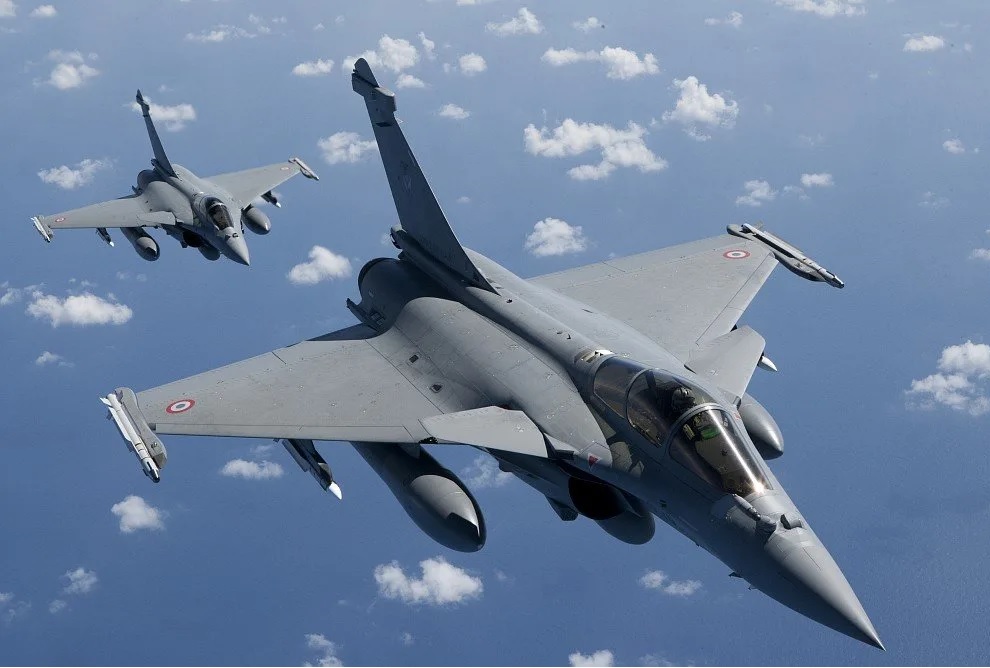
A short video clip posted this week by the French Air & Space Force has ignited a fresh round of arguments over fourth- vs fifth-generation air combat. The footage—shot during Exercise Atlantic Trident 25 in Finland—appears to show a Dassault Rafale achieving a visual-range sensor “lock” on a U.S. Air Force F-35A during a mock dogfight, prompting headlines that the French jet “scored a kill.”
What the video proves—and what it doesn’t—is key. The clip shows a Rafale pilot slewing sensors onto an F-35 in a close-in engagement and calling a simulated shot. That indicates a momentary positional advantage in a training merge, but it is not an official scoreboard for the exercise, and the U.S. or NATO have not published any adjudicated “win/loss” tallies. Atlantic Trident’s aim is interoperability, not competition.
The Exercise and Who Took Part
Finland hosted Atlantic Trident from June 16–27, 2025, the first time the long-running, high-end air combat drill moved to a Nordic base set. Participants included USAF F-35A and F-15E, French Rafale (with A330 MRTT and E-3F support), RAF Typhoon, and Finnish F/A-18. Public releases from NATO and USAF emphasized 4th/5th-gen integration, agile combat employment, and combined tactics—not dueling for headlines.
Why a Rafale “Lock” Is Plausible in a Merge
At visual range, pilot skill, energy management, and sensor cueing can temporarily trump stealth. Rafale’s high off-boresight cueing, advanced electronic warfare suite, and helmet/sensor integration can set up valid simulated shots if rules of engagement (ROE) allow it. Conversely, the F-35’s decisive edge is typically before the merge—beyond-visual-range (BVR) detection, fusion, and shots that exercises don’t always script the same way every sortie. Even Army Recognition’s write-up stressing the Rafale’s moment notes that modern air combat is usually decided BVR.
Treat the Clip as a Vignette, Not the Whole Story
Open-source outlets amplified the video, some framing it as a “kill.” That language over-reads a single vignette from a multi-sortie event with varied scenarios, ROE, and training objectives. Neither NATO nor the USAF claims any official dogfight results; their wrap-ups are about readiness and interoperability gains.
Bigger Picture
-
Optics vs outcomes: Such clips are great for morale and marketing but don’t overturn the fundamental roles of each jet: F-35 as a stealthy sensor-shooter and quarterback; Rafale as a highly capable 4.5-gen multirole fighter with formidable WVR chops. (This exercise history dates back to earlier U.S.–France–U.K. iterations, where the theme has consistently been integration.)
-
Nordic setting matters: Hosting in Finland showcased NATO’s northern posture and ACE (Agile Combat Employment) concepts in austere, dispersed operations—arguably the real “win” for the alliance.
Yes, a Rafale pilot appears to have achieved a simulated lock on a USAF F-35A during a dogfight at Atlantic Trident 25—a real, impressive moment caught on camera. But official exercise communiqués don’t crown winners, and one merge doesn’t rewrite the BVR-first reality of modern air warfare. The enduring takeaway from Finland is allied interoperability and readiness, not a definitive verdict on which jet “wins.”
✍️ This article is written by the team of The Defense News.