Putin Warns Europe: “If Europe Starts a War, Russia Is Ready Right Now
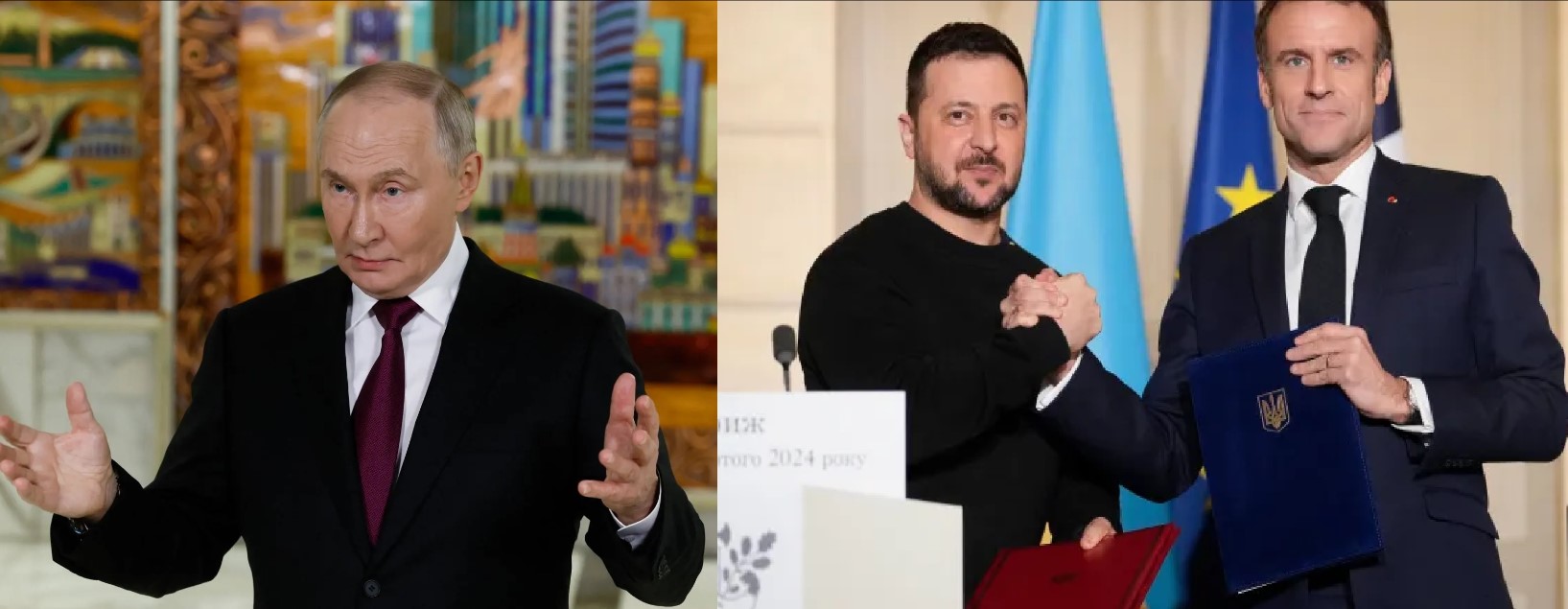
Russian President Vladimir Putin issued one of his sharpest warnings to Europe in years, declaring that Moscow is “ready” for war if European nations choose confrontation over diplomacy. His remarks came on Tuesday during a tense day of negotiations in Moscow, where U.S. envoy Steve Witkoff and presidential adviser Jared Kushner arrived for critical talks aimed at finalizing a new American peace proposal to end the Ukraine conflict.
The statement immediately reverberated across European capitals, deepening anxieties as the nearly four-year-long war enters a decisive phase.
Putin’s Message: “We Are Ready Right Now”
Speaking to reporters in Moscow, Putin insisted Russia does not seek war with Europe but emphasized that the country is fully prepared for one if provoked.
“We are not planning to go to war with Europe, but if Europe wants to and starts, we are ready right now,” Putin said.
He accused European governments of sabotaging U.S.-led peace efforts, claiming that their revised inputs to Washington’s 28-point peace plan were deliberately designed to block diplomatic progress.
“They have no peaceful agenda, they are on the side of war,” he added, saying Europe’s proposed changes to the U.S. draft were “aimed solely at completely blocking the peace process and putting forward demands absolutely unacceptable for Russia.”
U.S. Pushes a Controversial 28-Point Plan
The United States, under President Donald Trump, has presented a 28-point peace draft aimed at ending the war. But the proposal—initially seen as leaning toward Russia’s strategic demands—triggered resistance from Kyiv and widespread skepticism in Europe, who felt the plan risked forcing Ukraine into concessions on territory and sovereignty.
After criticism, Washington amended portions of the draft. The ongoing mission by Witkoff and Kushner aims to secure approval from both Moscow and Kyiv before the plan is publicly unveiled.
European governments, meanwhile, insist that “no unfair peace should be imposed on Ukraine”, arguing that any agreement must not reward aggression.
Why Europe and Russia Have Been in Conflict: A Historical Overview
The tensions between Russia and Europe did not emerge overnight. They are rooted in centuries of political rivalry, territorial disputes, and competing visions of security.
1. Medieval and Imperial Rivalries
The conflict goes back nearly 1,000 years, with early divisions between:
-
Western Europe, shaped by the Catholic Church and later modern nation-states
-
Russia, influenced by Orthodox civilization and later expanded into a vast Eurasian empire
Competing cultural and political identities laid the foundation for mistrust.
2. The Napoleonic Wars (early 1800s)
France’s invasion of Russia in 1812 cemented Russia’s deep suspicion of Western military ambitions. Europe saw Russia as a continental power to contain, while Russia saw Europe as a threat to its sovereignty.
3. The Crimean War (1853–56)
Russia fought a coalition of Britain, France, and the Ottoman Empire. The war marked one of the first modern confrontations between Russia and Europe over:
-
control of the Black Sea
-
influence in Eastern Europe
-
protection of Christian minorities
4. The World Wars
Russia (later the Soviet Union) and Europe clashed in both wars:
-
WWI: Russia fought against Germany and Austria-Hungary.
-
WWII: Nazi Germany invaded the Soviet Union, killing nearly 27 million Soviet citizens.
This trauma still shapes Russian strategic thinking.
5. The Cold War (1947–1991)
Europe split into:
-
NATO (Western Europe) backed by the U.S.
-
The Warsaw Pact led by the Soviet Union
This era solidified Europe-Russia rivalry over political systems, military blocs, and global influence.
6. NATO Expansion & Post-Soviet Tensions
After the Soviet collapse:
-
Many Eastern European countries joined NATO.
-
Russia saw NATO’s eastward expansion as a direct threat.
-
Europe viewed it as guaranteeing freedom for post-Soviet states.
This disagreement forms the backbone of the modern conflict.
7. 2014 Crimea Annexation & Donbas War
Russia’s annexation of Crimea and backing of separatists in eastern Ukraine created the most serious Europe-Russia crisis since the Cold War.
8. The 2022–2025 Ukraine War
The current war, now nearing four years, is the culmination of decades of:
-
NATO-Russia mistrust
-
disputes over European security
-
Ukraine’s struggle between Western integration and Russian influence
Europe sees the war as a defense of international law.
Russia sees it as protecting its security space from NATO.
Why Europe Opposes the U.S. Plan
European diplomats believe that the American proposal risks forcing Kyiv into territorial concessions, which would effectively legitimize Russia’s battlefield gains. They fear that Moscow could use such a settlement to rearm and later return with renewed pressure on Ukraine.
For Europe, Ukraine’s survival and sovereignty are directly tied to the continent’s own security, a reality very different from that of the United States, which is geographically distant and far less vulnerable to Russian power projection.
European officials also argue that the draft meets too many of Russia’s demands, especially on Crimea and the eastern territories. Accepting such conditions, they warn, would set a dangerous precedent, undermining international law and encouraging further aggression.
Above all, Europe fears that any peace deal weakening Ukraine’s sovereignty could destabilize the continent for decades, triggering new cycles of conflict rather than ending the war.
Moscow’s View: Europe Is Blocking Peace
From Moscow’s perspective, the original U.S. peace proposal—before European governments amended it—represented the closest and most realistic path toward a ceasefire in Ukraine. Russian officials argue that Europe deliberately altered the plan to make it unacceptable for Moscow, acting not out of strategic reasoning but out of what the Kremlin describes as a long-standing anti-Russian political instinct.
In the Russian view, Kyiv is not negotiating independently, and is instead being guided by European capitals unwilling to allow compromise, even if it could lead to a settlement. This, they claim, has left the peace process stalled and fragile.
Putin’s latest comments appear designed to increase pressure on Europe, signaling that unless European leaders soften their position and support an agreement closer to Washington’s earlier draft, the risk of further escalation will continue to grow.
What Happens Next
The Witkoff-Kushner mission is expected to continue through the week.
If Moscow and Kyiv reach preliminary agreement, the U.S. hopes to unveil the peace plan before year-end.
Europe, however, is preparing for prolonged negotiations—and heavily reinforcing its defenses amid what some officials call the most dangerous moment in Euro-Russian relations since the 1980s.
Whether Putin’s latest warning is a negotiating tactic or a signal of deeper confrontation remains uncertain. But the message was unmistakably clear:
Russia is not seeking a war with Europe—but is prepared for one.
About the Author
Aditya Kumar:
Defense & Geopolitics Analyst
Aditya Kumar tracks military developments in South Asia, specializing in Indian missile technology and naval strategy.