Putin Signs Historic Law Allowing Belarusians to Vote and Run for Office in Russia
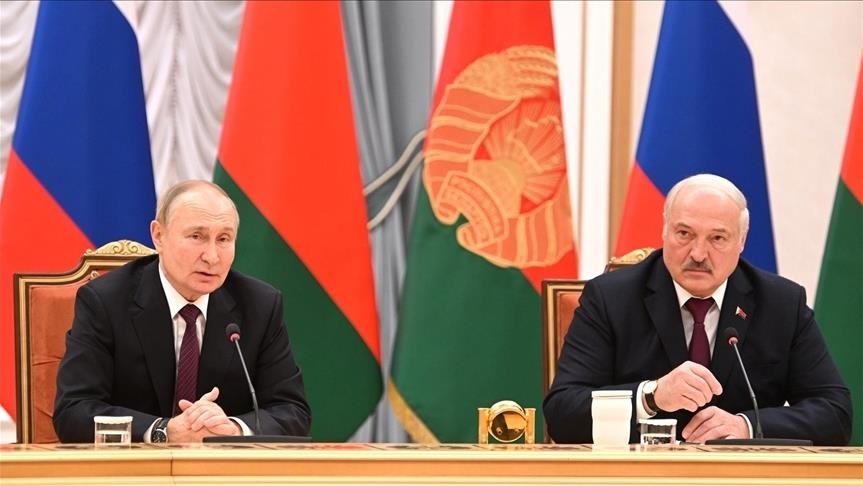
In a move being called historic and unprecedented, Russian President Vladimir Putin has signed a new law that gives Belarusian citizens living permanently in Russia the right to vote in local elections and even run for local office. This moment is being seen as a major step in blurring the lines between the two countries, as Moscow and Minsk push forward with deeper political integration.
The law was officially signed on Wednesday, and it updates a 1998 agreement on the equal rights of Russian and Belarusian citizens living in each other’s countries. That agreement—dormant for many years—is now being reactivated and expanded, signaling a stronger commitment to the idea of a “Union State” that both countries agreed to back in 1999. That Union State agreement envisions shared borders, a joint legal system, common currency, and coordinated foreign and defense policy.
This latest legislation comes after Putin submitted the ratified changes to the Russian parliament earlier this month. The bill was approved by the Federation Council, Russia’s upper house, last week. The new law mirrors existing Belarusian legislation that already allows Russian citizens to participate in local elections within Belarus.
According to state-run Russian media, Putin believes the change will help Belarusians integrate more fully into Russian civic life, turning long-time residents into more active participants in the communities they live in.
But it doesn’t stop there. Belarusian officials have said they hope the new policy will eventually extend to regional-level elections as well—possibly leading to a “common political space” between the two countries. That would be a massive leap toward forming a unified state, not just in name but in actual governance.
The Belarusian Institute for Strategic Studies, which is close to the government in Minsk, has praised the move, saying it adds a “human face” to the Union State integration process. It’s not just about politics and policy anymore—it’s about people becoming truly part of each other’s societies.
To understand the deeper meaning of this move, one must look at the history of Belarusians in Russia. The two nations have long shared deep linguistic, cultural, and religious ties, with both peoples tracing roots back to the medieval state of Kievan Rus. Many Belarusians moved to Russia during Soviet times, and even after the USSR’s collapse, the two countries remained closely intertwined. Today, hundreds of thousands of Belarusians live and work in Russia, and many of them have built permanent lives there.
Now, with this new law, those Belarusians are being offered more than just residency—they’re being offered political inclusion. They’ll be able to cast votes, run for office, and have a say in how their local communities are governed.
At a time when Russia is increasingly isolated from the West and Belarus remains its most loyal ally, this law sends a strong message: the borders between Russia and Belarus are fading, and the Union State is no longer just an idea—it’s becoming a lived reality.
✍️ This article is written by the team of The Defense News.