Project Kusha’s S‑Band LRBMR: GaN‑Powered Radar with 500 + km Reach

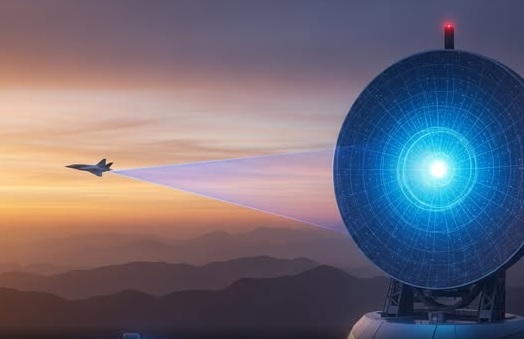
Project Kusha—officially known as the Extended‑Range Air Defence System (ERADS) or Precision‑Guided Long‑Range Surface‑to‑Air Missile (PGLRSAM)—is India’s indigenous initiative to develop a long-range air defence capability between MR‑SAM (80 km) and S‑400 (400 km) systems . At the heart of the system lies the Long Range Battle Management Radar (LRBMR), an S‑band phased-array radar with a detection range exceeding 500 km—with some reports suggesting 500–600 km of effective surveillance into adversary airspace .
GaN TRMs & Digital Beam‑Forming Architecture
The LRBMR uses Gallium Nitride (GaN) based Transmit‑Receive Modules (TRMs), enabling high power output, better thermal resilience, and superior efficiency—necessary for managing the radar’s multi-target tracking and wide-area coverage capabilities. Additionally, Digital Beam-Forming hardware enables dynamic steering of beams, permitting simultaneous tracking and fire-control across multiple directions—an indispensable feature in modern battle-management radars.
Axiscades Contract: Beam‑Forming Subsystems
-
In July 2025, Axiscades Technologies, via its subsidiary Mistral, secured a contract worth ₹159 crore from Bharat Electronics Ltd (BEL) to develop and supply 75 units of Digital Beam‑Forming hardware for the LRBMR over a five-year delivery timeline .
-
As part of a broader package totaling approximately ₹600 crore, Axiscades will also contribute GaN-based Transmit‑Receive Modules (ODTRMs and ODRMs) and key radar subsystems under DRDO-led projects, consolidating its stake in indigenous defence electronics development .
Strategic Importance & Technical Capabilities
| Feature | Significance |
|---|---|
| Detection Range >500 km | Provides early warning for high-altitude aircraft, drones, missiles |
| GaN TRMs | High-power, compact modules with better heat dissipation |
| Digital Beam‑Forming Units | Allows flexible, simultaneous multi-beam tracking |
| Integration with IACCS | Enables coordinated air defence tactics across platforms |
The LRBMR is designed to serve as an air battle-management hub—integrating with IACCS and other systems like Akash, MRSAM, Barak‑8, and S‑400—enhancing real-time coordination and faster decision-making in India's air defence grid .
Development Timeline & Deployment Path
-
Project Kusha received Cabinet Committee on Security (CCS) clearance in May 2022, followed by Acceptance of Necessity (AoN) approval in September 2023, authorizing procurement of multiple squadrons at an estimated cost of ₹21,700 crore (approx. US$2.6 billion) .
-
As of mid‑2025, prototype radar hardware and launchers are under development. BEL is expected to complete system prototypes by late 2026 or early 2027, with user trials to follow spanning 12–36 months. Operational induction is projected between 2028 and 2030 .
Broader Context & Implications
-
Project Kusha is positioned as a domestic alternative to systems like Russia’s S‑400 or future S‑500, offering comparable detection and engagement abilities for stealth jets, missiles, drones, and ballistic threats—with significantly reduced reliance on foreign imports ).
-
It underscores India's push for Atmanirbhar Bharat (self‑reliance) in defence technology, while offering a scalable and cost-effective solution suitable not just for domestic use but also export opportunities in international defence markets.
Project Kusha’s LRBMR represents a major leap in India’s radar and air-defence capabilities—with S‑band coverage beyond 500 km, GaN-powered TRMs, and modern digital beam‑forming architecture at its core. The award to Axiscades for digital beam‑forming units—amid a larger ₹600 crore order—validates growing synergy between DRDO, BEL, and Indian private industry in mission-critical defence electronics. As the radar and missile systems mature toward the 2028–2030 induction window, LRBMR is set to become a pivotal element of India’s integrated air battle-management network—enhancing strategic deterrence and technological independence.
✍️ This article is written by the team of The Defense News.