President Trump Affirms U.S. Commitment to AUKUS Submarine Deal with Australia
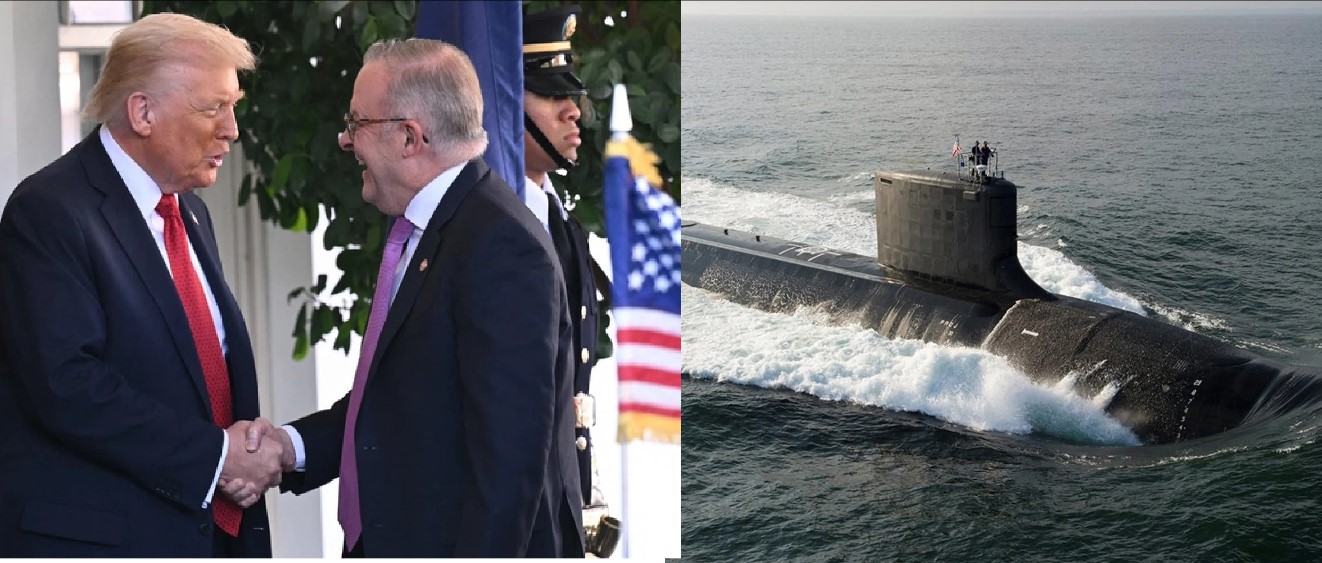
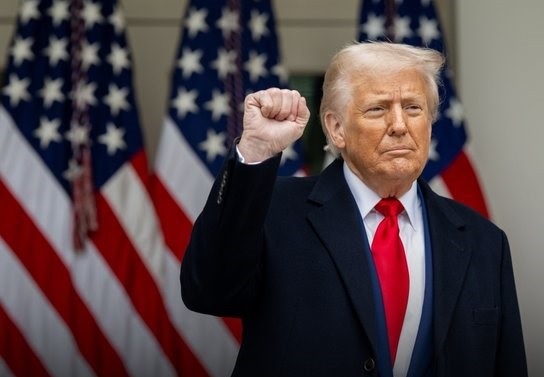
U.S. President Donald Trump has reaffirmed America's strong support for the AUKUS trilateral defense pact, confirming plans to sell Virginia-class nuclear-powered submarines to Australia. This announcement came during a White House meeting with Australian Prime Minister Anthony Albanese on October 20, 2025.
President Trump emphasized that "Australia would get the boats," underscoring the U.S.'s commitment to the agreement.
AUKUS Submarine Deal
Under the AUKUS framework, Australia is set to acquire three to five Virginia-class submarines from the United States, with deliveries commencing in 2032. The initial batch will include two Block IV submarines currently in U.S. Navy service, followed by a new Block VII submarine in 2038. These submarines are intended to bridge the capability gap until the introduction of the SSN-AUKUS class, a new generation of submarines developed collaboratively by the U.K., U.S., and Australia.
The Virginia-class submarines are renowned for their advanced capabilities, including:
-
Enhanced Firepower: The Block V variant features an extended hull, increasing the number of Tomahawk missile launch tubes from 12 to 40.
-
Advanced Sonar Systems: Equipped with cutting-edge sonar technology for superior detection and tracking.
-
Stealth and Endurance: Designed for long-duration missions, providing unmatched stealth in various operational environments.
Each Virginia-class submarine is estimated to cost between $3 billion and $3.5 billion USD, making this a substantial investment for Australia.
Strategic Implications
The AUKUS submarine deal is a strategic move aimed at enhancing Australia’s defense capabilities and countering China's growing influence in the Indo-Pacific region. President Trump framed the pact as a deterrent to China’s ambitions, particularly concerning Taiwan, emphasizing that it should not be viewed as a provocation.
In addition to the submarine deal, President Trump and Prime Minister Albanese signed a critical minerals agreement valued at $8.5 billion, aimed at building supply chains independent of China, focusing on mining and processing projects essential for defense and technology sectors.
Challenges
While the AUKUS submarine deal represents a major advancement in strengthening trilateral defense ties, Australia faces a series of challenges in successfully implementing the agreement. A primary concern is workforce development; the country must significantly expand its pool of nuclear-trained personnel, including submariners, engineers, and skilled tradespeople, to operate and maintain these advanced vessels. In addition, substantial infrastructure investment is necessary, particularly in Western Australia, where facilities must be upgraded or constructed to support the deployment, servicing, and maintenance of the submarines. Equally critical is the financial commitment: with an estimated cost of $239 billion, the AUKUS submarine program represents a considerable portion of Australia’s defense budget, requiring careful long-term planning to balance defense priorities with national spending constraints.
The AUKUS submarine deal is a pivotal element of Australia's defense strategy, enhancing its capabilities and strengthening ties with the United States and the United Kingdom. Addressing workforce development, infrastructure investment, and financial planning will be crucial for the program's success. With continued commitment and collaboration, Australia aims to bolster its defense posture and contribute to regional stability in the Indo-Pacific.
About the Author
Aditya Kumar:
Defense & Geopolitics Analyst
Aditya Kumar tracks military developments in South Asia, specializing in Indian missile technology and naval strategy.