Pratt & Whitney Secures $1.6 Billion Contract to Sustain F135 Engines Powering Global F-35 Fleet
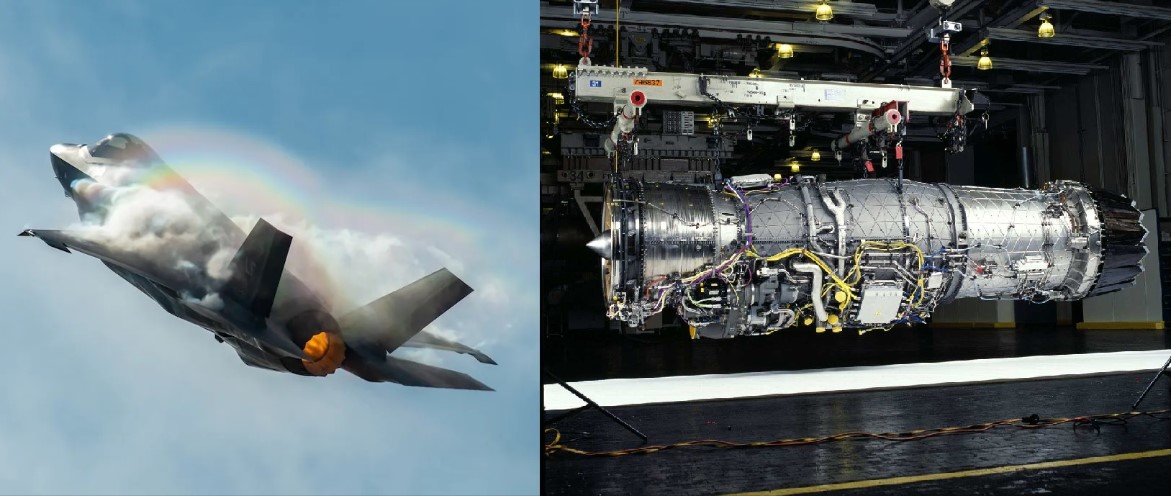
Pratt & Whitney, an RTX business, has been awarded a $1.6 billion undefinitised contract action (UCA) to continue sustaining the F135 engines that power all three variants of the F-35 Lightning II, the world’s largest and most internationally connected fifth-generation fighter program. The new award ensures continued engine readiness for both U.S. operators and international customers across the 20-nation F-35 partnership.
A Comprehensive Sustainment Package
The contract funds a wide spectrum of sustainment activities essential to keeping the global F-35 fleet mission-ready. It covers depot-level maintenance and repair, replenishment of spare parts and material management, as well as propulsion system integration and engineering support. It also provides for software sustainment, including updates to the engine’s health-monitoring tools and performance algorithms. This comprehensive support package is especially important as the global F-35 fleet continues to expand—now numbering more than 1,000 aircraft—ensuring that squadrons maintain high mission-capable rates despite increasing operational demands.
Pratt & Whitney: Sustaining Global Readiness
“Investing in F135 sustainment keeps allied forces ready to meet current and future threats,” said Kinda Eastwood, vice president of F135 Sustainment at Pratt & Whitney. She added that air forces worldwide rely on the engine’s power and performance for a wide range of operational missions, from deterrence patrols and expeditionary deployments to strike missions and homeland defense.
The F135, recognized as the most powerful fighter engine ever fielded, delivers 40,000+ pounds of thrust, advanced thermal management, and high-efficiency performance—all essential for the F-35’s stealth and sensor-fusion capabilities.
A Global Sustainment Footprint
Pratt & Whitney’s F135 sustainment network is one of the most distributed and complex engine-support infrastructures in the world. It spans:
-
Multiple depot facilities across the United States, Europe and Asia
-
39 operating bases
-
12 aircraft carriers and amphibious assault ships equipped for F-35B and F-35C operations
This global footprint allows rapid deployment of parts, tools, and technical expertise, enabling high aircraft availability across theaters such as Europe, the Indo-Pacific, and the Middle East. Officials say the distributed model enhances agility, resilience and response time, ensuring that F-35 units remain combat-ready under all conditions.
A Growing Fleet and Future Upgrades
Pratt & Whitney has already delivered more than 1,300 F135 production engines. With the F-35 program projected to exceed 3,000 aircraft, sustainment costs and reliability upgrades remain politically and strategically important.
The company emphasized that the upcoming F135 Engine Core Upgrade (ECU)—a modernization package scheduled to begin entering service later this decade—will be fully compatible with existing sustainment infrastructure. The ECU aims to improve:
-
Thrust performance
-
Thermal management (critical as F-35s gain new sensors and weapons)
-
Fuel efficiency
-
Lifecycle cost reduction
Partner nations have welcomed the ECU as a cost-effective and low-risk path to maintain engine performance without pursuing a completely new propulsion system.
Why This Contract Matters
The sustainment UCA comes at a time when global F-35 deployments are expanding rapidly. Nations such as Japan, the U.K., Australia, Norway, the Netherlands, Italy, Finland, South Korea and others rely heavily on the aircraft’s operational availability to deter regional threats.
For the U.S., the F-35 remains the backbone of tactical airpower across the Air Force, Navy, and Marine Corps, making engine support essential for forward operations, carrier deployments, and homeland defense missions.
The new contract ensures the stability of the sustainment pipeline, secures spare-part inventories, and supports the transition to next-generation upgrades—all crucial as worldwide demand for F-35 missions intensifies.
About the Author
Aditya Kumar:
Defense & Geopolitics Analyst
Aditya Kumar tracks military developments in South Asia, specializing in Indian missile technology and naval strategy.