Poland Unveils 15-Year Military Expansion Plan, Targets 500,000-Strong Force by 2039

WARSAW : Poland has unveiled an ambitious long-term blueprint to reshape its military into one of Europe’s largest and most technologically advanced armed forces, with plans to expand total strength to 500,000 personnel by 2039, according to a newly adopted development program published by the official website of the Polish Armed Forces.
The document, formally launched by the Ministry of National Defence, is described by officials as a strategy of fundamental importance, setting out the direction of Poland’s military transformation over the next 15 years. It defines the future size of the armed forces, outlines priorities for operational capabilities and technical modernization, and establishes new principles for building and sustaining reserves in an era of heightened security risks.
A 500,000-Strong Force by 2039
Under the plan, Poland’s total military strength is to reach 500,000 personnel by 2039. Of these, 300,000 will be active-duty soldiers, while the remaining 200,000 will consist of reservists, including a newly created high-readiness reserve designed to be rapidly mobilized in a crisis.
Defense officials stress that the expansion is not solely about numbers. The guiding philosophy of the program is described as “quality multiplied by quantity,” combining numerical growth with a deliberate effort to raise professional standards across the force. The ministry said this will be achieved through a renewed focus on the ethos of the “winning soldier,” improved talent management, and the systematic integration of innovation into combat operations.
According to the ministry, this approach is intended to offset the potential numerical superiority of adversaries and to provide Poland with credible deterrence and defense capabilities in a high-intensity conflict.
Shifting the Deterrence Paradigm
A central pillar of the new strategy is a shift toward what officials call “deterrence through punishment.” Rather than relying solely on defensive postures, the plan emphasizes the development of long-range and precision strike capabilities capable of neutralizing an adversary’s critical centers of gravity.
At the same time, the program calls for a major expansion of integrated missile, air, and anti-drone defenses to protect Polish forces, key infrastructure, and civilian populations. These layered defense systems are intended to counter modern threats, ranging from ballistic and cruise missiles to swarms of unmanned aerial vehicles.
Reserves as a Strategic Asset
The development program places particular emphasis on the role of reserves, identifying them as a decisive factor in deterrence and sustained national defense. Officials argue that the ability to rapidly reinforce active forces with trained reservists could prove critical in a prolonged or large-scale conflict.
To that end, the plan provides for a comprehensive overhaul of reserve training and readiness. This includes more intensive training cycles, higher standards of preparedness, and a new system designed to ensure that reservists can be quickly integrated into operational units without lengthy mobilization delays.
Drones, Robots, and the Digital Battlefield
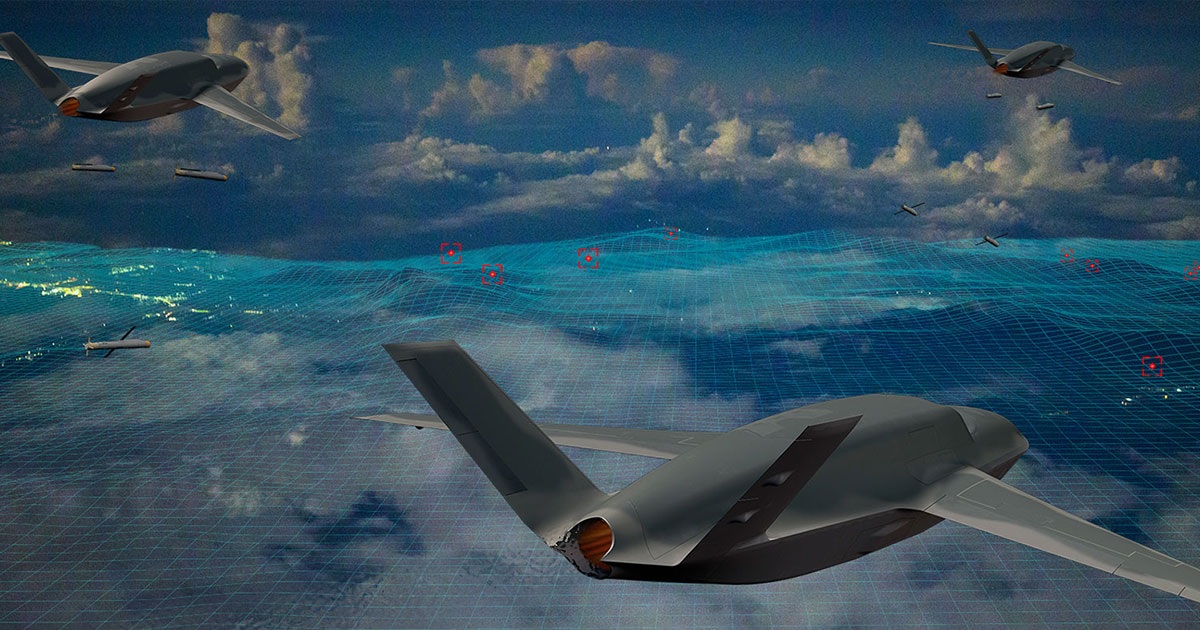
Another major component of the strategy is the widespread introduction of unmanned and autonomous systems across the armed forces. The ministry says “dronization and robotization” will affect all branches and domains, from land and air to logistics and command systems.
Unmanned platforms are expected to play a growing role in reconnaissance, decision support, precision strikes, and logistical resupply. Officials say this reflects lessons learned from recent conflicts, where drones and autonomous systems have reshaped the conduct of warfare at every level.
Near-Term Reality: The 2026 Snapshot
While the long-term vision is expansive, official budget planning documents reveal a more modest and realistic picture in the near term. Under current projections, Poland’s armed forces are expected to number 227,641 active personnel in 2026.
This figure includes approximately 163,641 professional soldiers, 24,000 personnel in the Voluntary Basic Military Service, 40,000 members of the Territorial Military Service, 3,000 active reservists, 5,000 passive reservists, and 57,686 civilian employees. The projected total represents a decrease of more than 14,000 personnel compared with planned levels for 2025.
The defense-focused publication Dziennik Zbrojny has noted that the downward adjustment reflects an effort to align staffing plans with recruitment capacity, training pipelines, and budgetary realities.
A Strategic Signal
Taken together, the Armed Forces Development Program sends a clear strategic signal about Poland’s long-term security priorities. By combining force expansion, modernization, reserve reform, and advanced technologies, Warsaw is positioning its military not only to defend national territory but also to play a more significant role in regional and allied defense frameworks.
Officials acknowledge that achieving the 2039 targets will require sustained political commitment, stable funding, and successful recruitment over more than a decade. Yet they argue that the scale of the plan reflects a new and enduring security environment—one that demands both mass and sophistication in equal measure.
About the Author
Aditya Kumar:
Defense & Geopolitics Analyst
Aditya Kumar tracks military developments in South Asia, specializing in Indian missile technology and naval strategy.