Poland Plans to Send Remaining MiG-29s to Ukraine for Access to Ukrainian Drone Designs
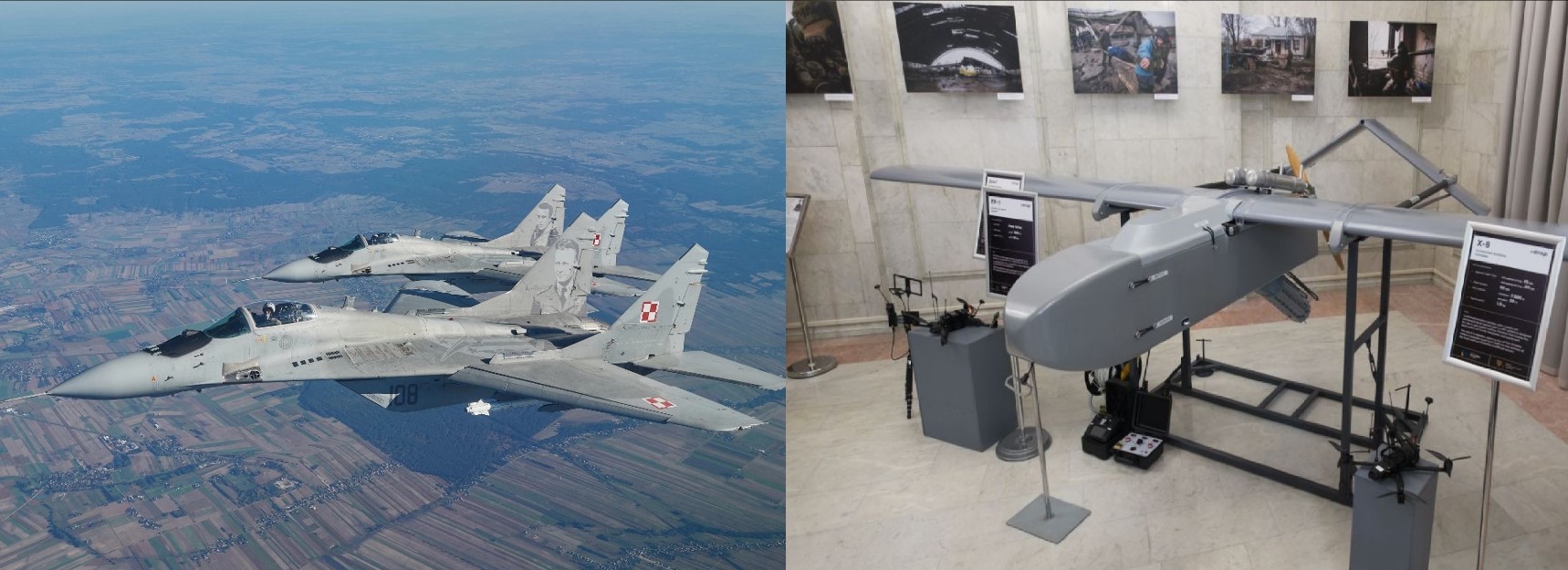
Poland is in advanced negotiations to transfer its remaining MiG-29 fighter jets to Ukraine, the General Staff of the Polish Armed Forces confirmed on 10 December 2025, framing the proposal as both an act of allied solidarity and a strategic investment in next-generation drone and missile capabilities developed inside Ukraine’s wartime innovation ecosystem. While no final decision has been announced, officials in Warsaw describe the talks as “constructive and ongoing,” with Polish defense planners emphasizing that the Soviet-built fighters are nearing the end of their useful life in Polish service.
Poland Preparing to Retire Its Last MiG-29s
Poland’s defense minister reiterated that the airframes under discussion are the final MiG-29s remaining in Polish inventory, following an earlier tranche transferred to Kyiv in 2023 and 2024. The aircraft once formed the backbone of Poland’s air defense, but Warsaw’s sweeping modernization program—built around F-16s, FA-50 light fighters, and future F-35A squadrons means the MiG-29s will not undergo further upgrades. Their roles will be fully absorbed by Western platforms in the coming years.
Despite their age, the MiG-29s have retained significant point-defense value. The twin RD-33 afterburning engines, Mach 2-class performance, high thrust-to-weight ratio, and tight low-altitude maneuverability make the jet a rugged first-responder in high-threat environments. Equipped with a 30 mm GSh-30-1 cannon, R-27 and R-73 air-to-air missiles, and limited ground-attack stores, the Fulcrum remains a potent quick-reaction platform—particularly suited for Ukraine’s daily battle against cruise missiles, glide bombs, and low-flying drones.
Poland’s fleet received incremental NATO compatibility upgrades, including improved radios, identification systems, and navigation avionics. While modest, these updates have increased reliability and interoperability, making the jets immediately usable by Ukraine without further modification.
Why Ukraine Wants More MiG-29s
The Ukrainian Air Force already operates several MiG-29 variants, and its pilots, maintainers, and depots are fully integrated into the Fulcrum support structure. Following earlier Western efforts, Ukrainian MiG-29s have been successfully adapted to deploy AGM-88 HARM anti-radiation missiles, and additional Western weapon integrations remain possible.
As Ukraine fields its first F-16 squadrons, officials in Kyiv acknowledge that a transitional period is unavoidable. Training pipelines, spare parts chains, and hardened air bases need time to mature. Until then, combat-ready MiG-29s serve as critical attrition replacements, allowing Ukraine to disperse aircraft across small airfields and operate under heavy Russian air-defense pressure. Their acceleration and short-field performance remain valuable as Ukraine confronts Russia’s expanding use of glide bombs and long-range missile barrages.
Poland Seeks Access to Ukraine’s Rapidly Advancing Drone Technology
In return for the MiG-29s, Poland is seeking access to Ukrainian drone and missile technologies, including:
-
FPV and kamikaze drone production methods
-
AI-assisted targeting software
-
Electronic warfare-resistant datalinks
-
Modular warheads for ground and aerial unmanned systems
-
Long-range strike drone designs capable of deep penetration
Ukraine’s drone industry has emerged as one of the most dynamic wartime innovations in decades. Ukrainian officials estimate more than one million drones were produced domestically in 2024, with even larger output planned in 2025. Battlefield adaptation has accelerated breakthroughs in autonomous navigation, hardened communications, and low-cost manufacturing—areas in which NATO states, including Poland, now seek close cooperation.
Poland aims to integrate these technologies into its artillery brigades, territorial defense units, coastal protection forces, and future counter-UAV formations. Warsaw is also exploring co-production arrangements, allowing joint facilities to mass-manufacture drones for both Ukrainian and NATO use.
A New Industrial Logic: Fighters for Drones
The emerging deal represents a novel model of wartime equipment exchange. Poland would send combat aircraft that no longer fit its modernization plan, while Ukraine leverages one of its strongest comparative advantages—its rapidly evolving combat-proven unmanned systems—as strategic currency.
Defense analysts note that this is the first major exchange in which a NATO ally seeks not only hardware compensation but also direct access to Ukrainian technology and intellectual property, turning Ukraine’s battlefield innovations into long-term industrial capacity for the alliance.
NATO’s Strategic Perspective
For NATO, the arrangement achieves two goals simultaneously:
-
Keeping the MiG-29 operational where it is most effective—over Ukraine’s front lines, not in storage hangars.
-
Absorbing Ukrainian innovation into the alliance’s eastern industrial base, helping to accelerate Europe’s preparedness for high-intensity conflict.
The alliance has long sought ways to strengthen deterrence on its eastern flank while supporting Ukraine’s war effort without depleting Western fighter inventories. This transfer-and-tech-access model, if finalized, could become a template for future cooperation.
What Comes Next?
Polish officials say the negotiations are in “the decisive phase,” with a formal political decision expected in the coming weeks. Technical teams from both countries are already discussing timelines, delivery conditions, and the scope of joint production arrangements tied to the drone and missile technology exchange.
If approved, the deal would mark the final retirement of the MiG-29 from Polish service—but also the beginning of a new chapter for the aircraft as Ukraine continues to rely on rugged legacy platforms while transitioning into a Western-equipped air force.
For Ukraine, the additional airframes would enhance survivability and operational flexibility. For Poland, the deeper technological partnership could anchor its emerging role as a central node in NATO’s drone and missile industrial revival. And for Europe, the arrangement would represent a rare convergence of immediate battlefield utility and long-term strategic development—uniting old fighters with new drone warfare innovations.
About the Author
Aditya Kumar:
Defense & Geopolitics Analyst
Aditya Kumar tracks military developments in South Asia, specializing in Indian missile technology and naval strategy.