Poland Plan To Acquire 3–4 Airbus A330 MRTT Aircraft in €1 Billion Deal
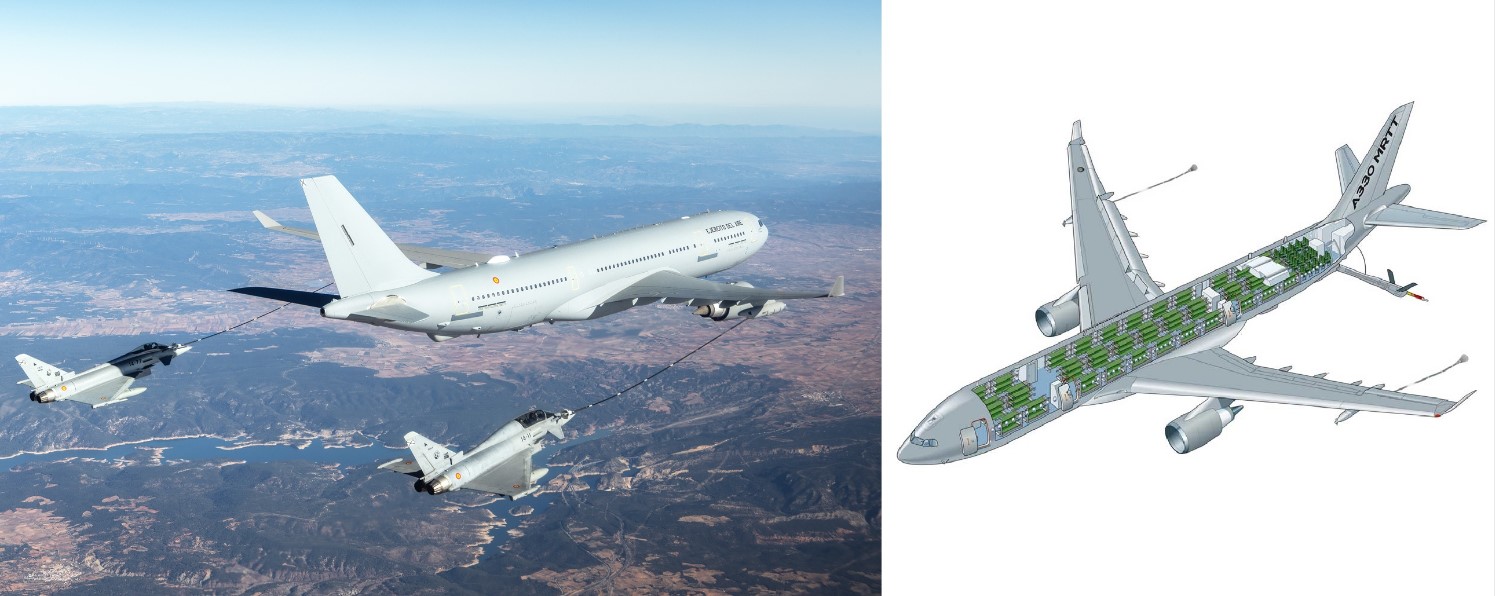
Poland has announced plans to acquire Multi-Role Tanker Transport (MRTT) aircraft, in what officials and analysts are calling one of the most important steps in the modernisation of the Polish Air Force since the decision to buy the F-35. Warsaw is expected to purchase three to four Airbus A330 MRTT aircraft from France in a deal worth more than €1 billion, giving Poland its first-ever national aerial refuelling capability for its F-35, F-16 and FA-50 fleets.
A Billion-Euro Deal Built Around A330 MRTT
According to Polish and European defence media, the government has decided to move ahead with the Karkonosze tanker/transport programme after nearly a decade of delays. The preferred solution is a small fleet of Airbus A330 MRTT aircraft sourced from France, which already operates the type and can offer training, maintenance cooperation and rapid integration into NATO refuelling networks.
The purchase is expected to be co-financed under the European Commission’s EU SAFE defence investment facility, which offers low-interest loans for critical capability projects but requires that no more than 35% of the system’s value comes from non-EU components. That condition strongly favours the European-built A330 MRTT over US competitors and has been cited in Polish media as a key reason for the Airbus selection.
While final contract details have not yet been published, officials in Warsaw say the goal is to have the first tankers in service before the end of this decade, in time to support a growing fleet of fifth-generation and upgraded fourth-generation fighters.
From Zero Tankers To A National Capability
Unlike many Western air forces, the Polish Air Force has never operated its own dedicated aerial refuelling tankers. Instead, Poland has relied on a network of NATO partners for inflight refuelling support during training and operations. French A330 MRTT tankers, for example, have recently refuelled Polish F-16s, while U.S. Air National Guard tanker wings have supported Polish fighters and the training of Polish F-35 crews.
Earlier attempts to plug this gap repeatedly stalled:
-
In 2008, Polish plans to acquire tankers were shelved amid budget pressures.
-
In 2014, Warsaw joined a NATO Multinational MRTT Fleet (MMF) initiative but then withdrew in 2016, just days before signing, a decision retired Polish Air Force leaders later described as a “lost opportunity”.
In the absence of tankers, Poland depended on its transport fleet—five C-130E Hercules, additional C-130H airframes being received from the United States, 16 Airbus C-295M, and smaller M28 Bryza aircraft—for strategic and tactical lift, medical evacuation and troop movements. These aircraft can move people and cargo but cannot refuel fighters in mid-air, forcing Polish jets to operate within range of ground bases or allied tankers.
The planned A330 MRTT purchase therefore represents not a replacement of older Polish tankers – there were none – but the creation of an entirely new mission area inside the Polish Air Force.
What The A330 MRTT Brings To Poland
The Airbus A330 MRTT is widely regarded as the benchmark among new-generation tanker/transports. Based on the civilian A330-200 airliner, it combines a large fuel load with a wide-body cabin for cargo and passengers:
-
It can carry around 111 tonnes of fuel in its wings and tanks without additional fuel cells.
-
Airbus data shows it can offload up to 70 tonnes of fuel during a one-hour loiter mission 1,250 nautical miles from base—enough to keep a sizeable fighter package airborne.
-
The aircraft can also transport up to about 300 troops or roughly 45 tonnes of cargo, and can be configured for aeromedical evacuation with intensive-care modules.
For Poland, that means a single platform able to:
-
Refuel F-35A, F-16C/D and future tanker-capable aircraft via boom or hose-and-drogue systems.
-
Fly long-range strategic airlift missions, including deployments to the Middle East, Africa or the Indo-Pacific without relying on chartered civilian lift.
-
Conduct mass medical evacuation or humanitarian relief flights, for example in support of operations in Ukraine or disaster response.
Polish air commanders have publicly argued that having tankers can halve the number of fighters and crews needed to maintain long combat air patrols by allowing aircraft to refuel in the air rather than cycling back to base.
Supporting A Rapidly Expanding Fighter Fleet
The MRTT decision is closely tied to Poland’s rapidly growing fast-jet inventory. Warsaw is modernising and expanding its air force on several fronts:
-
It operates 48 F-16C/D Jastrząb fighters, which are now being upgraded to the latest F-16V standard under a multibillion-dollar programme.
-
It has ordered 32 F-35A Lightning II, with the first jets already delivered to a U.S. training base and Polish-based deliveries scheduled from 2026.
-
It has contracted 48 FA-50 light combat aircraft from South Korea, 12 of which have already been delivered, with the remainder arriving through 2028.
As these fleets enter service and legacy MiG-29 and Su-22 jets are phased out, Poland faces a simple problem: modern jets without a tanker are range-limited. A national MRTT fleet will allow:
-
Deep-strike and patrol missions along NATO’s eastern flank and over the Baltic Sea.
-
Long-endurance air policing and missile-defence patrols, which have become routine since Russia’s full-scale invasion of Ukraine.
-
More realistic training for F-35 crews, who will rely heavily on tanker support in any high-intensity conflict.
EU, NATO And Industrial Dimensions
The choice of A330 MRTT also deepens Poland’s integration with wider European and NATO refuelling networks. Several European allies—including France, the Netherlands (through the Multinational MRTT Fleet), Spain and the UK—already operate the aircraft, enabling shared training, common logistics and pooled operations in crises.
By tying the deal to the EU SAFE mechanism, Warsaw can offset part of the financial burden while supporting European industrial supply chains, particularly Airbus facilities in France, Spain and Germany.
At the same time, Poland continues to explore separate deals for tactical transports like the Embraer C-390 Millennium, which can also be configured as a smaller tanker, suggesting that the A330 MRTT fleet could eventually be complemented by more agile tanker/transport platforms assembled partly in Poland.
What Happens Next
The next milestones will include the formal intergovernmental agreement with France, contract signature with Airbus, selection of a Polish base for the MRTT fleet, and detailed decisions on boom and hose-and-drogue fit, medical kits and communications systems. Once delivered, the aircraft will need a tailored training pipeline for pilots, boom operators and maintenance personnel.
For Warsaw, however, the strategic direction is already clear. After years of relying on allied tankers and watching earlier initiatives fall through, the planned purchase of three to four Airbus A330 MRTT aircraft marks the moment when Poland finally couples its expanding fleet of modern combat aircraft with the long-range reach and endurance they were designed to deliver.
About the Author
Aditya Kumar:
Defense & Geopolitics Analyst
Aditya Kumar tracks military developments in South Asia, specializing in Indian missile technology and naval strategy.