Philippines Declines to Invoke U.S. Defense Treaty After South China Sea Incident
The Philippines opts not to invoke its mutual defense treaty with the U.S. following a violent encounter with the Chinese coast guard at Second Thomas Shoal, seeking to manage tensions in the volatile South China Sea region.
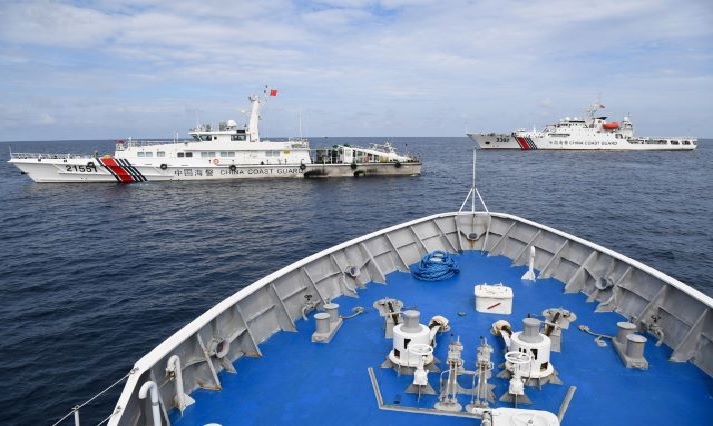
The Philippines has decided not to invoke its mutual defense treaty with the United States following a recent clash with the Chinese coast guard at the disputed Second Thomas Shoal in the South China Sea. This decision comes after a confrontation on Monday in which Chinese personnel reportedly rammed, boarded, and used machetes and axes to damage two Philippine navy boats, injuring several Filipino navy personnel.
Incident Details
During the altercation, Chinese coast guard personnel reportedly seized eight M4 rifles from the Philippine navy and damaged the inflatable boats carrying food and supplies to the BRP Sierra Madre, a dilapidated warship grounded at the shoal since 1999. The Philippine military chief has condemned the incident, describing it as akin to piracy and demanding the return of the rifles and compensation for the damage.
Government Response
In a televised news conference, key advisers to President Ferdinand Marcos Jr. clarified that invoking the 1951 mutual defense treaty with the U.S. is not being considered. Presidential assistant on maritime concerns, Andres Centino, emphasized that the incident is not viewed as an armed attack under the terms of the treaty. Executive Secretary Lucas Bersamin echoed this sentiment, stating the confrontation appeared to be a misunderstanding rather than an act of war.
Regional Tensions
The South China Sea is a contentious region with overlapping territorial claims from China, the Philippines, Vietnam, Malaysia, Brunei, and Taiwan. The U.S. has repeatedly affirmed its obligation to defend the Philippines, its oldest treaty ally in Asia, should Filipino forces come under armed attack in the region.
Chinese Perspective
China has accused the Philippines of trespassing in the shoal, insisting that the Filipino personnel ignored its warnings. China has maintained a significant presence at the shoal, including coast guard, navy, and suspected militia ships, contributing to ongoing volatility in the area.
Strategic Decisions
In what could be seen as a concession to China, Executive Secretary Bersamin announced that President Marcos approved the recommendation to publicize the schedule of navy personnel deployments to the shoal. This move is intended to avoid further misunderstandings and potential confrontations.
The Philippine navy reported that one person was injured in the incident, while unnamed security officials disclosed that at least five personnel were treated on a Philippine coast guard ship nearby.
U.S. Involvement
While the Philippines has chosen not to escalate the situation by invoking the mutual defense treaty, the U.S. remains committed to its defense obligations. This incident underscores the fragile balance in the South China Sea and the potential for regional disputes to draw in larger powers.
✍️ This article is written by the team of The Defense News.