Philippines Awards ₱34-Billion Contract for Two New Missile Frigates to South Korea’s HD Hyundai
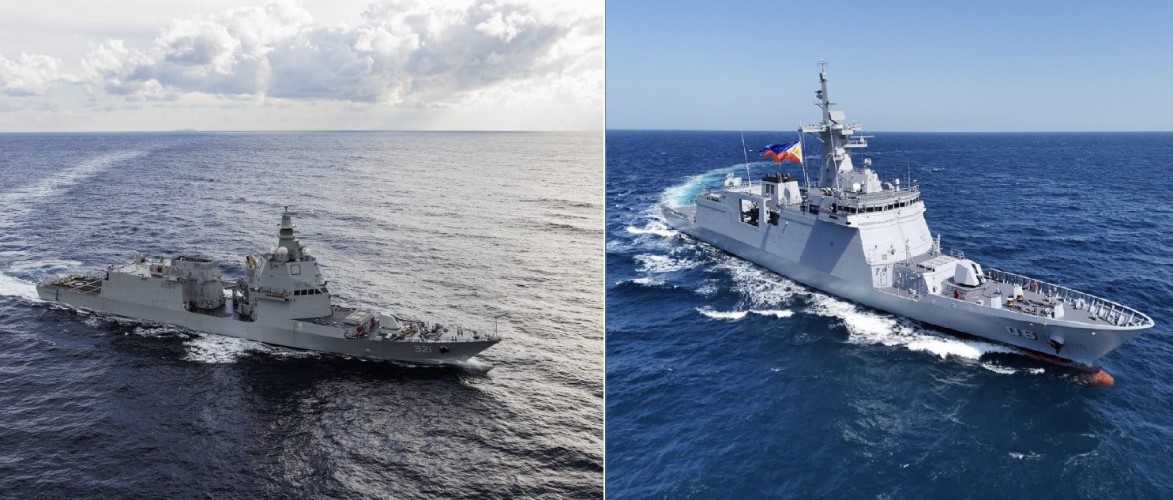
The Philippines has taken a decisive step in strengthening its maritime strike and air-defense capabilities after the Department of National Defense (DND) formally issued a Notice of Award to South Korean shipbuilder HD Hyundai Heavy Industries for the acquisition of two advanced guided-missile frigates, officials confirmed on December 22, 2025.
The contract, valued at approximately ₱34 billion (about $585 million), follows the release of critical modernization funds by the Department of Budget and Management, clearing the final financial hurdle for the long-planned procurement. Defense officials described the acquisition as “inventory-based,” signaling a deliberate repeat order intended to reduce costs, shorten crew training timelines, and simplify long-term maintenance and logistics across the fleet.
The award further consolidates the role of HD Hyundai Heavy Industries as the central shipbuilding partner of the Philippine Navy, reflecting Manila’s strategy of building a standardized, interoperable surface combatant force rather than a mix of disparate designs.
Standardizing the Modern Philippine Fleet
Over the past five years, HD HHI has delivered four major warships to the Philippines, including the Jose Rizal-class frigates and the more capable Miguel Malvar-class vessels. The Navy’s current flagships, BRP Miguel Malvar (FFG-06) and BRP Diego Silang (FFG-07), both displacing around 3,200 tons, represent the most advanced surface combatants ever operated by Manila.
Diego Silang was commissioned into active service on December 2, 2025, at Subic Bay, entering the fleet just months after its sister ship. The close succession underscored the Navy’s push to accelerate capability development amid growing regional security pressures.
Defense sources say the newly awarded frigates will be based on HD HHI’s HDF-3200 design, effectively matching the Malvar-class configuration. By ordering near-identical ships, the Navy aims to minimize operational “teething issues,” allow crews to rotate seamlessly between hulls, and ensure commonality of spare parts, weapons, and software.
Firepower and Sensors for High-Threat Waters
While the base ship contract stands at ₱34 billion, the total project cost is expected to rise to around ₱42 billion once weapons, sensors, and support systems are fully integrated. The frigates are designed for high-intensity naval warfare, with a focus on air defense, anti-surface strikes, and submarine detection—capabilities seen as essential for operations in the West Philippine Sea.
Based on existing Malvar-class specifications, the ships will be armed with a 76mm Super Rapid main gun, a 16-cell vertical launching system for VL MICA surface-to-air missiles, and eight C-STAR anti-ship missiles capable of engaging enemy vessels at long range. For close-in defense, the frigates carry the Gökdeniz 35mm close-in weapon system, designed to counter incoming missiles and aircraft.
Anti-submarine warfare is provided by two triple torpedo launchers, complemented by a towed array sonar, while situational awareness is enhanced through an advanced AESA multi-function radar, giving the ships a significant leap in detection and tracking capability compared with older Philippine Navy platforms.
A Cornerstone of the ‘Re-Horizon 3’ Strategy
The frigate acquisition is a key element of the Philippines’ “Re-Horizon 3” defense modernization phase, a ₱2-trillion, ten-year program aimed at shifting the Armed Forces of the Philippines from an internal security focus to external territorial defense. The Navy, long constrained by aging platforms, is a primary beneficiary of the plan.
The timing of the award is notable. It comes amid sustained tensions in the South China Sea and follows increased international security cooperation, including new U.S. legislative measures supporting Philippine defense capacity. Officials say this broader strategic environment has encouraged Manila to commit to long-term, capital-intensive naval programs.
Looking Toward 2029 and Beyond
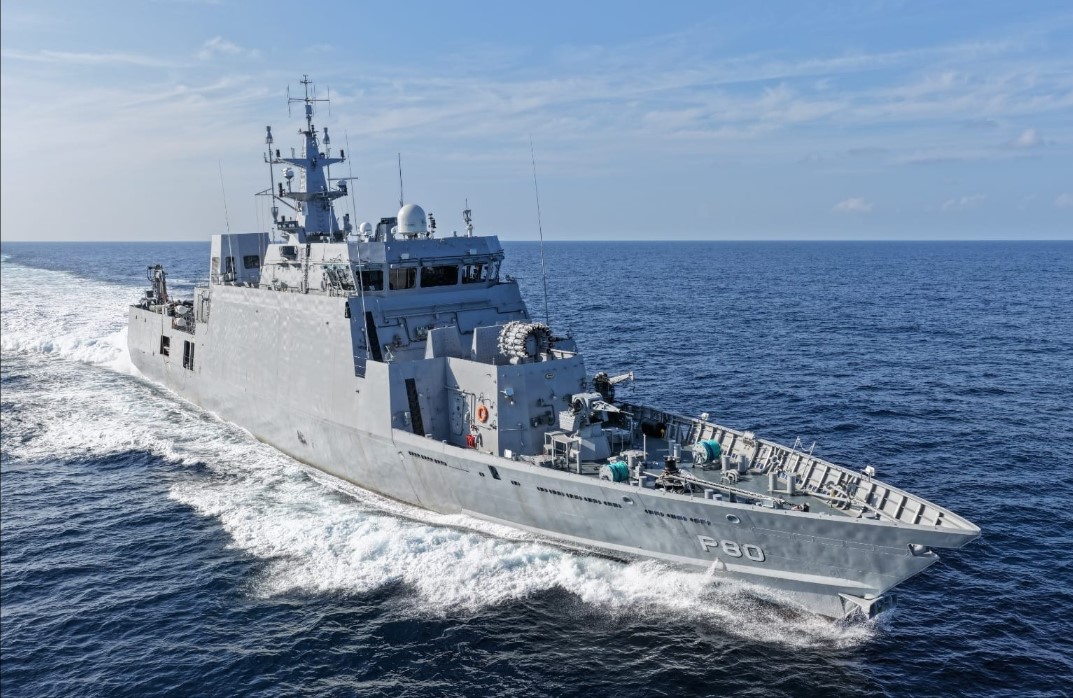
The two new frigates are scheduled for delivery in 2029, further expanding a surface fleet that is steadily transforming in size and capability. In parallel, HD HHI is constructing six Offshore Patrol Vessels (OPVs) for the Philippine Navy, with the first—the future BRP Rajah Sulayman—set for delivery in January 2026.
By the end of the decade, the partnership between Manila and the South Korean shipbuilder is expected to have produced a total of 12 modern warships, marking one of the most comprehensive naval renewal efforts in Southeast Asia.
For Philippine defense planners, the latest frigate award is more than a procurement milestone—it is a clear signal that the country intends to field a credible, modern, and standardized surface fleet capable of protecting its maritime interests in an increasingly contested regional environment.
✍️ This article is written by the team of The Defense News.