Philippines Navy Commissions "BRP Diego Silang" Its Most Advanced Warship Yet
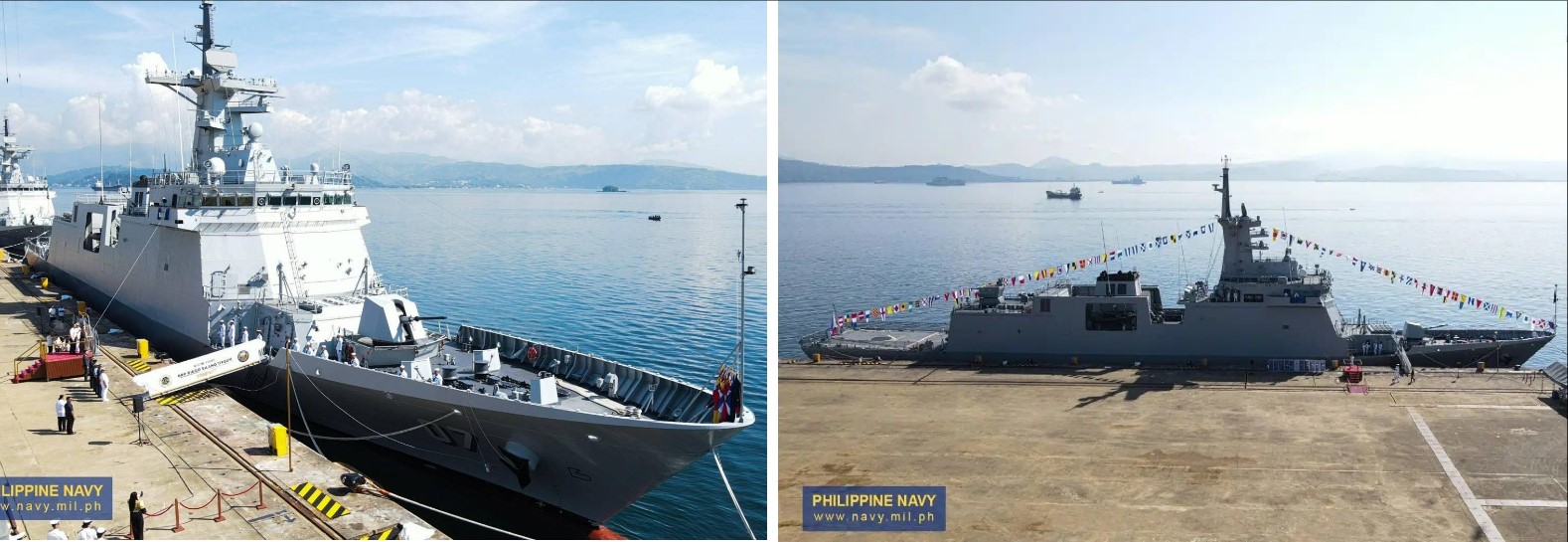
The BRP Diego Silang (FFG-07) — the second guided-missile frigate of the Miguel Malvar-class frigate — was officially commissioned into service on 2 December 2025 at Naval Operating Base Subic, marking a significant milestone in the ongoing modernization of the Philippine Navy (PN).
Senior naval and defense officials present at the ceremony highlighted the arrival of the ship as a decisive step in boosting maritime domain awareness and deterrence — particularly in disputed waters of the West Philippine Sea, the Philippine EEZ in the broader South China Sea.
“This will add to the capital ships of the PN that are capable of patrolling all the way up to our EEZ and even beyond,” said the Navy’s West Philippine Sea spokesperson during the press briefing, calling BRP Diego Silang “the most modern warship that we will have.”
Defense Undersecretary for Acquisition and Resource Management said the commissioning “sends a clear message that the Philippines will keep investing in programs that bolster maritime domain awareness, strengthen deterrence, and reinforce our ability to uphold the rule of law.”
From South Korea to Subic: Delivery and Arrival
Built by South Korea's HD Hyundai Heavy Industries (HD HHI), the frigate was delivered to the Philippine Navy on 9 September 2025. The warship is based on HHI’s HDC-3200 design — a further-evolved variant of the hull used in the earlier Jose Rizal-class frigate.
At arrival, the ship was formally welcomed by another Philippine naval vessel — the BRP Jose Rizal (FF-150) — marking a symbolic moment for the navy’s expanding surface fleet. During its voyage into Philippine waters, the frigate also conducted coordinated maneuvers with a coastal patrol vessel of the Philippine Coast Guard, reinforcing fleet interoperability.
Soon after its arrival, the necessary acceptance procedures and final checks were completed to prepare for full commissioning — now formalized on 2 December 2025.
What BRP Diego Silang brings: Capabilities & Strategic Value
At around 3,200 tons displacement, approximately 116–118 meters in length, with a beam of 14.9 meters, BRP Diego Silang is powered by a Combined Diesel and Diesel (CODAD) propulsion system, enabling a top speed of about 25 knots and a cruising range of 4,500 nautical miles.
The frigate is outfitted for multi-domain warfare — capable of addressing air, surface, and subsurface threats. Its weapons fit includes a 76 mm main naval gun, a 16-cell vertical launching system (VLS) for surface-to-air missiles, eight anti-ship missile launchers, a 35 mm Gökdeniz close-in weapon system (CIWS), and torpedo launchers for anti-submarine warfare.
Beyond raw firepower, the vessel is equipped with modern sensors and electronics — including long-range radar, fire-control systems, sonar capability, and integrated combat management systems — allowing the Philippine Navy to track, detect and respond across multiple domains.
Why the Commission Matters for Manila’s Maritime Strategy
The commissioning of BRP Diego Silang underlines the broader intent of the Philippine government to strengthen maritime security, assert sovereignty, and deter incursions in its Exclusive Economic Zone.
In recent years, tensions in the South China Sea — particularly the West Philippine Sea — have increased, with reports of foreign naval incursions probing Philippine maritime claims. Against that backdrop, a capable, modern frigate represents a valuable symbol and instrument of deterrence.
Moreover, the ship enhances interoperability with allied navies, and signals Manila’s readiness to participate more robustly in joint maritime operations, patrols, and regional security cooperation.
At the same time, the government — via the Department of National Defense (DND) — appears to be doubling down on modernization, with negotiations underway to acquire two additional Miguel Malvar-class frigates.
What Comes Next
With BRP Diego Silang now active, the Philippine Navy is better positioned to maintain a credible forward presence in its maritime zones. The planned additional frigates — once acquired — would further increase patrol coverage, surveillance, and deterrence capacity, enabling Manila to safeguard its maritime interests more confidently.
Much will depend on how the Navy integrates these new ships operationally — through training, coordination with regional partners, and deployment strategies — to maximize impact.
In commissioning its newest and most capable warship to date, Manila sends a clear message: it intends to assert and defend its maritime rights, and remains committed to modernizing its naval forces for the challenges ahead.
About the Author
Aditya Kumar:
Defense & Geopolitics Analyst
Aditya Kumar tracks military developments in South Asia, specializing in Indian missile technology and naval strategy.