Pentagon Ousts DIA Chief and Two Navy Leaders Amid Rising Political Tensions
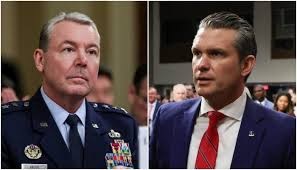
Washington, D.C., August 2025 – The Pentagon has dismissed three senior military officials, including Lt. Gen. Jeffrey Kruse, head of the Defense Intelligence Agency (DIA), in a move that has fueled debate over political interference in the U.S. military. The removals come just weeks after the DIA released an assessment that contradicted the Trump administration’s claims about the impact of U.S. airstrikes on Iran’s nuclear facilities.
The decision, announced Friday, also included the removal of Vice Adm. Nancy Lacore, chief of the Navy Reserve, and Rear Adm. Jamie Sands, commander of Naval Special Warfare Command. The Pentagon has not offered detailed reasons for their dismissals, stating only that they were based on a “loss of confidence.”
Leadership Shake-up in DIA
Lt. Gen. Kruse had led the DIA since mid-2023 and was widely respected within the intelligence community for his analytical rigor. His deputy, Christine Bordine, will serve as acting director until a permanent replacement is nominated and confirmed by the Senate.
Kruse’s removal is particularly notable because it follows a DIA preliminary report on the June U.S. strikes against Iran. The report concluded that while the strikes damaged key facilities, they only delayed Iran’s nuclear programme by several months—contradicting former President Donald Trump’s public claim that the strikes had “obliterated” Tehran’s nuclear ambitions.
Part of a Broader Pattern
Kruse is the second senior military intelligence official to be removed in recent months under Trump’s second administration. Earlier this year, Gen. Timothy D. Haugh, head of the National Security Agency (NSA), was dismissed after coming under fire from influential political commentators.
Observers note that both cases reflect a growing push within the administration to replace senior defense leaders who were appointed during the Biden era.
Political and Strategic Reactions
The series of dismissals has sparked concern in Congress. Senator Mark Warner, the top Democrat on the Senate Intelligence Committee, criticized the move, saying:
“The firing of yet another senior national security official underscores the Trump administration's dangerous habit of treating intelligence as a loyalty test rather than a safeguard for our country.”
Warner directly tied Kruse’s ouster to the DIA’s Iran assessment, warning that sidelining independent analysis in favor of political narratives weakens U.S. national security.
Other lawmakers, including some Republicans, have privately expressed unease that military professionals are being removed based on perceived political alignment rather than performance.
Iran Strike Fallout
The June airstrikes targeted three suspected Iranian nuclear facilities. While the Trump administration hailed the operation as a major strategic success, intelligence assessments suggested otherwise. The DIA’s report found that Iran’s programme was temporarily hindered but not destroyed, and that Tehran retained the capacity to rebuild critical infrastructure within months.
The contrast between the intelligence findings and the White House narrative has become a flashpoint, with critics arguing that Kruse’s removal was politically motivated.
Impact on the Military
The dismissal of Vice Adm. Lacore and Rear Adm. Sands further highlights the scope of the reshuffle. Both officers had been seen as key figures in naval readiness—Lacore overseeing reserve forces, and Sands leading the elite SEAL community. Their sudden removal leaves leadership gaps at a critical moment, as the Navy navigates increased operational demands in the Indo-Pacific.
What Comes Next
The Pentagon has not named permanent successors for the dismissed officials. Until replacements are confirmed, acting leaders will hold command, leaving uncertainty at the top of multiple military branches.
Analysts warn that such abrupt leadership changes could undermine continuity in U.S. defense planning and erode confidence among allies. Critics say the moves risk politicizing military and intelligence institutions that traditionally pride themselves on nonpartisan professionalism.
The ouster of Lt. Gen. Kruse and other senior officials underscores the tension between intelligence assessments and political narratives in Washington. While the administration maintains that the changes reflect a loss of confidence, critics argue they reflect a broader purge of Biden-era appointees and a willingness to sideline unwelcome analysis.
As the Pentagon braces for further scrutiny, questions remain over whether U.S. defense agencies will be able to provide independent, fact-based intelligence at a time of heightened global threats.
✍️ This article is written by the team of The Defense News.