Pentagon Draft Report Says China Has Loaded Over 100 Nuclear ICBMs Into New Silo Fields
A draft Pentagon assessment cited by Reuters concludes that China has likely loaded more than 100 intercontinental ballistic missiles (ICBMs) into newly built missile silos across three large fields in northern China, near the border with Mongolia. The finding points to a major acceleration in Beijing’s nuclear modernization and a shift toward a more ready and survivable strategic deterrent as great-power competition intensifies.
Silo Fields Signal Higher Readiness
U.S. defense analysts say the silo complexes, first identified through satellite imagery in 2021, are now assessed to be operational. Earlier assessments suggested some silos might remain empty or be used as part of a deception strategy. The latest draft report, however, indicates that a significant number have been loaded with missiles, signaling a move toward higher operational readiness.
The silo fields are located in remote desert regions, providing both concealment and physical protection. By dispersing missiles across dozens of hardened launch sites, China increases the difficulty for any adversary attempting to neutralize its nuclear forces in a first strike, thereby reinforcing its second-strike capability.
DF-31 Missiles at the Core of the Deployment
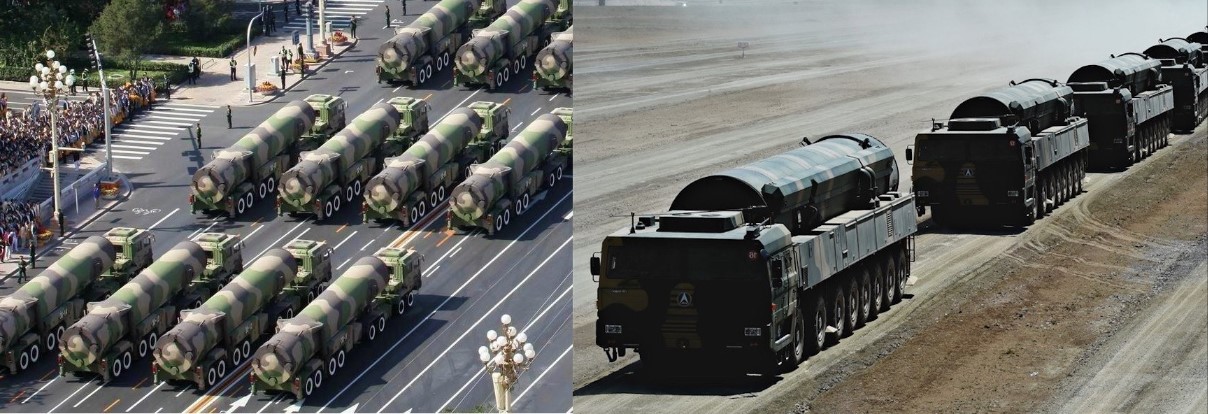
The Pentagon assessment says the silos are believed to house primarily DF-31 intercontinental ballistic missiles. The DF-31 is a solid-fueled ICBM with an estimated range of 7,200 to 8,000 kilometers, placing much of the continental United States within reach when launched from northern China. Solid-fuel propulsion allows for faster launch readiness compared with older liquid-fueled systems, reducing vulnerability during crises.
The missile is generally assessed to carry a single nuclear warhead, though improved variants feature greater accuracy and penetration aids designed to counter missile defense systems. While the DF-31 was originally developed as a road-mobile system, placing it in fixed silos provides an additional layer of survivability by combining mobility-based design with reinforced infrastructure.
Broader Nuclear Expansion Underway
U.S. officials say the silo deployments are part of a wider expansion and diversification of China’s strategic nuclear forces. Alongside silo-based missiles, Beijing continues to invest in road-mobile ICBMs, ballistic missile submarines, and long-range bombers, moving toward a more complete nuclear triad.
This evolution marks a departure from China’s long-standing posture of minimum deterrence. Pentagon estimates now project that China could possess more than 1,000 nuclear warheads by 2030, a dramatic increase from earlier estimates of a few hundred warheads.
Arms Control and Strategic Stability
The draft report also assesses that China is not interested in arms control talks in the near term. U.S. officials warn that the rapid growth of China’s nuclear forces, combined with the absence of formal dialogue, increases the risk of miscalculation and strategic instability.
Chinese officials have repeatedly rejected U.S. assessments, arguing that China’s nuclear forces are purely defensive and maintained at the lowest level necessary for national security. Beijing has accused Washington of exaggerating the China nuclear threat to justify its own military expansion and alliance-building efforts.
Global Implications
The Pentagon’s findings suggest that nuclear weapons are once again becoming central to global security planning. As China fills new silo fields with DF-31 missiles and accelerates its buildup, analysts say the strategic balance is shifting in ways that could reshape arms control, deterrence, and international stability for years to come.
✍️ This article is written by the team of The Defense News.