Pentagon Awards $10.25 Million Contract to Boeing for More QF-16 Drone Conversions
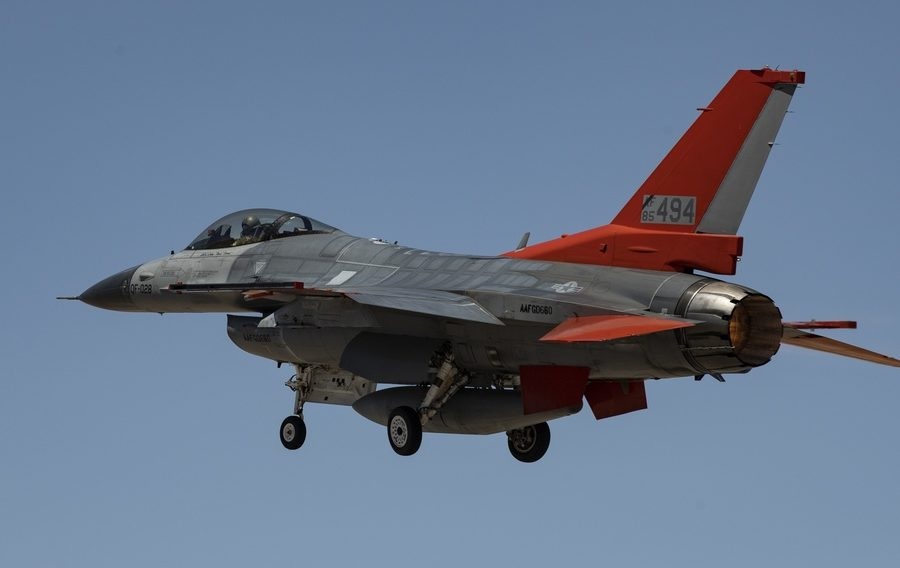
On 4 June 2025, the United States Department of Defense officially awarded a fresh $10.25 million contract to Boeing for the conversion of additional retired F-16 Fighting Falcon fighter jets into QF-16 FSAT (Full Scale Aerial Target) drones. This move is part of a long-running program aimed at improving the realism and effectiveness of air combat training for the U.S. Air Force.
This latest agreement continues a series of similar contracts under which Boeing has already converted 75 F-16s into aerial target drones. These QF-16 aircraft are highly advanced, remotely piloted drones capable of mimicking real fighter jets in combat scenarios — offering live-fire training opportunities that are as close to real combat conditions as possible.
What Is the QF-16?
The QF-16 is essentially a converted F-16 Fighting Falcon that can be flown both remotely as a drone and conventionally by a human pilot when needed. These aircraft retain their full manoeuvring capabilities, including supersonic speeds and up to 9G turns — making them extremely challenging targets for testing air-to-air missiles, ground-based air defence systems, and radar tracking technology.
Nicknamed the "Zombie Viper," the QF-16 reflects the idea of giving a second life to retired F-16s, many of which are sourced from the AMARG (Aerospace Maintenance and Regeneration Group) — famously known as the U.S. Air Force’s aircraft boneyard in Arizona.
Where and How Are They Converted?
The initial conversions were handled at Boeing’s facility at Cecil Field in Jacksonville, Florida, later followed by another conversion line near the AMARG facility at Davis–Monthan Air Force Base in Arizona.
The conversion process includes:
-
A thorough inspection and refurbishment of the airframe
-
Installation of advanced remote control systems
-
Integration of scoring recorders to track missile impacts
-
Fitting emergency self-destruct systems for safety in case of drone malfunction
These drones are typically recovered from among the most heavily used F-16 airframes in storage and are granted a new operational life of around 300 flight hours — enough for multiple training missions before being expended in live-fire exercises or retired for spare parts.
Operational Role and Capabilities
Once converted, the QF-16s are assigned to the 82nd Aerial Targets Squadron at Tyndall Air Force Base, Florida, and a detachment at Holloman Air Force Base, New Mexico. These squadrons conduct highly realistic air combat training operations, with QF-16s often flown remotely from ground-based simulation cockpits.
In addition to controlled piloting, the QF-16s are equipped with systems that enable them to perform pre-programmed autonomous manoeuvres during specific mission phases, adding unpredictability and realism to training exercises.
Not every mission ends in destruction — some flights are used to calibrate radar systems or test electronic warfare countermeasures, ensuring U.S. defence systems stay sharp and capable of handling modern aerial threats.
Specifications of the QF-16
-
Type: Full Scale Aerial Target (FSAT)
-
Base Aircraft: F-16 Fighting Falcon (various Block models)
-
Top Speed: Mach 2.0 (approx. 2,470 km/h)
-
Max G Tolerance: Up to 9G
-
Operational Flight Life: Approx. 300 flight hours per drone
-
Control Mode: Remotely piloted or optionally manned
-
Features: Autonomous manoeuvre capability, scoring system, remote command link, self-destruct system
Why It Matters
The continued investment in QF-16 conversions highlights the Pentagon’s commitment to providing U.S. Air Force pilots and ground-based air defence teams with the most realistic combat training possible. By simulating the speed, agility, and combat manoeuvres of actual enemy fighters, the QF-16 ensures American forces remain prepared for modern air warfare scenarios.
This new $10.25 million contract ensures that the U.S. Air Force's training programs remain among the most advanced and demanding in the world — an essential edge in maintaining air superiority.
✍️ This article is written by the team of The Defense News.