Pakistan’s New Babur-Class Corvette PNS Khaibar Passes Key Weapons Tests
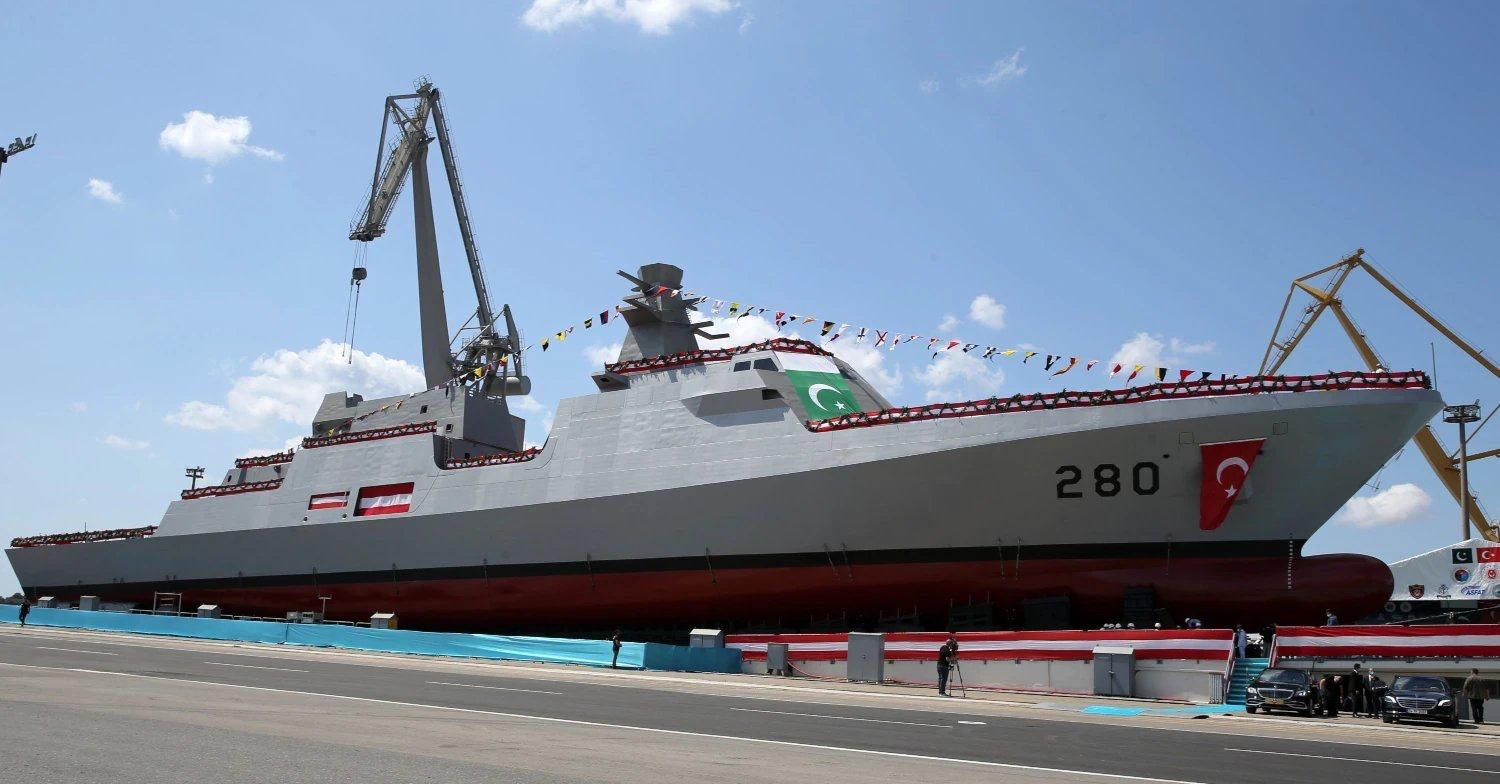
Pakistan’s new warship, PNS Khaibar, has successfully completed important live-fire trials, marking a major step before it officially joins the Pakistan Navy. The announcement came from the Turkish defense company HAVELSAN, which has played a key role in building and integrating the ship’s combat systems.
Sharp Accuracy in Weapon Tests
During the trials, Khaibar fired its 76 mm main gun at land targets and hit them with high accuracy. The ship’s Aselsan STOP 25 mm remote-controlled gun also repeated the same precise performance.
These tests were mainly done to check how well the ship’s advanced combat system, ADVENT, can control weapons and sensors together. HAVELSAN and Turkey’s state-owned shipbuilder ASFAT supervised the trials.
What Makes PNS Khaibar Different
PNS Khaibar is the second ship of the Babur-class—a larger and more powerful version of Türkiye’s Ada-class corvette. Unlike older ships that were mainly built for anti-submarine missions, Khaibar is designed to handle multiple types of missions at sea.
Key features include:
-
Harbah land-attack and anti-ship missiles
-
Albatros NG air-defense missiles with a 12-cell launcher
-
Gokdeniz close-in weapon system (CIWS)
-
Leonardo 76/62 Super Rapid main gun
-
Two STOP 25 mm guns
-
324 mm torpedo launchers
The ship is around 108 meters long, weighs about 3,000 tons, and can reach speeds of over 26 knots. It can also carry a 10-ton anti-submarine helicopter.
Advanced Radar and Sensors
Khaibar is equipped with powerful sensors that help it detect ships, aircraft and submarines from long distances. These include:
-
SMART-S Mk2 3D radar
-
Piri infrared search-and-track system
-
SeaEye-AHTAPOT electro-optical sensors
-
Yakamos sonar
-
HIZIR torpedo defense system
Together, these systems allow the ship to monitor the sea and air around it up to almost 250 km.
ADVENT Combat System: The Brain of the Ship
The ADVENT combat management system is one of the ship’s biggest upgrades. It connects all radars, weapons, sensors and communication systems so they work together as one networked unit.
This system can:
-
Share data with other ships
-
Track multiple threats at the same time
-
Guide weapons more accurately
-
Connect with NATO and Pakistan Navy communication links
The supporting FLEETSTAR system helps distribute data quickly and safely across the ship.
For Pakistan, this means its navy will operate a second digital combat network—separate from the Chinese systems used on its Tughril-class ships and upcoming Hangor-class submarines.
A Program Designed for Technology Transfer
The PN MILGEM program began in 2018 with an agreement between Pakistan and Türkiye to build four ships, including two made at Karachi Shipyard. The deal includes technology transfer, giving Pakistan the rights to modify and develop future ships such as the planned Jinnah-class frigates.
This helps Pakistan learn ship design, weapon integration and combat-system management—skills it has been trying to develop for years.
Why This Matters in the Region
Khaibar’s arrival comes at a time of growing rivalry in the Indian Ocean. The Indian Navy is expanding rapidly, operating aircraft carriers, new destroyers and advanced submarines. Pakistan, on the other hand, is trying to modernize its smaller fleet while also protecting Chinese-supported sea routes linked to the China–Pakistan Economic Corridor (CPEC).
Analysts say the Babur-class corvettes give Pakistan a modern, missile-armed, network-enabled surface force — but they do not change the overall balance, which still heavily favors India.
A New Addition to Pakistan’s Naval Power
With its trials complete, PNS Khaibar is now close to joining the Pakistan Navy. The ship represents a major upgrade — combining advanced sensors, modern missiles, digital combat systems and long-range awareness in a compact design.
For Pakistan, Khaibar is a sign of its growing partnership with Türkiye and a step toward modernizing its navy for the challenges of the future.
About the Author
Aditya Kumar:
Defense & Geopolitics Analyst
Aditya Kumar tracks military developments in South Asia, specializing in Indian missile technology and naval strategy.