Pakistan’s Debt Hits Rs 80 Trillion, Raising Fears of Rupee Slide and Fresh Economic Crisis
Peshawar/Islamabad, December 21, 2025: Pakistan’s worsening debt arithmetic is back in the spotlight after Khyber Pakhtunkhwa Chief Minister Sohail Afridi warned that the country’s financial position remains vulnerable to any shock in external funding, even as headline foreign-exchange reserves have recently climbed above the $20 billion mark.
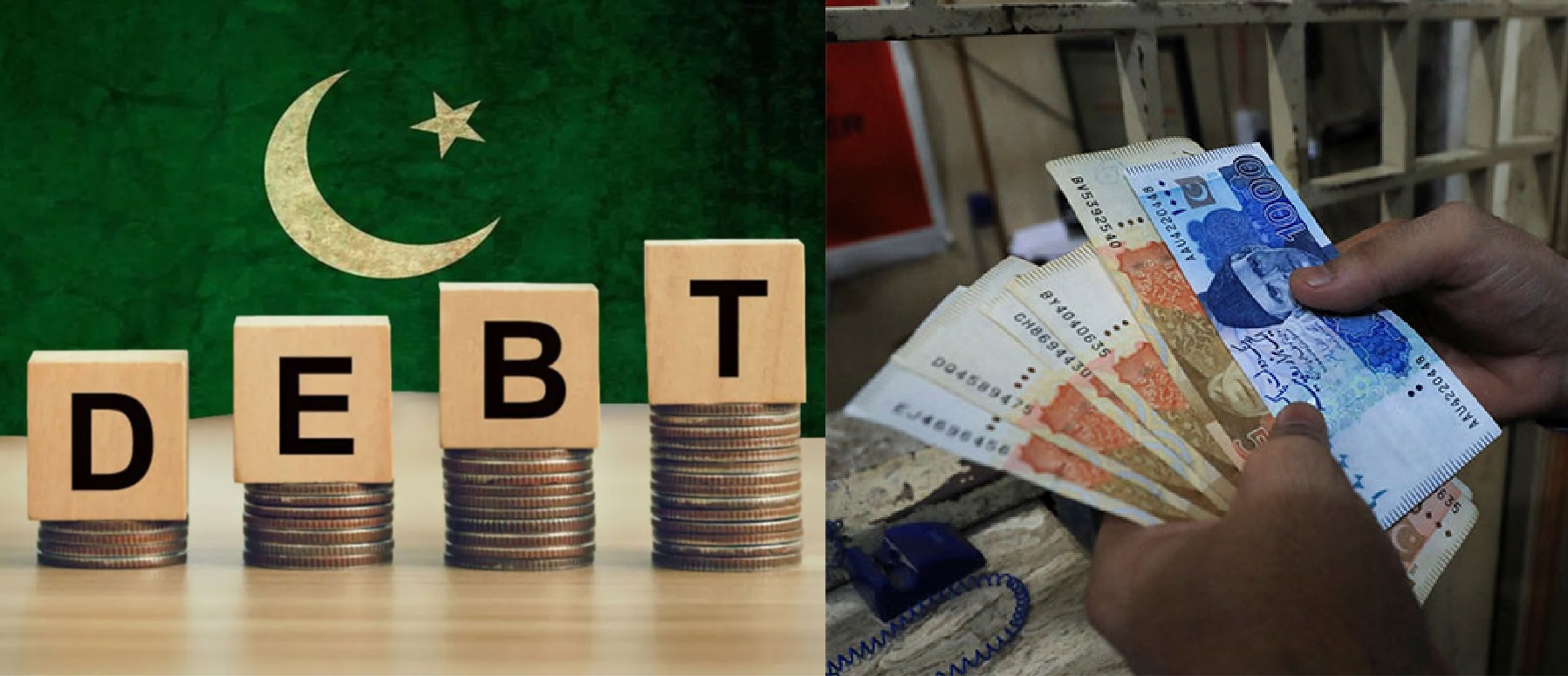
Pakistan’s total public debt reached about Rs80.6 trillion by the end of June 2025, according to the federal government’s Annual Debt Review for FY2025, a year-on-year rise of roughly 13% that pushed the public debt-to-GDP ratio to around 70%.
What The Official Debt Numbers Show—And Why The Exchange Rate Matters
The Ministry of Finance’s FY2025 debt review breaks the stock into Rs54.5 trillion in domestic debt and Rs26.0 trillion in external public debt as of June 2025.
The external debt component is critical because it is effectively priced in foreign currency, meaning any rupee depreciation inflates the rupee value of external debt even if the dollar amount remains unchanged.
The same review notes that exchange-rate valuation effects have historically been a major driver behind sharp increases in the rupee value of external debt during periods of currency depreciation, and that exchange-rate movements continued to influence the debt stock in FY2025.
Afridi, speaking amid renewed political and economic tension, argued that the external side of Pakistan’s balance sheet remains the main pressure point, citing the country’s reliance on multilateral lenders and friendly-country financing. While the chief minister’s figure of “Rs36 trillion” external debt has circulated widely on social media, the official public-debt figure for external debt at June 2025 is about Rs26 trillion; the gap may reflect differences between public external debt and broader external obligations and liabilities measured under different accounting frameworks.
Who Pakistan Owes: Multilaterals, Rollovers, And The Refinancing Treadmill
In his remarks, Afridi pointed to long-running dependence on institutions such as the IMF, the World Bank, and the Asian Development Bank, arguing that repeated bailout programs and project lending have entrenched Pakistan’s need for fresh foreign inflows to keep the system stable. His comments come as Pakistan continues to operate under an IMF-supported stabilization framework, with new multilateral financing still flowing.
In the latest sign of that support, the World Bank approved $700 million for Pakistan on December 20, 2025, aimed at macroeconomic stability and service-delivery improvements—another injection underscoring Islamabad’s reliance on external partners for reform-linked funding.
At the same time, credit rating agencies have warned that the country’s biggest near-term challenge is not only the size of obligations, but the frequency of rollovers required to stay liquid. Earlier in 2025, Fitch Ratings flagged that Pakistan faced more than $22 billion in external repayments in FY2025, including roughly $13 billion in bilateral deposits that often need to be rolled over rather than repaid outright.
Reserves Above $21 Billion—But How Much is Borrowed Breathing Room?
Pakistan’s foreign-exchange reserve position has improved on paper in recent weeks. The State Bank of Pakistan (SBP) reported that as of December 12, 2025, total liquid reserves stood at $21.089 billion, comprising $15.8868 billion held by the SBP and $5.2022 billion held by commercial banks.
That rise was boosted by IMF inflows, with media reports and central bank data showing reserves jumped after receiving about $1.2 billion linked to IMF disbursements.
Afridi’s core warning, however, is that headline reserves can mask underlying economic fragility if a significant share reflects deposits, currency swaps, or short-term external liabilities rather than fully owned reserve buffers. This concern is echoed in IMF program documents, which detail sizeable deposit liabilities and swap-related obligations tied to friendly countries, including Saudi deposits and China-related financing arrangements.
The Rupee At ~280 Per Dollar—And The Fear of a Sudden Reset
Afridi warned that if friendly countries or external creditors demanded repayment or stopped rolling over deposits, pressure could return swiftly to the currency market, potentially pushing the Pakistani rupee far weaker than current levels. Pakistan’s exchange rate has hovered around Rs280 per US dollar in the interbank market, with the SBP reporting a weighted average near 280.25 in mid-December.
A weaker rupee would raise the local-currency burden of debt servicing, increase the cost of imports, fuel inflation, and force tighter monetary policy, further slowing economic growth.
Exports, Growth, And The Balancing Act
Pakistan’s debt sustainability is closely tied to its ability to earn foreign currency through exports and remittances. The FY2025 debt review reported real GDP growth of 2.68% and noted a current account surplus of about $2.1 billion, supported largely by strong remittance inflows.
However, economists caution that the recovery remains fragile, as improvements in reserves and the current account could be quickly reversed if oil prices rise, imports accelerate, or external financing conditions tighten.
Outlook: Stability Built On Continued Inflows
For now, Pakistan is staying afloat through multilateral support, periodic IMF-linked disbursements, and continued engagement with friendly countries. Yet the underlying debt trajectory—Rs80.6 trillion in public debt and a debt-to-GDP ratio near 70%—leaves the economy exposed to shocks in refinancing, growth, or currency stability.
Afridi’s warning serves as a clear stress test: if external inflows slow and rollovers become harder to secure, Pakistan could face a renewed cycle of rupee weakness, rising debt ratios, and another round of emergency stabilization measures.
✍️ This article is written by the team of The Defense News.