Pakistan Will Not Exist’: India’s Warning and the Nuclear Balance in South Asia

In a stern reminder of the perilous dynamics in South Asia, Capt (IN) Shiv Kumar, India’s Defence Attaché in Jakarta, declared, “If there’s a nuclear attack on India by Pakistan, our policy is very clear—Pakistan will not exist.” This uncompromising statement reflects Delhi’s longstanding doctrine of massive retaliation, but also reveals deep strategic calculations rooted in credible deterrence.
Nuclear Arsenal: India vs Pakistan
According to the Stockholm International Peace Research Institute (SIPRI), as of January 2025, India holds around 180 nuclear warheads, compared to Pakistan’s approximately 170 . Though the margin is small, India maintains a more diversified nuclear triad—land, sea, and air delivery systems—while Pakistan’s remains incomplete.
India’s delivery platforms include :
-
Land-based ballistic missiles: Agni-I/-II/-III/-IV, long-range Agni-V (~5,000–8,000 km), developing Agni-VI (10,000+ km) and canisterized Agni-P;
-
Air-delivered: Nuclear-capable Mirage 2000H (48 warheads), with Rafale and Su-30MKI platforms under development;
-
Sea-based: SSBNs INS Arihant and INS Arighat, deploying K-15 (700 km) and test-trial K-4 (3,500 km) SLBMs .
Pakistan’s arsenal includes :
-
Land-based ballistic: Shaheen-I/-II/-III (650 to 2,750 km), Ghauri, Abdali;
-
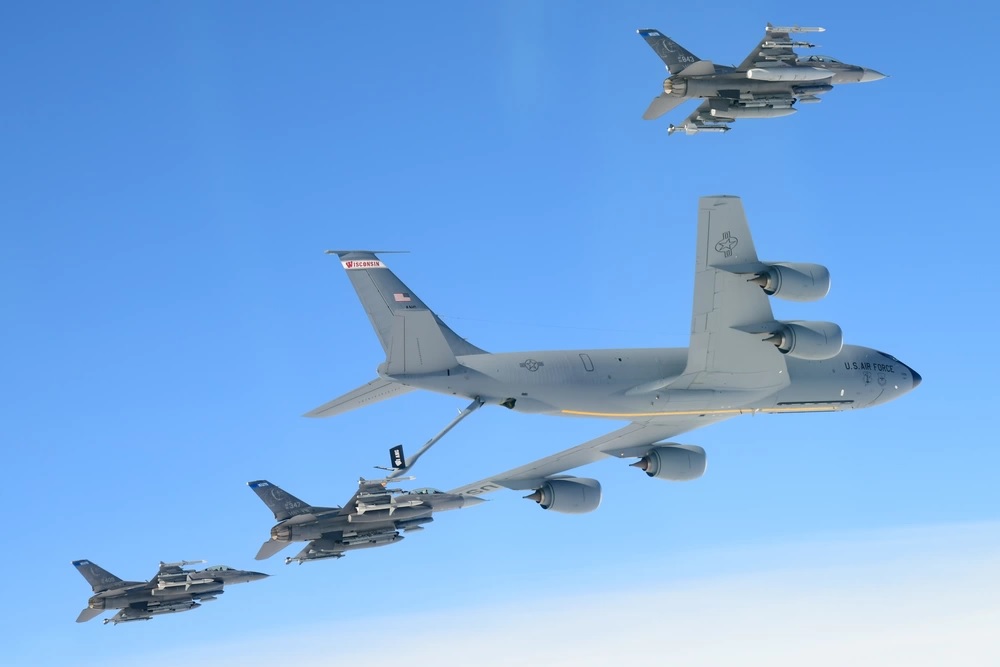
Air-delivered: F‑16s and Mirage V, with possibility of JF‑17 future integration;
Massive Retaliation vs Full-Spectrum Deterrence
India’s nuclear doctrine—anchored in No First Use (NFU)—promises a devastating second strike, committing to symmetric nuclear retaliation if attacked . Pakistan, conversely, follows a Full-Spectrum Deterrence policy, preparing to use tactical or strategic nukes even in a conventional conflict to counterbalance India’s superior conventional forces .
Capt. Shiv Kumar’s “Pakistan will not exist” warning underscores India’s readiness to leverage its large and diverse arsenal to deliver an overwhelming counterstrike in the event of a nuclear aggression—an unequivocal reaffirmation of its doctrine.
How Many Times Could India Strike?
With 180 warheads and multiple delivery platforms, India’s strike capacity far surpasses Pakistan’s 170 warheads . Assuming a conservative posture:
-
Land-based: Agni-V and Agni-IV cover all of Pakistan; multiple canisterized missiles facilitate readiness.
-
Air: Dozens of strategic bombers and Rafales can deliver nuclear loads into deep targets.
-
Sea: SSBNs from hidden ocean positions bolster second-strike resilience.
This multi-platform strength suggests India could deploy significantly more nuclear weapons than Pakistan, especially across diverse domains—underscoring how, in Capt Kumar’s scenario, India could “destroy Pakistan” multiple times over, though the reality of nuclear war is unthinkably catastrophic.
Strategic Implications and Risks
India’s posture aims to deter by ensuring mutual assured destruction (MAD). Yet, the thermonuclear capability on both sides—estimated to kill millions and create global environmental damage—raises severe escalation risks .
While India maintains NFU in theory, Capt. Kumar’s statement reflects a doctrine of “massive retaliation”—essentially saying, “If you strike first, we strike back even harder.” The result: any nuclear engagement would nearly guarantee Pakistan’s annihilation.
Capt. Shiv Kumar’s sharp warning wasn’t mere bravado—it reflected a credible arsenal: 180 warheads, ICBM-range missiles, nuclear-capable air, sea, and land platforms. Coupled with a firm doctrine, it places Pakistan in a strategically precarious position. Yet, the nuclear tag makes it imperative for both nations—and the world—to prioritize peace, diplomacy, and restraint over rhetoric and brinkmanship.
About the Author
Aditya Kumar:
Defense & Geopolitics Analyst
Aditya Kumar tracks military developments in South Asia, specializing in Indian missile technology and naval strategy.