Pakistan Seeks China’s PL-17 Missile After PL-15E Failed Against India
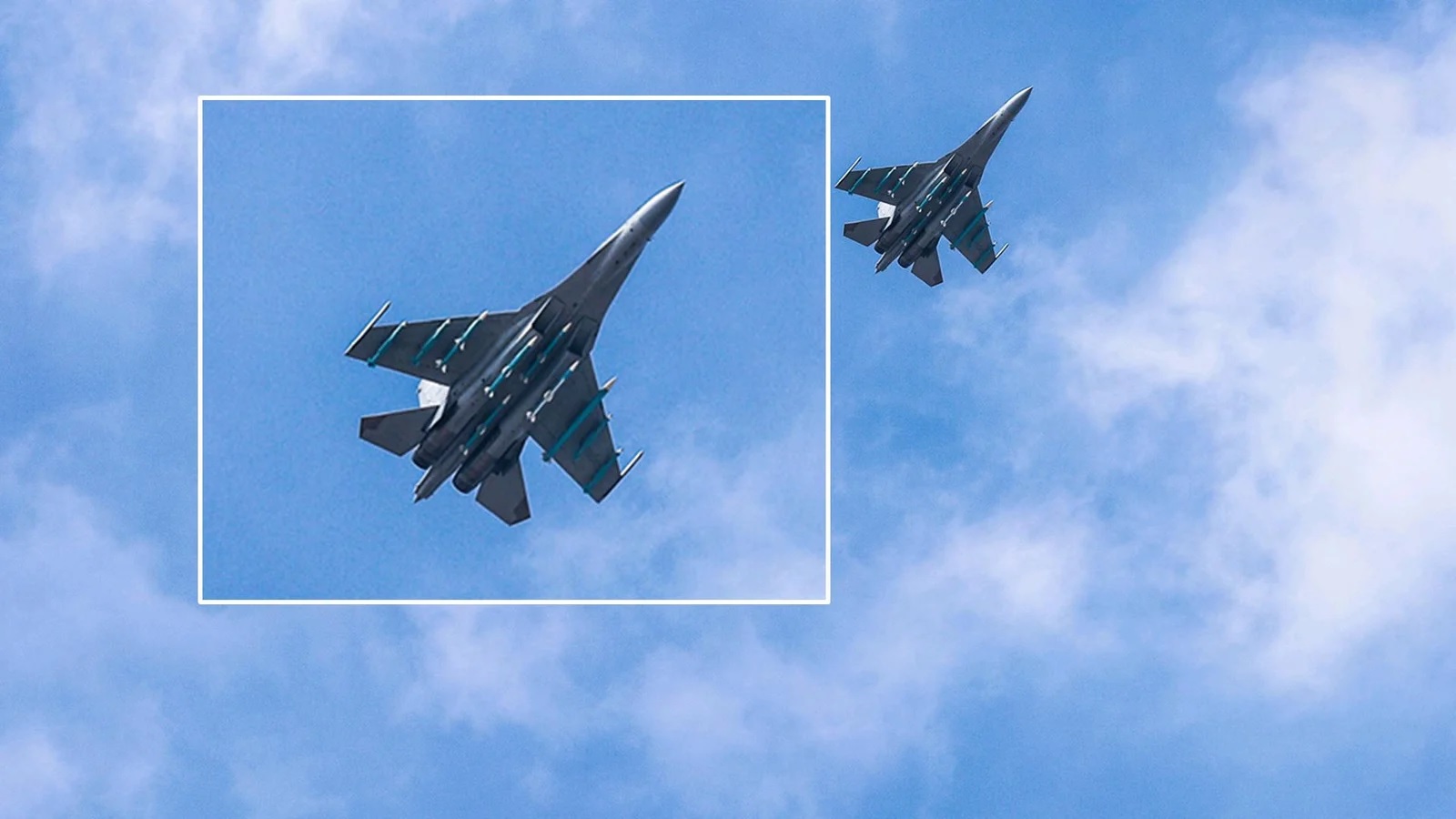
In the aftermath of the May 2025 India-Pakistan clash known as Operation Sindoor, Pakistan is reported to be considering acquisition of China’s advanced PL-17 long-range air-to-air missile, in response to the apparent failure of its current premier missile, the PL-15E. The developments mark a sharp escalation in aerial weapons capability pressure on India, prompting renewed urgency within the Indian defence establishment to shore up air superiority and protection of high-value airborne assets.
Operation Sindoor and PL-15E’s Ineffective Debut
Operation Sindoor began on 6–7 May 2025 as India’s retaliation for the Pahalgam terror attack of April 22, which killed 26 civilians. Indian forces struck nine sites in Pakistan and Pakistan-occupied Kashmir linked to Jaish-e-Mohammed (JeM) and Lashkar-e-Taiba (LeT).
During these strikes, the Pakistan Air Force (PAF) attempted to intercept Indian aircraft using PL-15E beyond-visual-range air-to-air missiles (BVRAAMs) launched from its J-10C and JF-17 Block III fighters. The PL-15E is the export version of China’s PL-15, boasting a range of about 145 km and an AESA radar seeker.
Yet, despite these on-paper advantages, none of the missiles achieved confirmed kills. Indian defence officials highlighted several reasons:
-
Electronic Warfare (EW): The Rafale’s SPECTRA suite and the Su-30MKI’s Israeli-supplied EL/M-8222 jamming pods disrupted the missile’s guidance systems.
-
Tactical errors: PAF fighters fired missiles near their maximum range, often without support from AWACS aircraft, which reduced accuracy and allowed Indian pilots to evade.
This failure exposed the limitations of PL-15E against modern electronic warfare and tactical counter-measures, creating concern within Pakistan’s defence establishment.
Pakistan Eyes the PL-17: The “AWACS Killer”
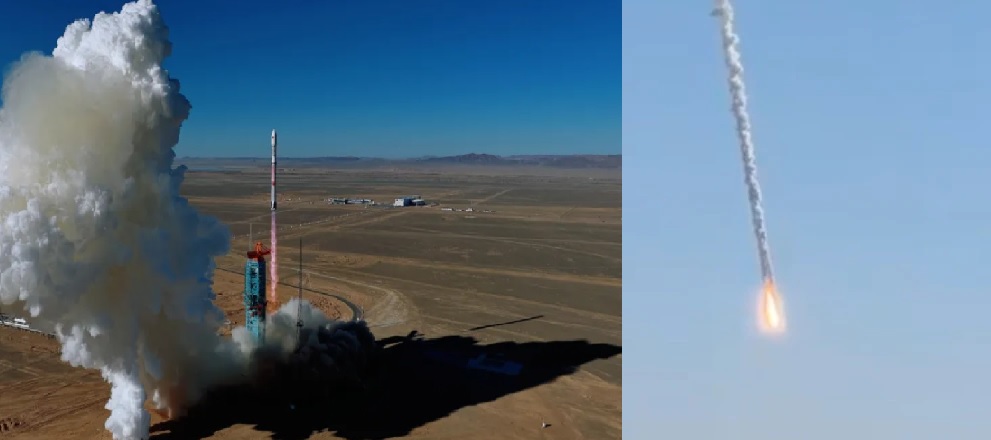
Having learned from the PL-15E’s shortcomings, Pakistan is reportedly accelerating plans to acquire the PL-17, a next-generation Chinese missile designed to neutralize strategic high-value targets.
Key features of the PL-17 include:
-
Extended Range: Believed to reach up to 300–400 km, dwarfing the PL-15E’s 145 km envelope.
-
Strategic Role: Unlike conventional dogfight missiles, the PL-17 is intended to strike AWACS, airborne early warning aircraft, and mid-air refuelling tankers. Eliminating these assets could cripple the IAF’s command, surveillance, and long-range strike capabilities.
-
Advanced Propulsion: The missile is thought to employ a ramjet engine, sustaining high speeds across vast distances.
-
Multimode Guidance: It reportedly combines inertial navigation, satellite updates, and a multimode seeker to track high-value targets with greater resistance to counter-measures.
How many PL-17s can a J-10C carry ?
The J-10C has multiple external hardpoints (an 11-station configuration), but the PL-17 is very large and heavy — roughly several metres long — so it is not a small underwing missile. Open-source imagery and defence reporting indicate the J-10C is normally seen carrying a single PL-17 (typically on a strong centerline or inner pylon). While test photos sometimes show experiments with different mounts, operationally a J-10C would most likely carry only one PL-17 because of the missile’s size, weight and aerodynamic/structural constraints. This means each J-10C armed with PL-17s would usually field one such ultra-long-range weapon at a time, rather than multiple PL-17s per aircraft.
Strategic Implications for India
The prospect of Pakistan fielding the PL-17 forces India to adapt quickly. Likely responses include:
-
Stronger Electronic Warfare & Self-Protection
-
Upgrading EW suites on Rafale, Su-30MKI, and Tejas fighters.
-
Deploying more advanced jamming pods, missile warning systems, and decoys.
-
-
Better Protection for Force Multipliers
-
Operating Phalcon AWACS and IL-78 tankers at safer standoff distances.
-
Increasing escort fighter protection and employing advanced EW cover.
-
-
Indigenous Missile Development
-
Fast-tracking the Astra Mk-2 and Mk-3 long-range missiles, with dual-pulse or ramjet propulsion.
-
Improving multi-mode seekers to match Chinese advancements.
-
-
Tactical & Doctrinal Adjustments
-
Revising combat air patrol strategies and escort tactics.
-
Expanding sensor networks and secure datalinks to detect long-range missile threats earlier.
-
-
Strategic Posturing
-
Deploying more air defence systems near key airbases.
-
Strengthening alliances and technology partnerships to counterbalance Pakistan’s acquisitions.
-
The May 2025 clashes revealed the ineffectiveness of the PL-15E against India’s advanced electronic warfare systems, boosting confidence in the IAF but also highlighting future risks. Pakistan’s reported interest in the PL-17 “AWACS killer” underscores the intensifying missile race in South Asia.
For India, the challenge is immediate and severe: protect its high-value airborne assets, accelerate the Astra missile program, and maintain air superiority in the face of rapidly evolving threats.
The skies over the subcontinent are entering a new era where very-long-range air-to-air weapons could decide the outcome of conflicts before dogfights even begin.
✍️ This article is written by the team of The Defense News.